

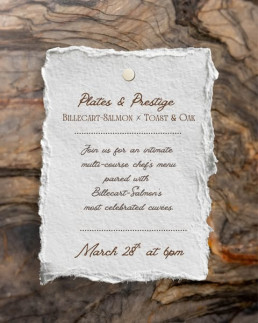
Toast & Oak Presents 'Plates & Prestige' Billecart-Salmon Dinner
Join us at Toast & Oak for an intimate multi-course chef's menu paired with Billecart-Salmon's most celebrated cuvees.
On Saturday, 28 March, Toast & Oak proudly presents an exceptional Champagne pairing dinner in collaboration with Champagne Billecart-Salmon — one of France’s most historic and revered Champagne houses, established in 1818. This exclusive evening has been carefully designed as a refined and immersive dining experience, celebrating craftsmanship, precision, and the art of pairing.
THE EXPERIENCE
Six remarkable Champagnes
A curated selection showcasing the elegance and finesse that define Billecart-Salmon, including the rare and prestigious Cuvée Saint-Hilaire 2006, a pure and powerful expression of the House’s expertise, as well as the Billecart-Salmon Cuvée Louis Salmon Brut Blanc de Blancs 2009. An exceptional Grand Cru Chardonnay, defined by its precision, mineral tension, and remarkable depth.
Five-course degustation menu
Thoughtfully curated by our Culinary Director, Pier Italiano, highlighting refined seasonal flavours and exceptional ingredients, including the use of caviar, kina, king crab, and other exciting premium produce.
Perfected pairings
Each dish and Champagne pairing meticulously crafted by Executive Chef & Wine Director, Giulio Barducci, ensuring seamless harmony between cuisine and cuvée. Guests will also enjoy insights throughout the evening from Billecart-Salmon’s Brand Ambassador, who will share the heritage, philosophy, and craftsmanship behind each Champagne poured.
With limited seating available, this promises to be one of Queenstown’s most elegant and sought-after dining events of the season.
Reservations are essential.

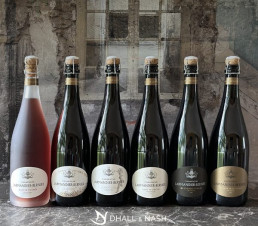
Larmandier-Bernier: Benchmark Blanc de Blancs
Larmandier-Bernier: Benchmark Blanc de Blancs
“In a region that still produces far too many meager, brittle wines, Larmander-Bernier reminds us of the plenitude and texture of which great Champagne is capable.”
William Kelley, The Wine Advocate
Champagne has for generations been synonymous with celebration and prestige, but as with so many things nowadays, we’ve seen a significant veer towards commercialism and marketing. Vineyards and brands are being snapped up by corporate powerhouses and stakeholders who see the vines as plots on a graph.
To say that ‘small is beautiful’ and ‘big is bad’ is an oversimplification, we know – large Négociants and Maisons can (and do,) produce exceptional cuvées – however this is no longer exclusively their domain. There are some valiant Davids amongst these vinous Goliaths.
One of which is our beloved Larmandier-Bernier. At Dhall & Nash, we pride ourselves on respecting those who create wonders by patiently loving, toiling and knowing their small piece of earth through the generations – and this eighth generation family endeavour working 47 acres of meticulously tended organic & biodynamic vineyards embody our core values in every way.
Larmandier-Bernier - At Its Core
“Some growers are known for their focus on the vines, others for their attention in the winery, but few find a balance in every detail like Pierre Larmandier.”
Tyson Stelzer, The Champagne Guide 2018-2019
If one had to describe Larmandier-Bernier in an absolute nutshell, they’d say it’s a family estate specialising in organically-grown grands crus.
Their natural approach to the growing extends to their winemaking and they favour a very low-interventionalist style following their comparatively late harvest.
Their wines have garnered strong praise and a bit of a cult following from fellow winemakers, critics and day-to-day drinkers (more on this later…)
But let’s crack open the nut and drill down a bit.
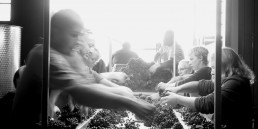
Larmandier-Bernier - Eight Generations of Champagne
The Larmandier family have been involved in Champagne since the 1700’s, with the first written evidence of such being in 1756 (the same decade that the Gregorian calendar replaced the Julian calendar, so some could say they’re as old as time itself!)
“In 1856, there was an average harvest of 10 casks per acre: that doesn’t seem much, but in those days, there were no American vines, no fertiliser even. Only the soil and the sun could nourish the vines.”
Louis Prosper Larmandier (Current generation – Pierre’s – great-great-grandfather).
Production remained small for decades, the world was less globalised than now (said as we write about this from New Zealand.) Though small, the Larmandier reputation was big. In the 1950s Jules Larmandier, followed by his son Phillipe Allyre Larmandier, became a supplier for some of Paris’ greatest restaurants (La Tour d’Argent, Taillevent, Charlot roi des coquillages, etc.).
The birth of modern Larmandier-Bernier came in the early 1970’s (which we regret to inform you was over 50 years ago, even if it feels as though it should be 30…) Phillipe Larmandier combined forces with his wife Elisabeth Bernier – an owner of vineyards in Vertus, where they built their cellar.
In 1988, one Pierre Larmandier followed in his parents’ footsteps, returning to the profession that “runs through his veins.” Whilst the decision was one born of passion, it was somewhat expedited. Phillipe, his father, died at the age of just 44. Elisabeth stayed at the helm, holding it down until Pierre, who was at university, was able to complete his studies and return home. At this time, the vineyard holdings were around 10 hectares.
Pierre Larmandier - The Organo-Realist
Some of Pierre’s first decisions upon coming aboard at this family estate alongside his wife, Sophie, were to move into organics. “Only the soil and the sun,” was interestingly the passing comment made by his great-great-grandfather that would come to represent his philosophy quite well.
They started dabbling in 1992, and then doubled down by moving to fully biodynamic viticulture by late 1999 after a trip to Burgundy’s Domaine Leflaive.
“It was really there that we realized you could do something serious with biodynamics,” Pierre told Robert Camuto for The Wine Spectator. It was around this time they began to use only indigenous yeasts in the fermentation process too. They have been certified organic since 2003 and biodynamically certified since 2004.
“Pierre describes himself as an ‘organo-realist,’” explains Tyson Stelzer in the 2018-19 Champagne Guide, “Every time I visit, he whisks me off in his four-wheel drive to one of his key plots in Vertus. “We’re not too concerned about a little disease in the vineyards. Some people say grass is a disease too!” Larmandier cultivates grasses in the mid-rows during winter and ploughs until close to harvest.”
“He considers an absence of herbicides to be the key in the vineyard. ‘Organic or not is less important than abandoning herbicides,’ he suggests. ‘Everyone says they control weeds by ploughing, but I see them spraying with herbicide!’”
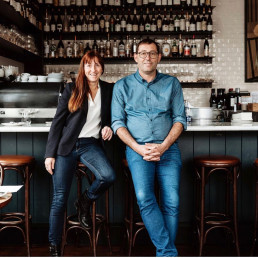
Pierre’s passion for what he creates is evident and he has taken the baton from his parents and carved his own path with it. “My parents made wine that was fine and elegant, but it was just fine and elegant, without depth,” he recalls as he speaks to Camuto, “With their enologist, they were always trying to make something with less taste. And I said, ‘That’s too bad.’”
This take on organics and biodynamics was not necessarily usual for the time. Camuto reckons that Larmandier-Bernier “broke the mold” and 88 Bamboo proclaims “when it comes to Champagne, it is none other than the Larmandier-Bernier house that has ushered the practice into this hallowed region.”
“I thought I could be five years ahead of the others in giving up on chemical farming,” Pierre observed to William Kelley, “but I never imagined that I might be fifty years ahead!”
Even today, under 10% of vineyards in Champagne are organic, (Apx 8.1%) and even fewer are biodynamic. Believe it or not, this is a marked increase from around just 1% in 2009, which really highlights just how unique this philosophy is in the region.
Despite his head-first deep-end dive into running things, Pierre found himself amongst good company. There were a number of new-generation winemakers questioning Champagne’s status quo. “We were asking a lot of questions,” Pierre recalls to Camuto, “One of them was how to express terroir.”
And express he does.
Larmandier-Bernier - The Signature Style
“It’s not our objective to be consistent,” Sophie Larmandier declared at a masterclass in Sydney in early 2020, attended by Huon Hooke of the Real Review, “If you want year-to-year consistency, you will find the vineyard isn’t the same every year.”
“Healthy, ripe grapes for pure, mineral, authentic wines,” is the tagline at the top of Larmandier-Bernier’s website.
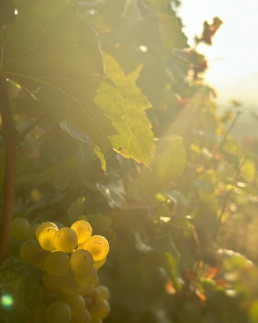
Beginning with grapes harvested at their peak maturity – picked late compared to many of the other growers. Pierre believes this allows them to concentrate on the flavours first and foremost, believing that before you can make good champagne you must first make good wine.
“Along with an expression of minerality, his priorities are roundness and linearity achieved by harvesting grapes at optimal ripeness of around eleven degrees of potential, compared with most in Champagne who aim for around nine”, explains Tyson Stelzer, ‘It is important for us to work the soil to achieve a lower pH in the wine, allowing us to wait longer to harvest, to achieve ripeness without lacking freshness.’
“His sensitive and non-interventionist approach informs all he does.”
Tyson Stelzer, The Champagne Guide 2018-2019
This also extends to a desire for complexity and depth in the wines without over-handling. Pierre understood that as things had changed in the vineyards, so too must they change in the winery.
He found the way in which they were doing things was making the wines too acidic and difficult to drink.
“Previously, the base wines were so acidic they hurt to drink,” he said. Now, after fermentation with indigenous yeasts, the wines are matured in casks and wooden vats to enable them to breathe.
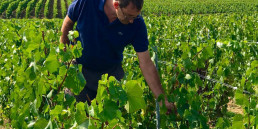
Larmandier-Bernier also bottles quite late for the second fermentation and has a very low dosage regime, which naturally encourages malolactic fermentation with the warming spring temperatures. The highest dosage used here is 4 g/litre. “We use the dosage to preserve the length,” they explain to Jamie Goode’s Wine Anorak.
Shortly after their organic certification, Pierre created “perpetual reserves” for their Latitude and Longitude base wines. “Traditionally, Champagne producers have kept reserves of single-vintage base wines to use for blending in non-vintage bottlings,” explains Camuto, “Perpetual reserves— pioneered by Selosse and inspired by the Spanish solera system of fractional aging for Sherry—age vintage after vintage together in one cask to create a reserve wine with added aged notes and complexity. In every vintage, the Larmandiers add the newest wine to the perpetual reserve while using the reserve for up to 40 percent of the blends they make that year.”
This perpetual reserve lends complexity and maturity to their wines, meaning that even though consistency isn’t the target, quality and signature is more easily expressed in the assemblages and the real voices of the vintages can shine through their millésime bottlings.
Larmandier-Bernier - The Next Chapter
Despite enduring passion and energy, Pierre is no longer a spring chicken. The future of Larmandier-Bernier is being discussed, and it looks bright.
Since they took the reins, Pierre and Sophie have doubled the estate vineyards to 47 acres, with production reaching about 13,000 cases annually. An exceptional starting point for the next era to run from.
“Sophie, Pierre, Arthur and Georges just want to get it right and do it well…” states their website, officially introducing Arthur & Georges to the fold. Arthur and Georges are Pierre & Sophie’s sons and are very much a part of day-to-day operations at Larmandier-Bernier. Arthur had cut his teeth marketing for Chanel for a few years, and Georges was an aeronautical engineer before they returned to the fold.
““I told them ‘Do what you want in life,’ but I showed them the trade,” Pierre says to Camuto, “I said, ‘The life of a vigneron is short. You have maybe 30 vintages in your prime, and 30 years go fast.’”
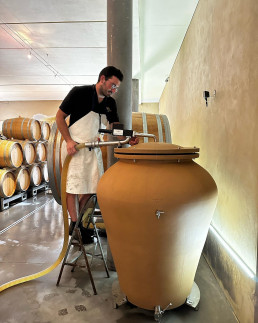
Under quite different circumstances to how he came to the helm, Pierre enjoys experimenting, teaching and learning alongside his boys. Currently they’re fermenting some base wines in stoneware amphorae (which we look forward to hearing about).
In 2024, the Larmandiers also announced that they’re launching a new expansion project of their barrel room and cellar. This will prolong the maturation both in barrel and in bottle, always digging into the chalk to enjoy ideal temperature and humidity conditions.
Côtes de Blancs and Vertus
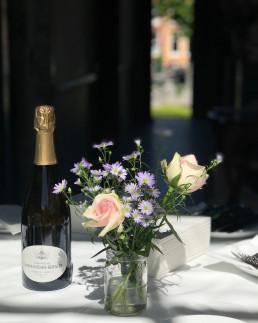
The Larmandier-Bernier estate is located on the terroirs of the Côte des Blancs, at the very heart of the Champagne vineyards where Chalk is king.
(We’ve got a great read on how soil types affect the vineyards and consequently the wines here, if you wish to go down the dirt rabbit hole.)
Geek talk: Limestone soils are naturally alkaline with high pH levels that can reflect sunlight to promote photosynthesis. These soils tend to be neutral shades of white, grey, or beige, and have ancient origins. After water receded from now-dry Jurassic seabeds over 200 million years ago, an array of fossilised shells, coral and other debris accumulated to form calcified sediments. Those remains give limestone its distinctive chemical makeup, called calcium carbonate.
Larmandier-Bernier’s holdings:
- Grands crus: Cramant, Avize, Oger
- Premier cru: Vertus
- Acres: 47 acres
- Chalk type: Outcropping Campanian chalk
- Grapes: More than 90% of Chardonnay
- Average Age: 35 year old vines
Acclaim
We can harp on about this benchmark Blanc de Blancs producer until the cows come home but consensus is key. Our voice is but one of many singing these praises, and here’s a small selection from the experts and critics…
“What Larmandier-Bernier achieves with Chardonnay, so Egly-Ouriet manages for Pinot Noir: wines of riveting purity and concentration.”
Andrew Jefford, The New France
“As I’ve written before, Larmandier-Bernier numbers among the Côte de Blanc’s—and Champagne’s—finest estates. Based in Vertus, the Larmandier family farms organically and harvest late, vinifying the resulting wines in wood. The result is vinous, elegantly muscular Champagnes that are concentrated but precise.
In a region that still produces far too many meager, brittle wines, Larmander-Bernier reminds us of the plenitude and texture of which great Champagne is capable.”
William Kelley, The Wine Advocate, speaking on the 2016 Larmandier-Bernier Brut Nature Blanc de Blancs Premier Cru Terre de Vertus
“Larmandier-Bernier exemplifies the levels of purity and mineral focus that can be drawn out of primarily premier cru terroirs with sufficient care and attention. These exceedingly fine wines rightfully rank high among the finest of Champagne’s grower-producers.”
Tyson Stelzer, The Champagne Guide 2018-2019
“Five years ago, in a restaurant in the hills outside Verona, I drank my first bottles of Larmandier-Bernier. I am not a wine reviewer who scores wines in blind tastings. Nor do I have special expertise in sparkling wines. But I love complex and elegant liquids, and those first sips of Larmandier-Bernier… were stunning. The wine lit up my palate like the stations of a pinball machine. It was creamy and mouth-filling with a deep yeastiness and a chalky, mineral texture, but at the same time, it flashed energetic freshness as it rolled along the tongue.”
Robert Camuto for Wine Spectator in his article, “Falling for Champagne (Again): Part 1 –How Larmandier-Bernier broke the mold.”
“The wines, which are almost all blanc de blancs (pure chardonnays) from the great villages of the Côte de Blancs, such as Avize, Cramant, Oger and Vertus, have a high profile and strong demand in this country. You’ll find them on the wine lists of all the best restaurants in the capital cities.”
Huon Hooke for The Real Review
“Only wine nuts know their Larmandier-Bernier (one of my favourite champagne growers…) from their Laurent-Perrier (one of the grandes marques). In some circles it would take a certain confidence to serve champagne from a little-known grower, however good, especially since from a distance it can be so difficult to tell a lovingly crafted grower’s champagne from a cheap, mass-market buyer’s own brand.”
Jancis Robinson in her article “Champagne – a wine or a brand?”
Our own Aliénor Visits
In 2025, our own Aliénor visited Larmandier-Bernier on her trip home to France,
”Pierre Larmandier’s wines are a dialogue with the vineyard: long lees contact, Stockinger casks, minimal intervention, and little or no dosage allow the freshness, salinity, and chalk of the Côte des Blancs to speak clearly, sip after sip. ‘I am so excited for the comeback of the Longitude. If you’ve tried the Latitude, it’s expansive across the palate, but the Longitude is all about minerality, linearity, and raciness!”
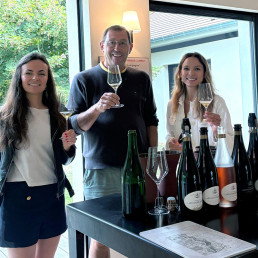
The Wines
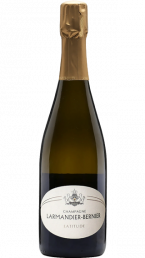
NV Larmandier-Bernier Latitude Extra Brut
- Available in 750ml, 1.5L, 3L
- 100% Chardonnay
- 40% Reserve wines
- 2g/l Dosage
- Fermentation (indigenous yeasts) and malolactic fermentation begin spontaneously in wood. Matured on the lees during their first year, with no filtering or fining being carried out.
- Blending and tirage are carried out in July. The bottles are taken down into the coolness of the cellars and stacked on lattes, the second fermentation takes place and maturation goes on for at least two more years. Each bottle is disgorged by hand 9 months before being released.
In the past, this cuvée was known as “Tradition”, a name chosen in the 1970’s by Pierre’s parents.
Antonio Galloni’s Vinous, 94 Points: “The NV (2022) Extra Brut Blanc de Blancs Latitude is stellar in this range. Broad and ample, the Latitude is so impressive. Lemon confit, marzipan, tangerine peel, mint and chalk are dialed up. More than anything else, I am so impressed with the wine’s sheer palate presence. There’s gorgeous density and character here.”
William Kelley for The Wine Advocate, 91 Points: “The latest rendition of NV Extra Brut Blanc de Blancs Latitude is excellent, offering up aromas of lemon oil, wet stones and white flowers. On the palate, it’s medium to full-bodied, bright and precise, with good concentration, racy acids, an ultra-fine mousse and a long, chalky finish. As usual, this is a classy introduction to the Larmandier- Bernier range.”
Huon Hooke, 95 Points: “Very bready, smoky bouquet. Very fresh and crisp in the mouth, dry, savoury, lush flavour, low-dosage style, with superb acidity. Small flowers, subtly complex, and the aldehydes are under control.”
Tyson Stelzer, 94 Points: “It encapsulates the gorgeous freshness of young Vertus chardonnay in its grapefruit, freshly picked apple and lemon blossom aromas, while boring deep into its chalk mineral structure, building great textural presence, amplified by the spicy, nutty complexity of barrel fermentation.”
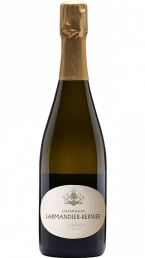
NV Larmandier-Bernier Longitude 1er Cru
- 100% Chardonnay
- 40% Reserve wines
- 2g/l Dosage
- Fermentation (indigenous yeasts) and malolactic fermentation begin spontaneously in wood. Matured on the lees during their first year, with no filtering or fining being carried out.
- Blending and tirage are carried out in July. The bottles are taken down into the coolness of the cellars and stacked on lattes, the second fermentation takes place and maturation goes on for at least two more years. Each bottle is disgorged by hand 9 months before being released.
“Longitude” originates exclusively from the Chardonnay grapes grown on the Côte des Blancs: Vertus, Oger, Avize, Cramant, which form a line close to the 4th meridian.
William Kelley’s The Wine Advocate, 93 Points: “The latest rendition of the Larmandiers’ NV Longitude Blanc de Blancs Premier Cru Extra Brut is predictably superb, offering up scents of waxy lemon rind, crisp yellow apple, dried white flowers and fresh hazelnut, followed by a medium to full-bodied, vinous but precise palate that’s pure, delicately textural and captivatingly weightless despite its undeniable intensity and concentration, concluding with a complex, mouthwateringly saline finish. It’s hard to think of a better value in Champagne.”
Tyson Stelzer, 95 Points: “Purity of white peach and preserved lemon is impressive, with the complexity and depth of a lesser vintage base already building spicy notes of fig and toast. As always, it is the tremendous minerality of these terroirs that is most engaging, gliding long and seamless from start to finish. A complex and creamy blanc de blancs of great depth, upholding lively acid tension on a very long finish.”
Decanter, 93 Points: “There’s an extra dash of mineral energy and zesty length in this cuvée Longitude, which brings together fruit from Larmandier-Bernier’s home village of Vertus with other fruit from the Côte des Blancs, over the true entry level Latitude that tends to make it worth trading up. Subtly creamy and peppery, yet fulsome in white peach, pear and lemon oil, it gains a savoury, umami depth from 40% addition of perpetual reserve. Always a model non-vintage blanc de blancs.”
88 Bamboo: “True to form, the Larmandier-Bernier Longitude has a distinct linearity to it, the flavours clean and precise yet not ever withholding richness. This all whilst at the same time showcasing those beautiful and beguiling aromas typical of long lees ageing with those plucks of fresh dough that’s presented as this musty, flour-y plume that has an almost chewiness to its aromatics, before delving deeper into toasted bread crusts territory. The body is rich and rounded, yet elegant and lifted, just the right weight without weighing, the acidity then bright and accented but neither sharp nor pointed. It leans in the direction of oxidativeness, with these bruised orchard fruits offered at such generosity. It was even more delightful given that it embodied such energy and liveliness that carried it vibrantly through the finish with still much more left in the tank. Such length! It finally ends in a seamless, clean and crisp note that is entirely refreshing!
What I really love so much about this is that it can be as straightforwardly enjoyable as you want or as much an intellectual exercise if you sit on it! Taken at face value, it’s clean and energetic, a precision that is apparent as it is pleasurable even without much interrogation, filled in with all of those lovely notes of a bakery at work, apple pie filling, fresh Mediterranean lemons with then a drizzle of maltose candy. Yet if you dive deeper, it’s a masterclass (and this is just the most accessible Larmandier-Bernier cuvee mind you!) in clarity, balance, composition and choreographed cadence. It’s ridiculously accessible and easy to fall in love with, a joy on all levels and a definite and clear step into the world of Grower Champagnes.”
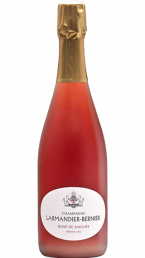
NV Larmandier-Bernier Rosé de Saignée
- 90% Pinot Noir
- 10% Pinot Gris
- 2g/l Dosage
- This technique is rarely used in Champagne: the Pinot grapes are selected on a sorting table, partially destemmed and then macerated for 2 to 3 days before fermentation (indigenous yeasts) in tank or concrete eggs. Malolactic fermentation and then the maturation on the lees for nearly a year. The tirage is carried out at the end of July.
- The wine is aged for at least another 2 years in the cellars, and the bottles are disgorged 6 months before being released.
William Kelley for The Wine advocate, 96 Points: “The latest edition of Larmandier-Bernier’s NV Extra Brut Rosé de Saignée is simply stunning, wafting from the glass with scents of minty red apples, rose petals and blood orange. On the palate, it’s medium to full-bodied, pure and elegant, with a concentrated core of vibrant fruit, a pinpoint mousse and a long, beautifully fragrant finish. This wine’s alliance of delicacy and intensity makes it one of the most exciting rosé bottlings being produced in all of Champagne.”
Antonio Galloni’s Vinous, 93 Points: “The NV Rosé de Saignée is laced with cranberry, orange peel, cinnamon and dried flowers. It’s a gorgeous, seductive Rosé, a Champagne that deftly marries the textural richness that was once such a focus in this bottling with the greater sense of vibrancy that informs today’s wines. Clean mineral accents shape the deceptively understated finish. The blend is 90% Pinot Noir and 10% Pinot Gris, an unusual combination that works quite well here.”
Tyson Stelzer, 95 Points: “This wine is a paradox of the highest order, a salute to the genius of its maker and the depth of its old-vine sources. How a 100% Cote des Blancs rosé from an elegant east-facing Vertus site can land midway between a graceful champagne rose and an expressive red cherry pinot noir is truly astounding. Pierre Larmandicr set out to make ‘a rose, not a white champagne with colour’, marrying the power of pinot noir with the elegance of the village and goodness, has he done it! It’s magnificently youthful, alive with jubilant rose petal, pink pepper, strawberries, raspberries and greengage plums, vibrant. primary and characterfully expressive. layered with mixed spice and white pepper. It’s framed in refreshingly elegant yet perfectly ripe acidity and wonderful chalk minerality of deeply penetrating structure that integrates seamlessly with super-fine tannins. Delightful harmony and persistence top off a brilliant rosé.”
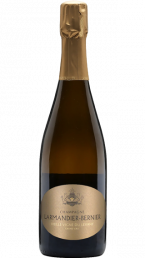
2014 Larmandier-Bernier Vieille Vigne du Levant Grand Cru
- 100% Chardonnay
- 2g/l Dosage
- 100% Cramant
- Fermentation (indigenous yeasts) and malolactic fermentation begin spontaneously in wood. Matured on the lees during their first year, with no filtering or fining being carried out.
- The tirage takes place in July. There’s no blending with other years, and no blending with other terroirs – this is a single-parcel Champagne. The bottles are taken down into the coolness of the cellars and stacked on lattes, the second fermentation takes place and the maturation continues slowly for 9 more years.
The old vines of the Levant face south-east and benefit from an exceptional terroir. They are between 60 and more than 85 years old. Their roots go down deep, and the diversity of the old vine stocks contributes to the complexity of the wine.
William Kelley for The Wine Advocate, 95 Points: “Disgorged in March 2023, the newly released 2014 Extra-Brut Blanc de Blancs Grand Cru Vieille Vigne du Levant unwinds in the glass with aromas of crisp stone fruit, freshly baked bread, white flowers, buttery pastry and clear honey. Full-bodied, pillowy and chiseled, with a sweet core of fruit, tangy acids and a penetrating, electric finish, it’s a terrific success.”
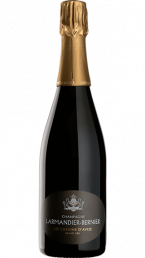
2016 Larmandier-Bernier Les Chemins d’Avize Grand Cru
- 100% Chardonnay
- 2g/l Dosage
- 100% Avize
- Fermentation (indigenous yeasts) and malolactic fermentation begin spontaneously in wood. Matured on the lees during their first year, with no filtering or fining being carried out.
- The tirage takes place in July. There’s no blending with other years, and no blending with other terroirs – this is a single-parcel Champagne. The bottles are taken down into the coolness of the cellars and stacked on lattes, the second fermentation takes place and the maturation continues slowly for 6 more years.
Originating from our two vieilles vignes vineyards in the heart of Avize and the latest of special Champagnes, this distinguished cuvée should be tasted on “alone together” occasions…
Kristaps Karklins for The Wine Advocate, 96 Points: “The 2016 Blanc de Blancs Les Chemins d’Avize, disgorged in April 2024 with a dosage of two grams per liter, is a particular success. Hailing from Le Chemin de Flavigny and Le Chemin de Plivot, located in a flat part of Avize at the bottom of the slope, these are some of the last plots to be harvested, as the fruit ripens more slowly here. Vinified in 20-hectoliter Stockinger vat and barrels of various sizes, it was matured on its lees for 10 months. Informed by the concentration of 50-year-old vines, lower-than-average yields due to mildew pressure and a late-ripening season, it opens from the glass with aromas of marzipan, baked bread, lemon zest and beeswax. Elegantly muscular and vividly chalky, it’s layered and harmonious, underpinned by bright acidity, leading to a precise, long-lasting finish. A more tense, higher-acid version than 2015, it has more in common with the personality of the 2013 vintage.”
Essi Avellan MW, 94 points: “Chemin de Plivot and Chemin de Flavigny plots in Avize grow the grapes for this fine blanc de blancs with a quietly spoken elegance. Soft, richly fruity nose with cool restraint. The carefully mastered oakiness is in perfect sync with the fruit. On the palate, the silky texture and mineral bite bring notions of energy and finesse. Drinking beautifully today.”
Antonio Galloni’s Vinous, 94 Points: “The 2016 Extra Brut Les Chemins d’Avize Blanc de Blancs Grand Cru is a very pretty, exotic Champagne. White flowers, mint, chalk, white pepper and crushed rocks are finely sculpted. Low dosage of 2 grams per liter adds notable tension and verve throughout This savory, super-excessive Champagne will be a fine companion at the dinner table.”
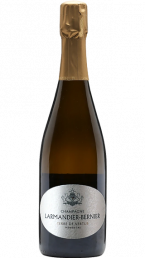
2017 Larmandier-Bernier 1er Cru Terre de Vertus
- 100% Chardonnay
- 0g/l Dosage
- 100% Vertus
- Fermentation (indigenous yeasts) and malolactic fermentation begin spontaneously in wood. Matured on the lees during their first year, with no filtering or fining being carried out.
- The tirage takes place in July. There’s no blending with other years, and no blending with other terroirs – this is a single-parcel Champagne. The bottles are taken down into the coolness of the cellars and stacked on lattes, the second fermentation takes place and the maturation continues slowly for 6 more years.
A pure and frank expression of Vertus on a well-oriented, mid-slope plot. Very original thanks to its salinity and complexity.
Gault & Millau, 96 Points: “Very pretty nose, harmoniously combining ripe notes of dried apricot, mirabelle plum and roasted hazelnuts with juicy yellow peach, nectarine and round dried fruit (mango, pineapple). On aeration, almost toasty notes appear, but without excess. The palate is delicious, with ripeness transcended by incredible freshness and minerality. The palate is all sweetness, light and caressing at the same time, with endless length, without tiring the palate. A great champagne to be enjoyed as an aperitif, at the table or as an after-dinner drink.”
Kristaps Karklins for The Wine Advocate, 93 Points: “The 2017 Brut Nature Blanc de Blancs Terre de Vertus, which derives from two east-facing plots within the same lieu-dit in Les Barillers, located mid-slope, imparts a very mineral, almost crystalline character. A vineyard that rarely produces powerful wines, even in the context of 2017, it has retained its personality, though it’s a little more generous and slightly less focused than the 2016 rendition. Unfurling from the glass with aromas of lemon peel, honeysuckle and oyster shell, it is medium-bodied, racy and saline-tinged and can be approached before the last year’s release. It was disgorged in May 2023.”
Antonio Galloni’s Vinous, 93 Points: “The Brut Nature Blanc de Blancs Terre de Vertus 1er Cru 2017 is creamy, open, and very seductive. Readers will discover a generous and sensual champagne that seduces from the very first sip. Vinification and aging in oak barrels soften its contours. Aromas of dried pear, crushed flowers, mint, and chamomile develop beautifully over time. This is a fine result in a very difficult year. No dosage. Disgorged in May 2023.”
Mike Bennie’s The Wine Front, 95 Points: “This has some concentration and depth, for sure. Slick texture with a core of lime and oyster shell, some fino sherry characters, baked apple, cinnamon spice uplifting, some sour dough notes and preserved lemon. While rich, the acidity is briny and bright, cooling and slips through any generosity to add polish and shine. Almost chewy texture.”

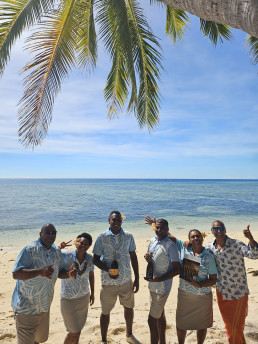
Billecart-Salmon at VOMO Fiji
Champagne Billecart-Salmon at VOMO Fiji
A truly magical experience, enjoying Billecart-Salmon champagnes at the exclusive VOMO Island Resort with a specially curated menu designed to highlight both the unique location and the premium champagnes.
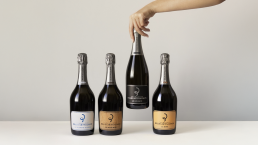
Trade Masterclass & Lunch - “The Evolution of Billecart-Salmon: Purity, Patience, Precision”
Join us at Koji restaurant for an exclusive tasting, hosted by Sebastien Papin of Maison Billecart-Salmon and Brandon Nash.
During this masterclass and lunch, you will be guided through the evolution of this exceptional Grand Marque Champagne house, with a significant focus on their recent efforts to strengthen their house style and ensure quality always remains at the forefront of their endeavours.
Tasting Line-up:
- Welcome Drink:
- Charles le Bel 'Inspiration 1818' Brut
- Lineup:
- Billecart-Salmon Le Blanc de Blancs
- Billecart-Salmon Le Rosé
- Billecart-Salmon Le Réserve
- Billecart-Salmon 2013 Vintage Brut
- Billecart-Salmon 2008 Nicolas Francois cuvée
Seats will be limited. Please contact Brandon to reserve your spot today.
“When you make internationally renowned champagne for 206 years you don’t have to rock the boat, but that’s exactly what Billecart-Salmon has done with the new releases of their flagship non-vintage champagnes. If you’re already a fan of Billecart-Salmon, prepare to love them even more. If you haven’t tried Billecart-Salmon before, it’s time to discover this legendary Grand Maison.”
Philip Roufail
Learn more about the recent changes that guests will taste through before time over on our release, here.
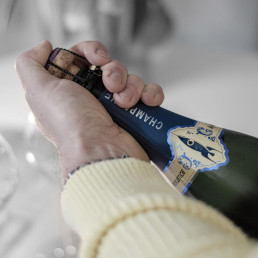
André Clouet: The Full Collection
André Clouet: The Full Collection
When every cuvée is a storied legend, it can be hard to know where to look…
“For those in the know, the rare cuvées of André Clouet are immensely sought-after. You can’t buy these champagnes year-round in Australia, because they quickly sell out as soon as a shipment lands.”
– Tyson Stelzer, Acclaimed Wine Writer & Champagne Expert
We’ve written a number of blogs about our Bouzy Champagne producer, André Clouet, and each reads rather the same – gushing praise, riveting tales and critic scores aplenty.
But each blog has focussed incredibly heavily on an individual cuvée at a time, so we thought it’s time to make the ultimate ‘umbrella’ blog for this wondermaker. The Clouet ‘hub’ if you will.
First, if you wish to read the deep dives we’ve published in the past we highly encourage you to, the links are below;

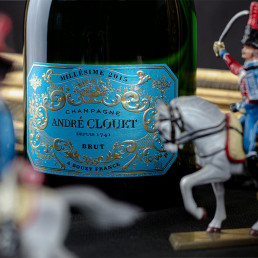
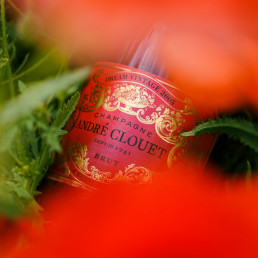
We first brought on Champagne André Clouet in 2017, and we were astounded at the way it managed to capture the hearts and the palates of both our staff and customers immediately.
At the time, we had only brought on their NV Grandé Reserve Brut. It wasn’t one of the ‘big’ Champagne names but it was one that carried with it a lot of respect, with a detectable electric undercurrent of intrigue reserved for only the most ‘boutique’ and ‘in-the-know’ producers.
We soon added their No.5 Brut Rosé and their V6 Experience cuvées to the line up, who have in time also garnered a passionate group of fans here in NZ.
Then in 2024, we opted to bring in a small allocation of NV Chalky Blanc de Blancs and sold out by word of mouth before we’d had a chance to properly launch it. “Loud and clear…” we thought, and we’re now on our 4th order of this clearly phenomenal cuvée.
Shortly after Chalky’s success, we added the 2005 Dream Vintage, 2015 Millesime Empire and the NV ‘Un Jour de 1911’ to our stable, rounding out the offering to a seriously respectable 7 phenomenal champagnes.
“His champagnes offer that something else, without the Hollywood budget, yet with pyrotechnics all of their own.”
– Tyson Stelzer
NV Champagne André Clouet Grande Réserve Brut
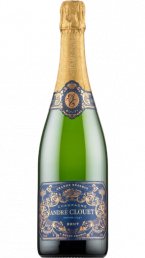
- 100% Pinot Noir (Blanc de Noirs) from Bouzy
- Ageing: 36 Months On Lees (Minimum Champagne NV requirement: 15 months)
- Dosage: 8 g/L
- 12% Alc.
- 30% Reserve wines
- Producer Technical Sheet
Enchanting pale gold. Toasted and fruity nose, a bit smoky. Light and juicy with a bit of zest at the lightly sweet finish.
- Tyson Stelzer, 94 Points: “Release after release, year after year, I have always marvelled at the lemon blossom freshness that Clouet manages to capture in pinot noir from two of Champagne’s most powerful terroirs. Here it is again, in a captivating interplay of fleshy mirabelle plums, white peaches, crunchy golden delicious apples, and even a hint of pepper. Wild honey and mixed spice join the maelstrom along the way, gliding obediently into a well defined finish of soft minerality and integrated dosage.”
- Lobenberg Wine Guide, 93 Points: “Strong and lush, very creamy, mild acidity, great perlage, very intense and expressive. You could easily decant it. No branded champagne can achieve this extremely good substance in terms of quality. Fantastically creamy apple note, nuts and pear in the aftertaste, infinitely charming and everybody’s darling. Unique in the price range.”
- Decanter, 92 Points: “Incredible value for a blanc de noirs (100% Pinot Noir) grower Champagne from the grand cru vineyards of Bouzy. It shows gorgeous aromas of stone fruit, citrus and strawberry, with complex brioche nuances, remarkable balance, ongoing elegance and a rich, refined, persistent finish.”
- Wine Spectator, 90 Points: “Whole-grain bread, malt and candied berry aromas and flavors highlight this intense yet creamy Champagne, which picks up a floral accent as it cruises to a long, mouthwatering finish.”
Honestly, this entry level NV cuvée is way better than any champagne in this tier has any right to be, but that’s what you get when you veer from the path less travelled and look at some of these genius growers.
The Grande Réserve boasts a super eye-catching deep blue label with gold leaf filigree designs that hark back to the Clouet family’s roots as printers for the French monarchy in centuries past, and the drop inside is just as fine. In Clouet’s own words:
“I like to think of the Grande Réserve like a vintage collection of “Greatest Hits”. Imagine being transported by the effervescence of Champagne, letting yourself feel the magic of musical masterpieces as they explode on your palate!”
NV Champagne André Clouet Brut Rosé No.5
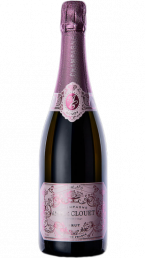
- 100% Pinot Noir (Blanc de Noirs) from Bouzy. 90% BdN and 10% Rouge de Bouzy
- Dosage: 5.1 g/L
- 12.2% Alc.
- Producer Technical Sheet
A bright salmon colour with fine bubbles. Delicious fruit aromas with toasted notes. The palate is creamy and elegant with forest fruits, smoke and mineral notes.
- Tyson Stelzer, 94 Points: “Boasting a full ruby hue, No5 is notably deeper than No3 in both appearance and flavour. As flamboyant and exuberant as its maker himself, it brims with wild strawberries, raspberries and morello cherries, encapsulating that wonderful talent of great pinot to build and rise triumphantly on the finish. For all of its generosity, it never deviates from the control and precision of the house, focused by bright acidity and the omnipresent chalk minerality that underscores this legendary village. A great expression of the freshness, mineral airiness and presence of Bouzy pinot noir.”
- Bob Campbell, 95 Points: “Bold, full-flavoured rosé Champagne with pronounced fruit and floral flavours including red rose petal, pot-pourri, and baguette crust. Delicious wine in quite a mellow style with restrained acidity. Seriously good Champagne.”
- Cameron Douglas, 93 Points: “Floral, fresh and distinctive with a mix of light red berry fruit aromas, balanced and even autolysis and moderate complexity. Quite delicious on the palate with a red cherry, red apple and fine red strawberry core, baked goods and a whisper of spice.”
A story the family loves to tell is that of André Clouet’s memorable interaction with Marie Antoinette.
In 1770, the future Queen of France visited the vineyards in Bouzy and a dinner in her honour was organised in a castle not far from the village. Andre Clouet was in attendance and decided to entertain the guests at the Queen’s table by adding a few drops of red wine from their vineyards to the white wine. Known as “Bouzy Rouge,” this Vin des Sacres, was the red wine served to celebrate the crowning of the French Kings.
On that night, it’s said the ladies’ eyes began to sparkle with amazement as the white wine became pink!
The men raised a toast to the Queen and André Clouet proclaimed: “This is how we perfect Pinot Noir in Champagne! Now the Burgundians will just have to deal with it!”
A few years later, a cousin placed an order for some of this ‘pink wine’, but sparkling this time, for her “crazy English friends!”
NV Champagne André Clouet The V6 Experience
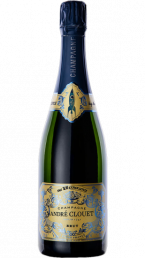
- Pinot Noir with dosage based on a liqueur of barrel-aged chardonnay and refined sugar
- Dosage: 4 g/L (as above)
- Aged 72 months on lees (six years, the ‘6’ in ‘V6’)
- 12% Alc.
- Producer Technical Sheet
A bright golden colour. Powerful nose of lightly candied fruit and spice. Accelerating on the palate with notes of ginger bread with sweet citrus.
- Wine Advocate, 93 Points: “Aged for six years on the second lees, the yellow-golden NV Brut The V6 Experience is a Bouzy Pinot Noir that displays great purity and intensity but also reduction on the mineral-scented nose. This is deep and complex, but it needs all our patience and perhaps even a decanter or at least a big glass and lots of aeration. The palate is rich and powerful, firmly structured, very tight and still astringent on the finish, but there is so much finesse paired with power, concentration and fruit, which give the V6 a promising future. The wine just starts a bit slowly (like a rocket, which is pictured on the label), but it will most probably go very steep in a couple of years. I have[n’t] ever had this cuvée before, so I can only guess, though. (Tasted 2021)”
- Tyson Stelzer, 92 Points: “Jean-Francois describes pinot noir as entering a phase he dubs ‘The Whirlwind’ in its sixth year of maturation. The rest of his inspiration is impossible to put into words, but clicking on ‘Cuvée Design Specification’ on his website will put you on the right trajectory. For the exuberance of Bouzy Pinot Noir and not inconsiderable age, the freshness packed into this cuvée is something to behold. Grapefruit tang meets crunchy red apple fruit, contrasting the generosity and spice of the village and the tension of zero dosage. Get on board.”
- Vinum Magazine, 18/20 Points: “What a champagne! A single-varietal Pinot Noir, “V6” stands for six years of aging on the lees. The golden yellow color alone promises much. Expansive, baroque, ripe aromas with candied fruits, apricot pastries, dates, and caramel. Gripping on the palate, it’s superbly present, with delicate fruitiness and wonderfully juicy acidity.”
The V6 experience is one close to Jean-Francois Clouet’s heart and is possibly one of the most underrated champagnes in our portfolio, as it showcases the brilliance of pinot noir and expert winemaking.
Being based in Bouzy, Jean-Francois is a pinot guy. He works wonders with all varietals, but pinot is where he shines and what his family have been growing for generations. This intimate knowledge gives him incredible insight and has allowed him to really hone in on the quirks and patterns in pinot winemaking. Something he’s noticed is how pinot reaches a really special stage of maturation at around 6 years…
“Pinot Noir does not mature directly, in linear fashion. Upon reaching its 6th year, it passes into a phase known as “The Whirlwind”,” Clouet explains. “Propelled by an unseen force it reaches outward, taking on another dimension. The wine becomes charged with energy and vibrations. It glows… and becomes transcendent! Deep, bright, effervescent… Taking off and on approach to Celestial Harmony. As you taste it, prepare yourself to be launched like a rocket ship toward a mysterious, resplendent Star-shine, emanating from the Pinot Noir Galaxy.
3.2.1…. Blast off!”
NV Champagne André Clouet Chalky Blanc de Blancs Brut
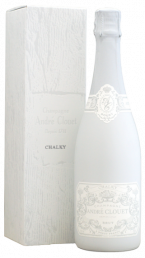
- 100% Chardonnay (1/3 from the southern slopes of the Montagne de Reims, 2/3 from the Côte de Blancs)
- Ageing: 72 Months On Lees
- Dosage: 6g/L
- 12% Alc.
- Producer Technical Sheet
A bright golden colour. Powerful nose of lightly candied fruit and spice. Notes from the aromas accelerate on the palate with added notes of ginger bread with sweet citrus. Expect a lively, salty, mineral inflected wine. Perfect for an aperitif or with fresh oysters.
- Lobenberg Wine Guide, 96 Points: “What does 200 million years of manifest minerality taste like? Jean-Francois Clouet put the answer in this bottle. A completely new wine in Clouet’s portfolio, bottled in a special white-coated bottle with a matching box in a chalk cliff design… As the name suggests, Chalky tastes like the salty-chalky purism of the chalk soils of Champagne, but it wouldn’t be a Clouet if it didn’t also exude a wonderful, melting charm and seductive appeal. 200 million years of minerality poured into the bottle as liquid chalk, what a smooth, delicious mineral hammer!”
- Sally Hillman: “Taking to the Chardonnay vines with the precision of a Renaissance sculptor, Jean-François Clouet carves a brand-new, pure and flawless Blanc de Blancs cuvée from Champagne’s deep, chalky bedrock.”
- Falstaff Magazine, 93 Points: “Medium golden yellow. Quite classic on the nose with citrus notes, exotic fruit nuances of mango and passion fruit. Elegant on the palate with a fine mousse, a noticeable impression of sweetness and a certain minerality. Complex even in the long aftertaste with smoky nuances.”
‘Chalky’ draws reference to the very soils which made Champagne famous.
“No matter what I do, chalky soil is stuck to the soles of my shoes. It’s been a part of me since I was a child!”
– Jean-François Clouet
Chalky is a particularly noteworthy addition to the Clouet lineup in that it’s a deviation from their cornerstone varietal, Pinot Noir. The Chalky Blanc de Blancs was aged an astonishing 72 months on lees – or six years. The base wines of this initial NV release come from the “late-ripening, almost brutally brilliant year” (Lobenburg) 2013. Disgorgement was in 2021, with a dosage of 6g. The resulting wine is creamy, mineral and – you guessed it – chalky.
2005 Champagne André Clouet Dream Vintage Grand Cru
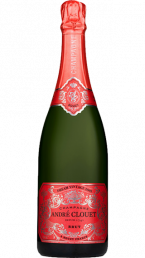
- 100% Grand Cru Chardonnay (Blanc de Blancs)
- Dosage: 2.4g/L
- No oak
- 12% Alc.
- Producer Technical Sheet
A golden yellow hue and brimming with luscious golden delicious apple and pineapple fruit, true to this warm vintage. It’s a spicy and rich style and it relies on this generosity in order to carry the dry phenolic grip and coffee and cocoa notes of the season.
- James Suckling, 93 Points: “If you like mature champagnes then this has a lot of depth and offers a lot of pleasure. Tons of nutty character (also a touch of peanut) and plenty of toasty notes, the dried-fruit aromas very much in the background. Long and intense finish that’s properly dry. 100% chardonnay. Drink now.”
- Lobenberg, 95-96+ Points): “The 2005 vintage gave the Chardonnay wines exceptional quality. Fresh, noble and with a long finish. They develop aromas of white flowers, citrus fruits and mineral notes. Enjoyable early and yet long-lasting.”
- Tyson Stelzer, 90 Points: “Jean-François prefers his 2005 Dream Collection to 2008. Both accurately articulate the mood of their contrasting seasons, the 2005 is already a golden yellow hue and brimming with luscious golden delicious apple and pineapple fruit, true to this warm vintage. It’s a spicy and rich style and it relies on this generosity in order to carry the dry phenolic grip and coffee and cocoa notes of the season.”
Everyone knows vintage Champagne has a little something extra to offer – we’ve blogged about it pretty extensively before, which we’ll touch on here but like all his cuvées, André Clouet adds extra to that extra.
In their own words; “The Dream Vintage collection is a masterful gourmet retrospective dedicated to the great vintages of Champagne. This collection is crafted with a base of Chardonnay, known for its elegance and finesse. The equipment is reminiscent of the great Cadillac classics: Fiesta Red, Chrystal Green, Ebony Black, and other colors that make big dreams come true.”
2015 Champagne André Clouet “Millésimé Empire” (Symphony Cap Leopard)
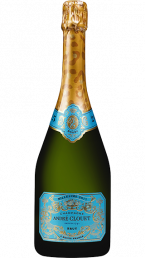
- 50% Grand Cru Chardonnay (Côte des Blancs)
- 50% Grand Cru Pinot Noir (Bouzy)
- Dosage: 4.8g/L
- 12% Alc.
- Producer Technical Sheet
Explosive potential, with a creamy, intense body. The Chardonnay component adds a touch of delicacy and freshness. On the palate, crisp pear is accompanied by the richness of golden and baked apples, all held together by the acidity of grapefruit.
- Lobenberg, 94 Points (2023): “Powerful, direct and intense. Terrific fabric like the 2012 one, but just as durable. Vital acidity and high concentration from low yields, with fine tannins in the intensive, long finish, which shows a lot of pressure and arrives youthfully agile, of exceptional class. Possesses an explosive potential with a creamy intense body. The small amount of Chardonnay also gives it some delicacy. He can certainly remain at the extremely high level for over 20 years of permanent change towards maturity.”
The ‘Millésimé Empire’ celebrates and captures Napoleon’s ‘Chasseurs à Cheval’ (‘mounted hunters’) – courageous and daring! “The Millésimé Empire is a cavalry charge of flavors, where the finesse of Chardonnay cuts like a blade, and the strength of Pinot Noir echoes the power of a noble mount. Long live the emperor!”
NV Champagne André Clouet ‘Un jour de 1911’ Grand Cru
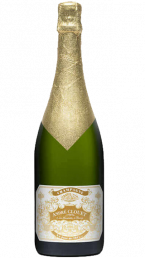
- 100% Grand Cru Pinot Noir (Bouzy)
- Dosage: 4.0 g/L
- 12% Alc.
- 50/50 blend of three vintages (including one great millésime at least 10 years old) and reserve wines from a solera system
- Aged 100% on the lees in Barrels for 120-150 months
- Producer Technical Sheet
This 100% Pinot Noir cuvée, with its brilliant golden color, combines maturity and complexity with intensity and elegance. It is a rich, well-balanced Champagne. Its mineral tension and persistence on the palate make it a first choice for elaborate dishes.
- Robert Parker’s The Wine Advocate, 96 Points (2021): “The NV Un jour de 1911… is another 100% Bouzy Pinot Noir with an ancient label design. The shining golden-colored cuvée combines ripeness, complexity and finesse with intensity and elegance on both the nose and palate. It’s a powerful and rich yet very fine and balanced Champagne with great freshness and complex length. It is juicy and intense but also highly delicate, and its mineral tension and persistent finish make it a first-class wine for elaborate dishes. A great Champagne, with a label that doesn’t give any more detailed information regarding vintages or disgorgement date, but we know it’s always a 50/50 blend of three vintages (including one great millésime at least 10 years old) and reserve wines from a solera system… You shouldn’t drink it too early, as it would be a waste of its talents. Drink 2021 – 2033.
- Falstaff, 95 Points (2020): “Rich, bright golden yellow. Intense bouquet, brioche notes, ripe stone fruit, dried apple and a little nougat. Complex, full-bodied with exotic hints of ripe pineapple on the palate. Very finely tuned mousse, salty underlay, with fresh acid structure. A creamy honey touch on the finish, full-bodied with noteworthy length. Very good ageing potential. Great.”
- James Suckling, 95 Points (2021): “A rich and expansive champagne with tons of mature aromas of dried fruit (apricots!) and candied orange. Teeters on the edge of decadence, but has enough vitality to stay on the right side of that line. Plenty of textural complexity on the palate and a long, chalky finish that keeps giving and giving. Spot-on balance. Drink or hold.”
Only the top 10% of their Grand Cru classified grapes (which are some of the best Pinot Noir grapes in all of Champagne) are used for this wine, and it shows!In Clouet’s words, this wine is a “Champagne fairytale’…
“Once upon a time, a few precious bottles were hidden away in a small cellar for more than 80 years. By a stroke of luck they were found and became the inspiration for a champagne tribute to the Golden Age we like to call “Un jour de 1911”. (Translation: “One day in 1911”).
We were overcome with sentimental nostalgia when we recovered those bottles, saving them from oblivion. Memories of old Aunt Jenny came flooding back. She had always spoken about them with a sparkle in her eye, remembering their presence at every resplendent celebration and happy occasion during those dazzling early years of the 1900s.
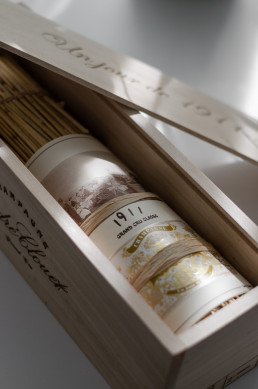
Carefully packed with straw, protected in their wooden cases, each bottle was beautifully dressed with a gold foil collar, painstakingly applied by hand and shapely suggestive of a woman’s plunging neckline. Belle Époque graphic design on the labels transported us back to the Golden Age of France, a time of prosperity, optimism and creative freedom when the arts began to flourish.”
Champagne André Clouet
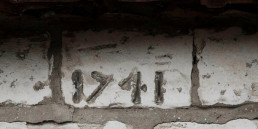
The Clouet family history in Bouzy dates back to the 1400’s. Before their vinous adventures, the Clouet ancestors were the appointed printers for the French monarchs.
Over the next 200 years and through several generations, the family slowly accumulated vineyards in Bouzy before finally, in 1741 they first started to make Champagne. Cellars were dug into the chalky soils and the family set down their roots officially in the town they’d spent several centuries in under the watchful eye of one André Clouet.
“During Creation, when God grew weary of sculpting the mountings, razing the deserts and firing up the volcanoes, he treated himself to a few moments of pleasure. He designed a little earthly paradise called Bouzy.”
André Clouet’s descendants took over his estate, ensuring that it remained in the family. The property had aged but has now been modernised, and the team working to perpetuate the House of André Clouet is inspired above all by the desire to preserve the personality of its champagnes.
“Jean-François is deeply rooted in the heritage of his village,” explains Tyson Stelzer in his book, The Champagne Guide 2020-2021 Edition VI, “He still possesses his family’s request for a deed for the purchase of land in Champagne by their ancestors in 1689 and a letter from the 1820’s requesting an order of Rosé to be sent to Paris.”
A story the family loves to tell is that of André Clouet’s memorable interaction with Marie Antoinette. In 1770, the future Queen of France visited the vineyards in Bouzy and a dinner in her honour was organised in a castle not far from the village. Andre Clouet was in attendance and decided to entertain the guests at the Queen’s table by adding a few drops of red wine from their vineyards to the white wine. Known as “Bouzy Rouge,” this Vin des Sacres, was the red wine served to celebrate the crowning of the French Kings.
On that night, it’s said the ladies’ eyes began to sparkle with amazement as the white wine became pink!
The men raised a toast to the Queen and André Clouet proclaimed: “This is how we perfect Pinot Noir in Champagne! Now the Burgundians will just have to deal with it!”
A few years later, a cousin placed an order for some of this ‘pink wine’, but sparkling this time, for her “crazy English friends!”
Jean-François Clouett
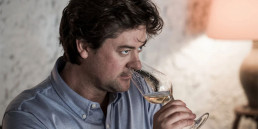
Jean-François is the larger-than-life current generation of the Clouet line and is at the helm of this family Estate. Growing up amongst the vines, the vineyards are in his blood. He’s been described as many things – a wizard, a wonder, a ringmaster… and all of these may be true but there’s no doubt his legacy will also recognise him as a phenomenal vigneron.
“One of the living rock stars of Champagne, Jean-François choreographs every element of his business with his inimitable flair and accomplishment…”
– Tyson Stelzer
A fun story he enjoys telling pertains to the tanks and barrels that age the wines;
“When I was a little boy, I loved walking around the wine-making cellar. In my imagination, the enormous wine tanks transformed and became champions, guardians, protectors of the wine…
My Heroes! Creaking, wheezing, groaning, squealing, sweating… sometimes they even seemed to be laughing! I watched the noisy show, as some were gushing from their nozzles, while others were being filled up. I grew up learning to play with my heroes who live in the wine-cellars.
Each has its own name and personality to share and their attributes come alive in the wines:
Superman, Zeus, and Thor lend their power to the Cuvée Grande Reserve.
Laser, D’artagnan and Zorro transmit their intensity, tension and minerality to the Brut Silver.
Sophie Marceau, Heather Locklear and Michelle Pheiffer flirt beautifully with the Rosé.
Rocky comes out swinging to make a Dream Vintage!
As I blend to create champagne, I work to find the perfect balance of characteristics that come from all my remarkable, dauntless heroes: the Stainless Steel Giants.”
Listen to Tyson Stelzer…
You can choose to take our word for it when it comes to Clouet’s brilliance, but if you don’t then you must listen to Tyson Stelzer.
Already quoted a few times in this piece, he is a multi-award winning wine writer, television host and producer and international speaker. Tyson has been named The International Wine & Spirit Communicator of the Year, The Australian Wine Communicator of the Year and The International Champagne Writer of the Year. He is the author and publisher of seventeen wine books, contributor to many wine magazines, a frequent judge and chair at Australian wine shows and a presenter at wine events in 12 countries. All this to say: he knows his wine and is great at articulating the magic where mere mortals fall short!
“Jean-François is a courageous visionary and an ebullient creative with the nous to bring his dreams to completion and the humility to gather round him the talent to make it happen.”
In 2017, Tyson published an article titled “Is this the most underrated champagne grower of all?” which is a poetic and beautiful summation of this Champagne House, which we’ve detailed below, or that you can read here.
“It’s always puzzled me that the remarkable, terroir-expressive champagnes of André Clouet never seem to come up among the rockstar growers of Champagne. And yet on the basis of his current cuvées, I have again anointed this little grower in the grand cru village of Bouzy among the top six growers in Champagne. This of course places him among the top sparkling growers on earth. My scores rank him equal to Dom Pérignon, Louis Roederer and Taittinger. And that’s mighty company!
For those in the know, the rare cuvées of André Clouet are immensely sought-after. You can’t buy these champagnes year-round in Australia, because they quickly sell out as soon as a shipment lands. Cru Bar in Brisbane recently told me of a pallet arriving and selling before the staff even had time to unpack it into the store.
I am always intrigued that something of the personality of the maker is translated into the character of all great wines. In this, the wines of Jean-François Clouet capture a profound and intriguing juxtaposition.
The man and his cuvées are deeply rooted into the multilayered and convoluted history of Champagne, arguably more than any other. He is the privileged custodian of eight hectares of estate vines in the best middle slopes of Bouzy and Ambonnay, the epicentre of pinot noir in Champagne. His family heritage in Bouzy extends back to 1492 and they have been making their own champagnes here since the early 1700s.
Every time I introduce new friends to Jean-François, he doesn’t first show us through his winery or cellars, doesn’t walk us through rows of vines, or even pour his champagnes. He takes us to the top of the vineyards, on the edge of the forest overlooking Bouzy, and recounts the remarkable sweep of history that has played out in view of this place over two millennia, and the role his own family has played in the stories: Attila the Hun, the Battle of the Catalaunian Fields, the birth of the monarchy, the crusades, the Templars, Marie Antoinette. ‘To understand Champagne you need to understand its political history,’ he says.
It’s a history that lives on in his champagnes, both in spectacularly classical labels designed by his great grandfather in 1911 (harking back to the family’s printer heritage, making books for the king since 1491), and in a traditional approach in the vineyards and the cellar. ‘I like the idea of the work of human hands in pruning, performing the same actions as my grandfather and even the Romans, who planted vines here 2000 years ago.’
Such deep heritage makes for a striking contrast to the flamboyant personality of Jean-François, dubbed by one of my recent guests as ‘a combination of winemaker and circus ringmaster.’
He is daringly creative, with a distinctly modern twist to his approach. It is his goal that some day none of his champagnes will have any dosage at all, an ideal that he rightly describes as revolutionary.
His are rich and concentrated expressions of pinot noir, wines of deep complexity, multifaceted interest and engaging character, yet with remarkable restraint and sense of control. Tasting after tasting confirm my impression that this small and relatively unknown grower ranks high among Champagne’s finest practitioners of pinot noir — and represents one of the best value of all.
And yet for all of his success, this extroverted young chef de cave doesn’t take himself too seriously. ‘Champagne is always for flirting!’ he grins.
Visits with Jean-François are always recounted as a highlight by my little tour groups in Champagne, and it has long been my dream to introduce my knowledgeable and entertaining friend in Australia.”
One Day In 1911...

“For those in the know, the rare cuvées of André Clouet are immensely sought-after. You can’t buy these champagnes year-round in Australia, because they quickly sell out as soon as a shipment lands.”
– Tyson Stelzer, Acclaimed Wine Writer & Champagne Expert
We have covered André Clouet in detail before, through the lens of various new cuvées we’ve brought on. If you want to learn about these, here are the links;
When we first brought on Champagne André Clouet in 2017, we were astounded at the way it managed to capture the hearts and the palates of both our staff and customers immediately.
At the time, we had only brought on their NV Grandé Reserve Brut – a 100% Pinot Noir Champagne from their family vineyards in Bouzy and adorned with an intricate blue and gold label designed in 1911. It wasn’t one of the ‘big’ Champagne names but it was one that carried with it a lot of respect, with a detectable electric undercurrent of intrigue reserved for only the most ‘boutique’ and ‘in-the-know’ producers.
We soon added their No.5 Brut Rosé and their V6 Experience cuvées to the line up, who have in time also garnered a passionate group of fans here in NZ. Then, earlier this year we ordered a few hundred bottles of his Blanc de Blancs – Chalky – which sold out by word of mouth within two hours of booking the stock, a 2005 Vintage bottling of their ‘Dream Vintage’ and the 2015 “Millésimé Empire” (Symphony Cap Leopard).
Which brings us to today, and also kind of brings us back in time, to one day in 1911…
“His champagnes offer that something else, without the Hollywood budget, yet with pyrotechnics all of their own.”
– Tyson Stelzer
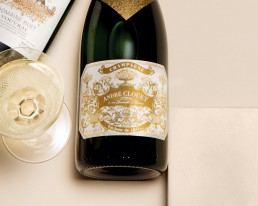
‘Un Jour de 1911’ Grand Cru by André Clouet
In Clouet’s words, this wine is a “Champagne fairytale’…
“Once upon a time, a few precious bottles were hidden away in a small cellar for more than 80 years. By a stroke of luck they were found and became the inspiration for a champagne tribute to the Golden Age we like to call “Un jour de 1911”. (Translation: “One day in 1911”).
We were overcome with sentimental nostalgia when we recovered those bottles, saving them from oblivion. Memories of old Aunt Jenny came flooding back. She had always spoken about them with a sparkle in her eye, remembering their presence at every resplendent celebration and happy occasion during those dazzling early years of the 1900s.
Carefully packed with straw, protected in their wooden cases, each bottle was beautifully dressed with a gold foil collar, painstakingly applied by hand and shapely suggestive of a woman’s plunging neckline. Belle Époque graphic design on the labels transported us back to the Golden Age of France, a time of prosperity, optimism and creative freedom when the arts began to flourish.
The House of André Clouet invites you to enjoy Un jour de 1911 the revival of a rediscovered gem from one of the best vineyards in the world. Working with the finest craftsmen, we bring you the magical renaissance of champagne production from the 1900s.”
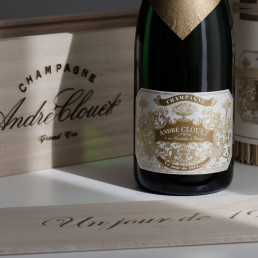
Champagne André Clouet
“Un Jour de 1911” Grand Cru (One Day in 1911)
- 100% Grand Cru Pinot Noir (Bouzy)
- Dosage: 4.0 g/L
- 12% Alc.
- 50/50 blend of three vintages (including one great millésime at least 10 years old) and reserve wines from a solera system
- Aged 100% on the lees in Barrels for 120-150 months
- This 100% Pinot Noir cuvée, with its brilliant golden color, combines maturity and complexity with intensity and elegance. It is a rich, well-balanced Champagne. Its mineral tension and persistence on the palate make it a first choice for elaborate dishes.
Robert Parker’s The Wine Advocate, 96 Points (2021): “The NV Un jour de 1911… is another 100% Bouzy Pinot Noir with an ancient label design. The shining golden-colored cuvée combines ripeness, complexity and finesse with intensity and elegance on both the nose and palate. It’s a powerful and rich yet very fine and balanced Champagne with great freshness and complex length. It is juicy and intense but also highly delicate, and its mineral tension and persistent finish make it a first-class wine for elaborate dishes. A great Champagne, with a label that doesn’t give any more detailed information regarding vintages or disgorgement date, but we know it’s always a 50/50 blend of three vintages (including one great millésime at least 10 years old) and reserve wines from a solera system. I tasted the wine as a Brut with Clouet’s German importer in Bremen. You shouldn’t drink it too early, as it would be a waste of its talents. Drink 2021 – 2033.”
Falstaff, 95 Points (2020): “Rich, bright golden yellow. Intense bouquet, brioche notes, ripe stone fruit, dried apple and a little nougat. Complex, full-bodied with exotic hints of ripe pineapple on the palate. Very finely tuned mousse, salty underlay, with fresh acid structure. A creamy honey touch on the finish, full-bodied with noteworthy length. Very good ageing potential. Great.”
James Suckling, 95 Points (2021): “A rich and expansive champagne with tons of mature aromas of dried fruit (apricots!) and candied orange. Teeters on the edge of decadence, but has enough vitality to stay on the right side of that line. Plenty of textural complexity on the palate and a long, chalky finish that keeps giving and giving. Spot-on balance. Drink or hold.”
Champagne André Clouet
The Clouet family history in Bouzy dates back to the 1400s. Before their vinous adventures, the Clouet ancestors were the appointed printers for the French monarchs. Over the next 200 years and through several generations, the family slowly accumulated vineyards in Bouzy before finally, in 1741 they first started to make Champagne. Cellars were dug into the chalky soils and the family set down their roots officially in the town they’d spent several centuries in under the watchful eye of one André Clouet.
“During Creation, when God grew weary of sculpting the mountings, razing the deserts and firing up the volcanoes, he treated himself to a few moments of pleasure. He designed a little earthly paradise called Bouzy.”
André Clouet’s descendants took over his estate, ensuring that it remained in the family. The property had aged but has now been modernised, and the team working to perpetuate the House of André Clouet is inspired above all by the desire to preserve the personality of its champagnes.
“Jean-François is deeply rooted in the heritage of his village,” explains Tyson Stelzer in his book, The Champagne Guide 2020-2021 Edition VI, “He still possesses his family’s request for a deed for the purchase of land in Champagne by their ancestors in 1689 and a letter from the 1820’s requesting an order of Rosé to be sent to Paris.”
A story the family loves to tell is that of André Clouet’s memorable interaction with Marie Antoinette. In 1770, the future Queen of France visited the vineyards in Bouzy and a dinner in her honour was organised in a castle not far from the village. Andre Clouet was in attendance and decided to entertain the guests at the Queen’s table by adding a few drops of red wine from their vineyards to the white wine. Known as “Bouzy Rouge,” this Vin des Sacres, was the red wine served to celebrate the crowning of the French Kings.
On that night, it’s said the ladies’ eyes began to sparkle with amazement as the white wine became pink!
The men raised a toast to the Queen and André Clouet proclaimed: “This is how we perfect Pinot Noir in Champagne! Now the Burgundians will just have to deal with it!”
A few years later, a cousin placed an order for some of this ‘pink wine’, but sparkling this time, for her “crazy English friends!”
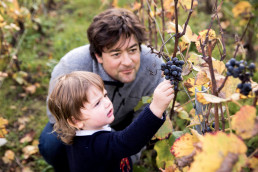
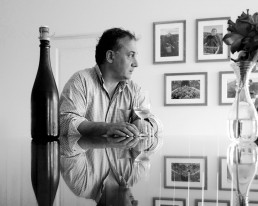
Jean-François Clouet
Jean-François is the larger-than-life current generation of the Clouet line and is at the helm of this family estate. Growing up amongst the vines, the vineyards are in his blood. He’s been described as many things – a wizard, a wonder, a ringmaster… and all of these may be true but there’s no doubt his legacy will also recognise him as a phenomenal vigneron.
“One of the living rock stars of Champagne, Jean-François choreographs every element of his business with his inimitable flair and accomplishment…”
– Tyson Stelzer
A fun story he enjoys telling pertains to the tanks and barrels that age the wines;
“When I was a little boy, I loved walking around the wine-making cellar. In my imagination, the enormous wine tanks transformed and became champions, guardians, protectors of the wine…
My Heroes! Creaking, wheezing, groaning, squealing, sweating… sometimes they even seemed to be laughing! I watched the noisy show, as some were gushing from their nozzles, while others were being filled up. I grew up learning to play with my heroes who live in the wine-cellars.
Each has its own name and personality to share and their attributes come alive in the wines:
Superman, Zeus, and Thor lend their power to the Cuvée Grande Reserve.
Laser, D’artagnan and Zorro transmit their intensity, tension and minerality to the Brut Silver.
Sophie Marceau, Heather Locklear and Michelle Pheiffer flirt beautifully with the Rosé.
Rocky comes out swinging to make a Dream Vintage!
As I blend to create champagne, I work to find the perfect balance of characteristics that come from all my remarkable, dauntless heroes: the Stainless Steel Giants.”
Listen to Tyson Stelzer…
You can choose to take our word for it when it comes to Clouet’s brilliance, but if you don’t then you must listen to Tyson Stelzer.
Already quoted a few times in this piece, he is a multi-award winning wine writer, television host and producer and international speaker. Tyson has been named The International Wine & Spirit Communicator of the Year, The Australian Wine Communicator of the Year and The International Champagne Writer of the Year. He is the author and publisher of seventeen wine books, contributor to many wine magazines, a frequent judge and chair at Australian wine shows and a presenter at wine events in 12 countries.
All this to say: he knows his wine and is great at articulating the magic where mere mortals fall short!
“Jean-François is a courageous visionary and an ebullient creative with the nous to bring his dreams to completion and the humility to gather round him the talent to make it happen.”
In 2017, Tyson published an article titled “Is this the most underrated champagne grower of all?” which is a poetic and beautiful summation of this Champagne House, which we’ve detailed below, or that you can read here.
“It’s always puzzled me that the remarkable, terroir-expressive champagnes of André Clouet never seem to come up among the rockstar growers of Champagne. And yet on the basis of his current cuvées, I have again anointed this little grower in the grand cru village of Bouzy among the top six growers in Champagne. This of course places him among the top sparkling growers on earth. My scores rank him equal to Dom Pérignon, Louis Roederer and Taittinger. And that’s mighty company!
For those in the know, the rare cuvées of André Clouet are immensely sought-after. You can’t buy these champagnes year-round in Australia, because they quickly sell out as soon as a shipment lands. Cru Bar in Brisbane recently told me of a pallet arriving and selling before the staff even had time to unpack it into the store.
I am always intrigued that something of the personality of the maker is translated into the character of all great wines. In this, the wines of Jean-François Clouet capture a profound and intriguing juxtaposition.
The man and his cuvées are deeply rooted into the multilayered and convoluted history of Champagne, arguably more than any other. He is the privileged custodian of eight hectares of estate vines in the best middle slopes of Bouzy and Ambonnay, the epicentre of pinot noir in Champagne. His family heritage in Bouzy extends back to 1492 and they have been making their own champagnes here since the early 1700s.
Every time I introduce new friends to Jean-François, he doesn’t first show us through his winery or cellars, doesn’t walk us through rows of vines, or even pour his champagnes. He takes us to the top of the vineyards, on the edge of the forest overlooking Bouzy, and recounts the remarkable sweep of history that has played out in view of this place over two millennia, and the role his own family has played in the stories: Attila the Hun, the Battle of the Catalaunian Fields, the birth of the monarchy, the crusades, the Templars, Marie Antoinette. ‘To understand Champagne you need to understand its political history,’ he says.
It’s a history that lives on in his champagnes, both in spectacularly classical labels designed by his great grandfather in 1911 (harking back to the family’s printer heritage, making books for the king since 1491), and in a traditional approach in the vineyards and the cellar. ‘I like the idea of the work of human hands in pruning, performing the same actions as my grandfather and even the Romans, who planted vines here 2000 years ago.’
Such deep heritage makes for a striking contrast to the flamboyant personality of Jean-François, dubbed by one of my recent guests as ‘a combination of winemaker and circus ringmaster.’
He is daringly creative, with a distinctly modern twist to his approach. It is his goal that some day none of his champagnes will have any dosage at all, an ideal that he rightly describes as revolutionary.
His are rich and concentrated expressions of pinot noir, wines of deep complexity, multifaceted interest and engaging character, yet with remarkable restraint and sense of control. Tasting after tasting confirm my impression that this small and relatively unknown grower ranks high among Champagne’s finest practitioners of pinot noir — and represents one of the best value of all.
And yet for all of his success, this extroverted young chef de cave doesn’t take himself too seriously. ‘Champagne is always for flirting!’ he grins.
Visits with Jean-François are always recounted as a highlight by my little tour groups in Champagne, and it has long been my dream to introduce my knowledgeable and entertaining friend in Australia.”
Champagne Egly-Ouriet: Finest of the Fine Cult Growers
Champagne Egly-Ouriet: Finest of the Fine Cult Growers

Egly-Ouriet (Egg-lee Ou-ree-yair) is to Champagne-lovers what a Steinway is to pianists, or a Phillipe Dufour is to watch collectors. That is to say, for those in the know, the mere mention can make the heart skip a beat and eyebrows nudge upward.
Rather than relying on heavy marketing or drama, they’re all about boutique excellence – maintaining extraordinary quality yet somehow retaining a sense of what one could only describe as ‘intimacy’. You won’t find Egly-Ouriet umbrellas outside eateries, nor will you find pyramids of it on a shop floor. Hell, they don’t even have a website. No, you’ll find an Egly, perhaps just one, or two if you’re lucky, quietly on the shelf. “Is that bottle glowing?” you’ll think, “And are those angels singing?” No, to your average drinker the bottle isn’t glowing and a Top 100 playlist is on, but to you, the Champagne aficionado – the heavens may as well be opening.
“Cult” is the word often bestowed upon producers like Egly, for good reason. The products they release are rare, undeniably impressive and opinions are overwhelmingly positive with broad consensus, so without further ado, let us initiate you into the world of Egly-Ouriet…
Egly-Ouriet - The Vines
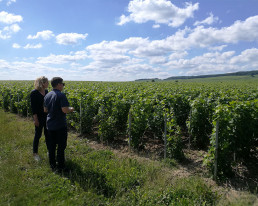
Egly-Ouriet is a revered ‘Récoltants-Manipulant’ or grower champagne, meaning they make their champagnes from vineyards they own themselves. They’re situated in Ambonnay where they own 8 hectares, with another 4 hectares scattered across Bouzy, Verzenay and Vrigny in the Montagne de Reims.
They grow all three champagne varieties and, with the exception of Vrigny, the other vineyards are all Grand Cru status. The vineyards are all on south or south-east facing slopes which helps them achieve good annual ripeness – an incredibly important detail for custodian, Francis Egly, “From vines averaging more than 45 years of age, Egly harvests at full maturity, typically at 12 or 13 degrees of potential alcohol, extremely ripe for Champagne, and never chaptalises. His goal is to harvest grapes as ripe as possible, and he cites the best vintages as those of high maturity, naming under-maturity as Champagne’s biggest problem.” Tyson Stelzer explains in his 2018/19 edition of The Champagne Guide.
Although not wanting to be labelled as an organic or biodynamic producer, Francis follows very natural practices and is determined the wines are clean and pure, reflecting the terroir of the Montagne de Reims whilst protecting the precious environment around them.
Egly-Ouriet - The Hands
As important as the vines are the hands that tend them, and attached to these digits of distinction is Francis Egly, the fourth generation working these vineyards. Each generation has followed the trend of vinifying more of their own grapes with each changeover, recognizing the quality of their holdings and increasing their investment over time.
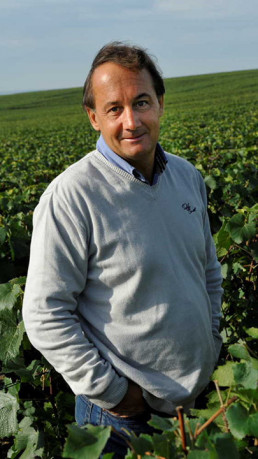
Francis took the mantle from his father in 1982, working alongside him in the cellar, before in the 1990s taking a more influential position making decisions, and has bottled the entire harvest of 100,000 bottles ever since. His father Michel had been bottling a small portion – around ⅓ – of the harvest since the 1970s, and his grandfather before him, Charles, bottled miniscule amounts just for family and friends since the 1950s.
Francis is described in many ways – meticulous, exacting, creative, even maniacal in regards to his viticultural dedication – but a word one could never use for Francis would be showy. He has a reputation of being somewhat quiet and almost elusive. A man of few words, he prefers to let his Champagnes do the talking. On the occasions he can be tracked down (usually in the vines) he speaks quietly, confidently and entirely in French.
He is the epitome of an artisan, whose work speaks so profoundly for his skill you’d be forgiven for thinking he just accidentally fell into worldwide renown, but the opposite is true. If you picture the quintessential french farmer heading off at sunrise, not to be seen again until dark, you’d be about right. He just wants to quietly get on with making some of the most revered drops in the market and he works hard to uphold that reputation.
Champagne writer, Yuri Champaniaque, calls him ‘mysterious,’ before congratulating the ‘Wine Challenge’ podcast for conducting perhaps one of the more in-depth interviews with Francis Egly around. “The estate has earned some reputation, so in a way, I would say that these days making mistakes is not an option…” Francis explains to them, and that he knows that people expect a certain calibre from the Egly-Ouriet estate and endeavours to provide that.
On the matter of the future of the estate, he explains to Alex, the interviewer, that there’s hope for a fifth generation but he doesn’t like to push them, “My children have come back to work with me, I’m particularly careful not to put pressure on them, because that wouldn’t be helping them… I have two children, a son who is 24 and a 26 year old daughter. Both of them have now helped me on the estate and I’m really proud of it. It’s a success to have them coming back, and I think they’re going to find their place here. It’s quite easy because my son likes to work the land, so he’s keen on working in the vines and Clémence [his daughter] likes the vineyards too, of course, and she too participates in all the work in the vines, but she’s also more involved in the commercial side of our activities and that suits her perfectly. So we’ve actually reached an easy balance.”
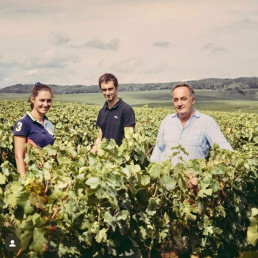
Egly-Ouriet - The Wines
Egly Ouriet’s champagnes are well-known for their bold but beautiful style.
“His aspiration is ‘elegance and strength, but never heaviness.’ He says champagne is like a bird; ‘it has to stay aromatic and light,”
explains Tyson Stelzer. Francis reiterates this concept again on the podcast, “We’ve had a Burgundy-like approach, if I may say so. The idea is to first have more full-bodied wines. We found that maybe some champagnes lacked a little bit of structure, or lacking in body. So we try to make rather stronger champagnes.”
Some of Egly-Ouriet’s stand out practices include mature picking, extra long ageing and very low dosage.
In speaking to The Wine Anorak, Francis asserts that “The complexity of the wine and the terroir expression increases with time on lees,” says Francis. “We will never change this,” he says, although adds that if it does change, they will go longer, not shorter.
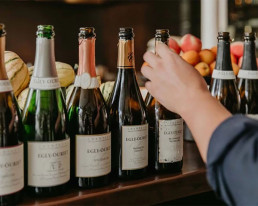
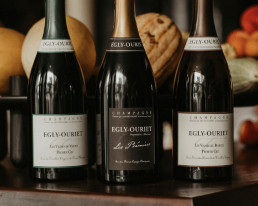
All cuvees sit for a minimum of 36 months (as opposed to legal minimum of 18) before disgorgement. This contributes to the rich complexity of the Egly-Ouriet champagnes. The Grand Cru VP or ‘Viellisement Prolongee’ (prolonged aging) sits in state for 70 months, giving it amazing powerful, intense flavours whilst still retaining wonderful elegance.
Every label of Egly-Ouriet’s Champagnes bears the house philosophy, “This champagne is the expression of a “family” style that comes first and foremost from perfectly tended vineyards. The quality of grapes, the precision of blending and long elevage in the cellar allows us to offer you non-filtered champagnes in the purest champagne style,” along with disgorgement dates, terroirs and the number of months on Iees.
Our 2025 Allocation
We are thrilled and immensely privileged to be given a small allocation of these revered, rare and dazzlingly pure champagnes, expected to land in May;
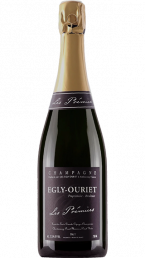
NV Egly-Ouriet Brut ‘Les Premices’
- ⅓ Chardonnay, ⅓ pinot noir, ⅓ pinot meunier from a 3.5 hectare plot in Trigny
- Base wines aged in stainless steel, aged 36 months on lees
- 1 g/L dosage
- 93 Points – Jamie Goode’s The Wine Anorak:
“Complex aromatics with nuts, toast, aniseed and a touch of wax. This has nice weight on the palate with rich citrus and pear fruit and a slight salinity. Ripe, textural and nicely complex. This might be their entry-level wine, but it’s fantastic.”
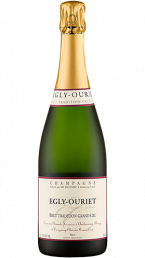
NV Egly-Ouriet Brut Grand Cru
- 70% Pinot Noir and 30% Chardonnay from Ambonnay, Bouzy and Verzenay
- 100% barrel fermentation, fifty-two months on lees
- 1 g/L dosage
- 95 Points – Decanter
“Although this appears as the ‘house’ non-vintage, in character it is more akin to a vintage wine that needs some time on cork. Tasted young, the saturated fruit—apricot, spiced apples, grilled lemons—is already expressive, yet not fully unsprung. Based on 2018 with 40% reserves back to 2016, the heat of 2018 is in the fruit profile rather than weight or grip, and is more about persistence than pure power, underlined by the oak élevage yet not coloured by it.”
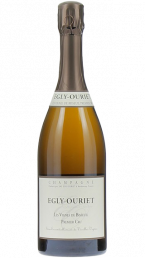
NV Egly-Ouriet Brut Les Vignes de Bisseuil 1er Cru
- 70% Chardonnay, 15% pinot noir, 15% pinot meunier
- Aged 51 months on lees
- 2 g/litre dosage
- 95 Points – Jamie Goode’s The Wine Anorak
“It’s a new wine for Egly-Ouriet, from a 1.5 hectare vineyard they bought 10 years ago, next to Ay, but this is the first release because the vineyards were still rented out for a while… Despite the higher than normal Chardonnay content this is still Egly in style. Powerful and lively with lovely depth of flavour: spice, crystalline citrus, a hint of salinity, with depth and concentration but also freshness. Very fine.”
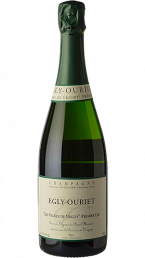
NV Egly-Ouriet Brut Les Vignes de Vrigny 1er Cru
- 100% Pinot Meunier from vines bought by Francis’ wife, Annick
- Aged 36 months on lees
- 2 g/l dosage
- 93 Points – Wine & Spirits Magazine
“Presented with barely any dosage (two grams per liter), this is a savory Champagne with the broad texture of the variety. The flavors are rich and mature, with scents of cider apple and coriander, a subtle spice and the mushroom notes of sourdough. Sit with it for a while and that richness reveals red fruit depths, the wine growing racy and brisk.”
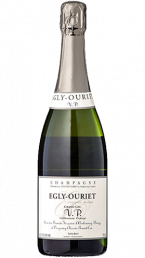
NV Egly-Ouriet Extra Brut V.P Grand Cru
- 70% Pinot Noir and 30% Chardonnay
- Aged 84 months on the lees
- 3 g/l dosage
- 98 points – Tyson Stelzer
“Power meets effortless calm as Champagne’s three finest pinot noir crus unite with breathtaking expression of lifted violet perfume and sensational purity of red cherry and strawberry fruit. Chardonnay injects energy and definition into a mouthfeel that bores to the core of grand cru chalk, intricately and seamlessly entwining a palate of glittering minerality of the finest texture. Magnificently defined acidity is at once bright, youthful and energetic, yet simultaneously ripe, full and integrated… Francis Egly has bottled the ultimate expression of the refinement and towering magnificence of Ambonnay, Bouzy and Verzenay.”
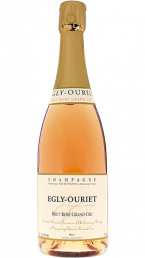
NV Egly-Ouriet Brut Rosé Grand Cru
- 70% Pinot Noir, 30% Chardonnay
- Aged 48 months on the lees
- 2 g/l dosage
- 95 Points – Jeb Dunnuck
“Also brilliant, the lighter salmon-hued NV Grand Cru Brut Rosé has a captivating nose of orange blossom, toasted bread, honeysuckle, dried flowers, and spice. With flawless balance, medium to full body, integrated acidity, building richness, and a great, great finish, this is another spectacular wine in the lineup to drink over the coming 10-15 years or so.”
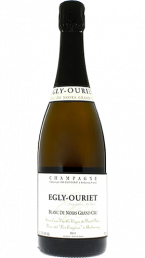
NV Egly-Ouriet Grand Cru Blanc de Noirs V.V. (“Vieilles Vignes”)
- 100% Pinot Noir
- Aged 64 months on lees
- 98 Points – Tyson Stelzer
“Hedonistic aromas of black cherries, plum pie and violets erupt in grand cru red Burgundy proportions, backed with notes of dark chocolate and exotic spice. In sheer volume, depth and persistence, this cuvee pushes champagne into another world. Yet, crucially and mesmerisingly, it is never for a moment heavy or blowsy, pulled exactingly into tight line by gorgeous, bright yet perfectly ripe and generous acidity. With barely a foot of topsoil before the chalk, the mineral character of this hallowed site speaks articulately in softly salty tones that will stir the depths of your soul.”
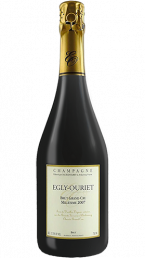
2015 Egly-Ouriet Grand Cru Millesime
- 70% Pinot Noir and 30% Chardonnay from 40-year-old vines in Ambonnay.
- Aged 96 months on lees
- 1 g/l dosage
- 96 points – Jeb Dunnuck
“Ripe and fruity on the nose, with aromas of black cherries, fresh violets, savory saline, and a hint of umami richness. The palate is full-bodied, with no phenolic bitterness, and never feels overtly savory. Pure, juicy, and inviting, it’s lovely and long on the palate, with a very pretty finish and a refined mousse that just frames the wine. It has a delicate note of toast that it needs time to harmonize, but I love what they have done with this vintage. Drink 2025-2045.” - Previous releases of the Millesime have achieved coveted 100 point scores from Robert Parker’s The Wine Advocate, reinforcing the quality to expect of Egly’s vintage bottlings. The 2013 was one of these, “Francis Egly has produced another profound Champagne with the 2013 Brut Grand Cru Millésime… Wafting from the glass with scents of Anjou pear, crisp yellow apple, freshly baked bread, clear honey, iodine and fresh mint, it’s full-bodied, ample and pillowy, with a layered, concentrated and effortlessly balanced core of fruit, uniting precision and sensuality to compelling effect. Girdled by racy acids and animated by a delicate pinpoint mousse, it concludes with a long, penetrating finish. Is this the most elegant wine Egly has produced to date? It’s certainly among the most compelling that this high quality but initially underrated Champagne vintage has delivered.”
Critics
Don’t just take our word for it! Egly-Ouriet has impressed the most discerning palates in the world;
“Egly-Ouriet enjoys a cult status shared by no other grower on the Montagne de Reims. This tiny, pristine operation in Ambonnay deserves its acclaim, capturing the profound complexity, intensity and grandeur of the Montagne’s finest terroirs without sacrificing the precision that underlies the most revered champagnes. These are ravishingly vinous sparkling wines, consistently among the most exactingly balanced of Champagne’s power set, handcrafted by a creative, thoughtful artisan who painstakingly tends his vines naturally to low yields and full maturity. To uphold the calibre of his non-vintage cuvees even in the wake of the harrowing 2011 season calls for wizardry I have witnessed from no other grower or house. On this basis, Egly-Ouriet remains the finest grower in Champagne right now, and my only 10/10 grower.”
Tyson Stelzer’s 2018/19 Edition of The Champagne Guide
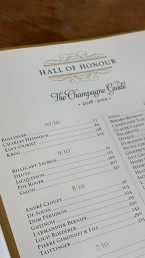
“Egly-Ouriet remains one of Champagne’s leading small growers… It is one of the reference-point growers in Champagne, with a deep selection of wines that offer remarkable transparency to site, vintage and variety.”
Antonio Galloni for the Wine Advocate
“Far from resting on the considerable and merited laurels that he has accrued over a 30-year career, Francis Egly has continued to refine and improve. The last decade’s innovations include refrigerated press pans to immediately cool the must in ever-warmer vintages, a peristaltic pump to handle his wines even more gently and a once-again expanded cellar that gives him the space to work still more precisely. Just like his work in the vineyards, investment in the winery has been incessant. Starting from next to nothing when he began in the 1980s, today Egly holds some 700,000 bottles in reserve wines and wine maturing sur lattes—equivalent to seven times his annual production… But the devil is in the details; no winemaker in Champagne is more precise or meticulous, from vineyard to cellar. These latest releases once again come warmly recommended.”
William Kelley for The Wine Advocate
“Francis Egly has done it again. I’ve written at length in the End of April 2021 Issue 254 of The Wine Advocate about this estate’s perfectionist methods and distinctive philosophy. Recent releases from Egly have been consistently nothing short of spectacular, but even so, I was unprepared for quite how good the 2013 vintage has turned out at this address.”
William Kelley for The Wine Advocate
“Few producers can equal Francis Egly in skill and experience, and larger houses cannot hope to emulate the cultivation norms…”
Michel Bettane, The World’s Greatest Wines
“What Larmandier-Bernier achieves with Chardonnay, so Egly-Ouriet manages for Pinot Noir: wines of riveting purity and concentration.”
Andrew Jefford, The New France
Egly Ouriet has been awarded 3 stars, the highest rating, in Le Classement by La Revue du Vin de France. Le Classement is a ranking of the 1300 best domaines in France and only 56 domaines in France have 3 star status. Only 5 champagne houses have 3 star status including Egly Ouriet together with Krug, Salon, Jacquesson and Selosse.
If there is one Grower Producer you should try, it’s Egly-Ouriet. Not only does it reflect the terroir, but the time, love and thought put into it by its producer Francis Egly.
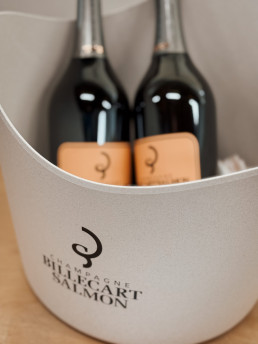
Gallery: Billecart-Salmon Masterclass with Sebastien Papin
Gallery: Billecart-Salmon Masterclass with Sebastien Papin
Auckland
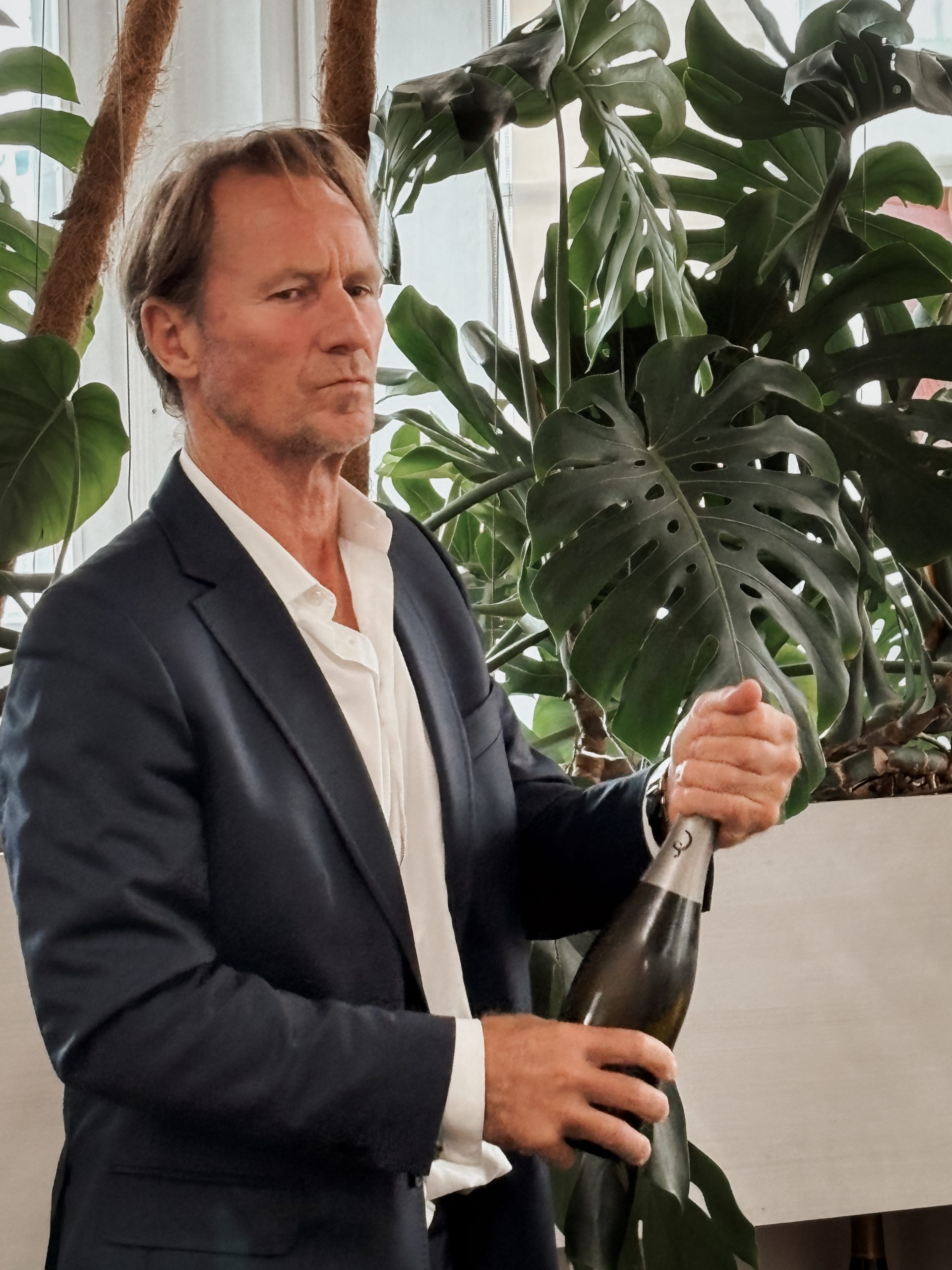
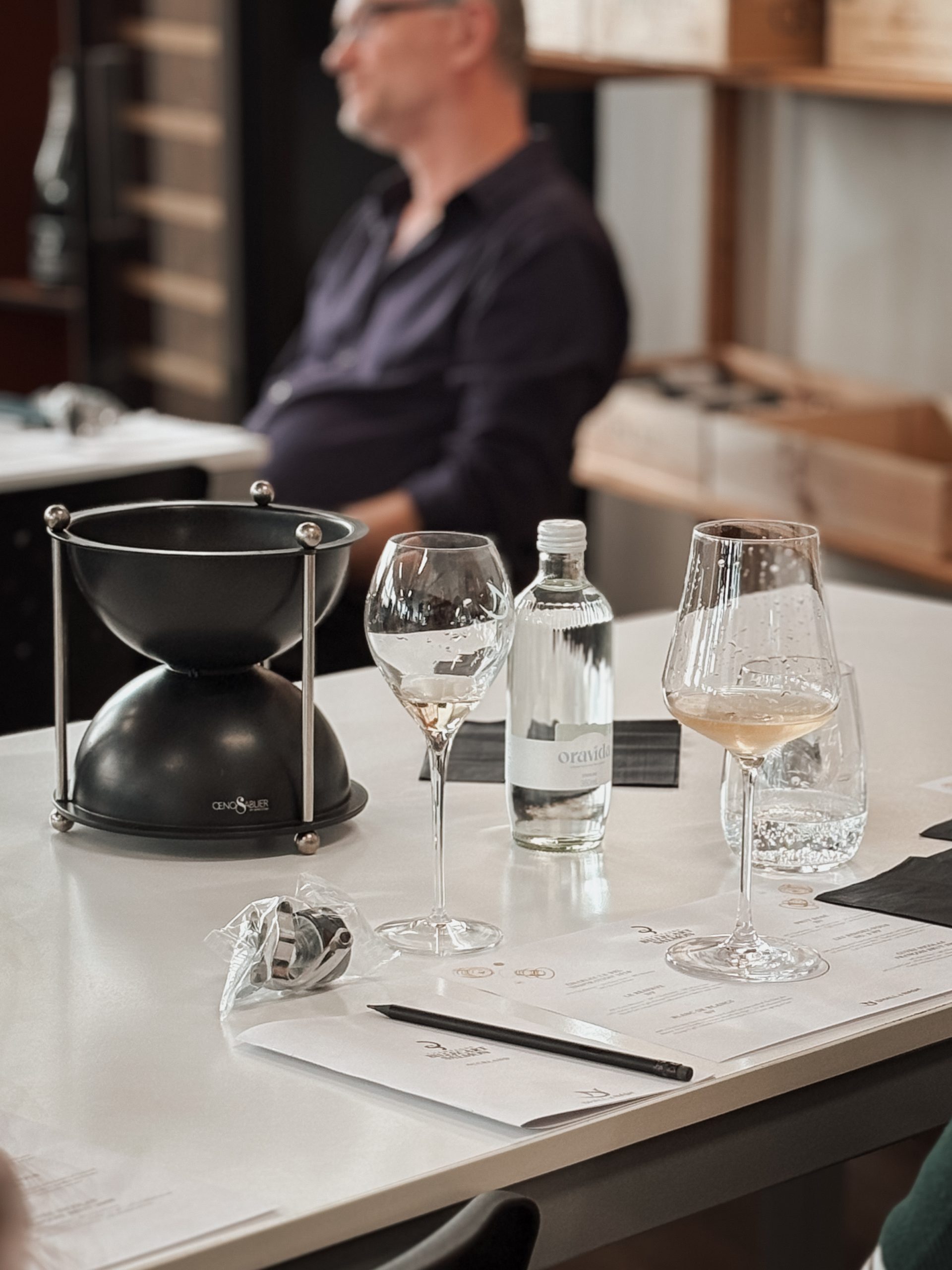
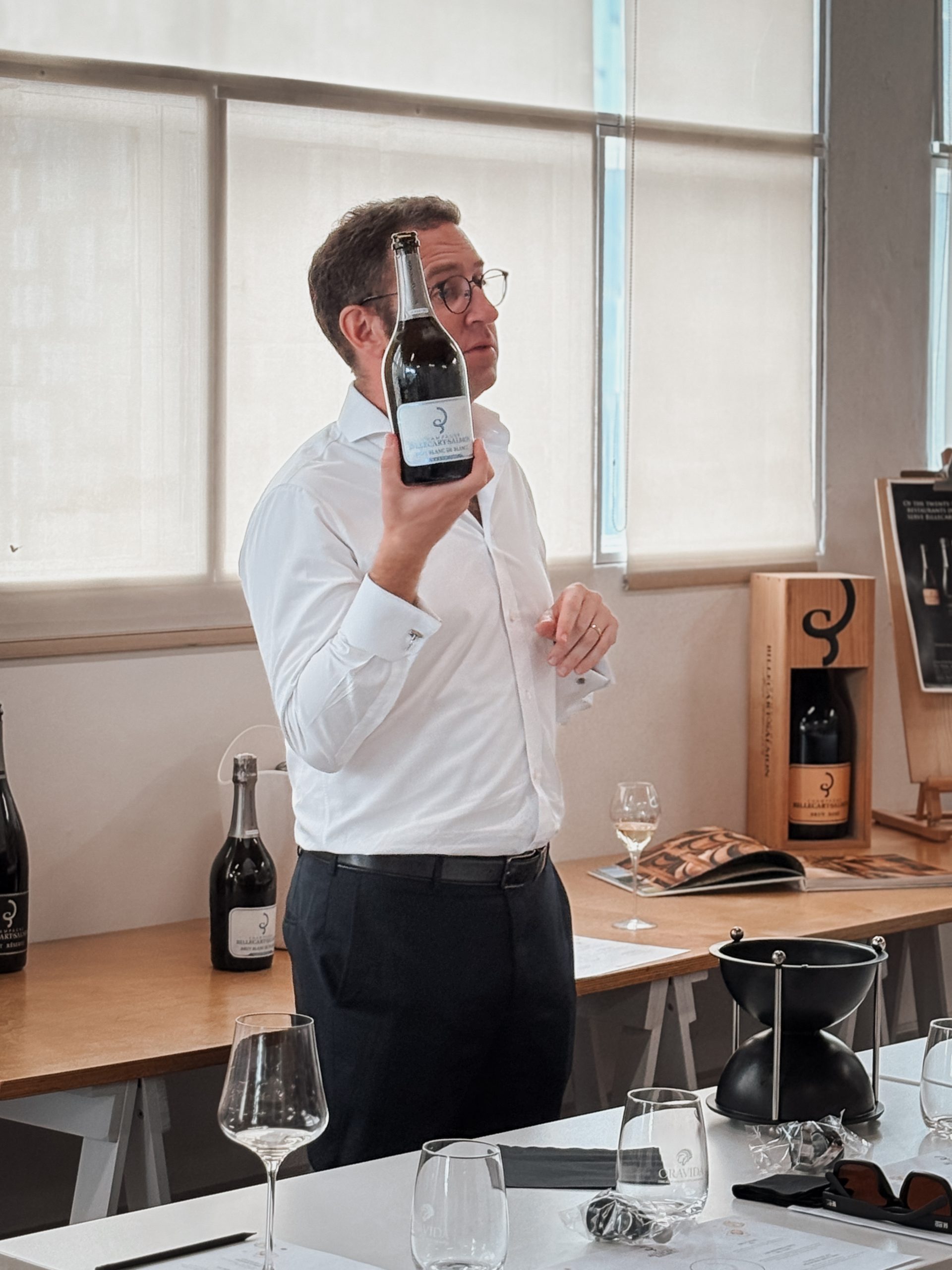
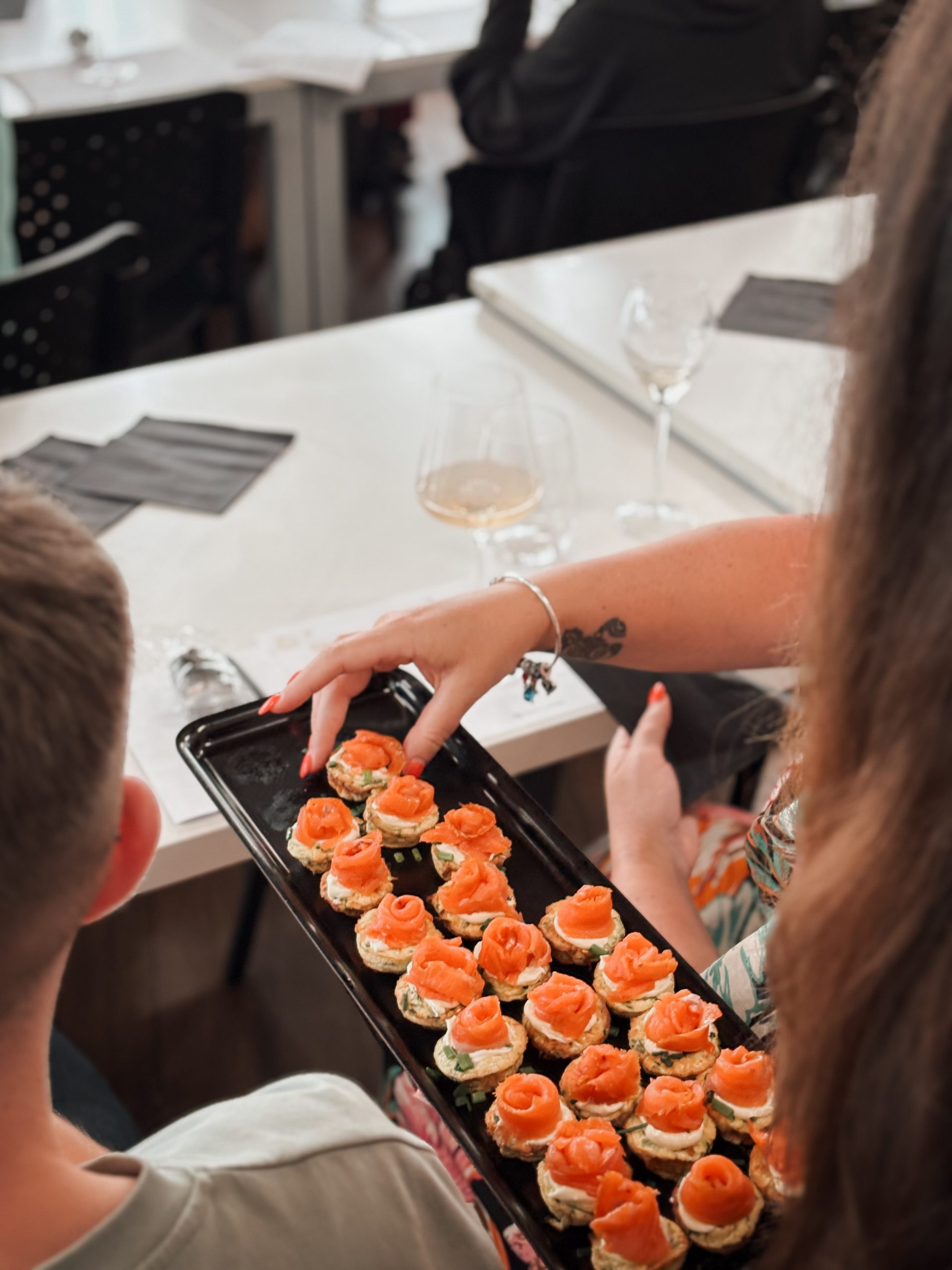
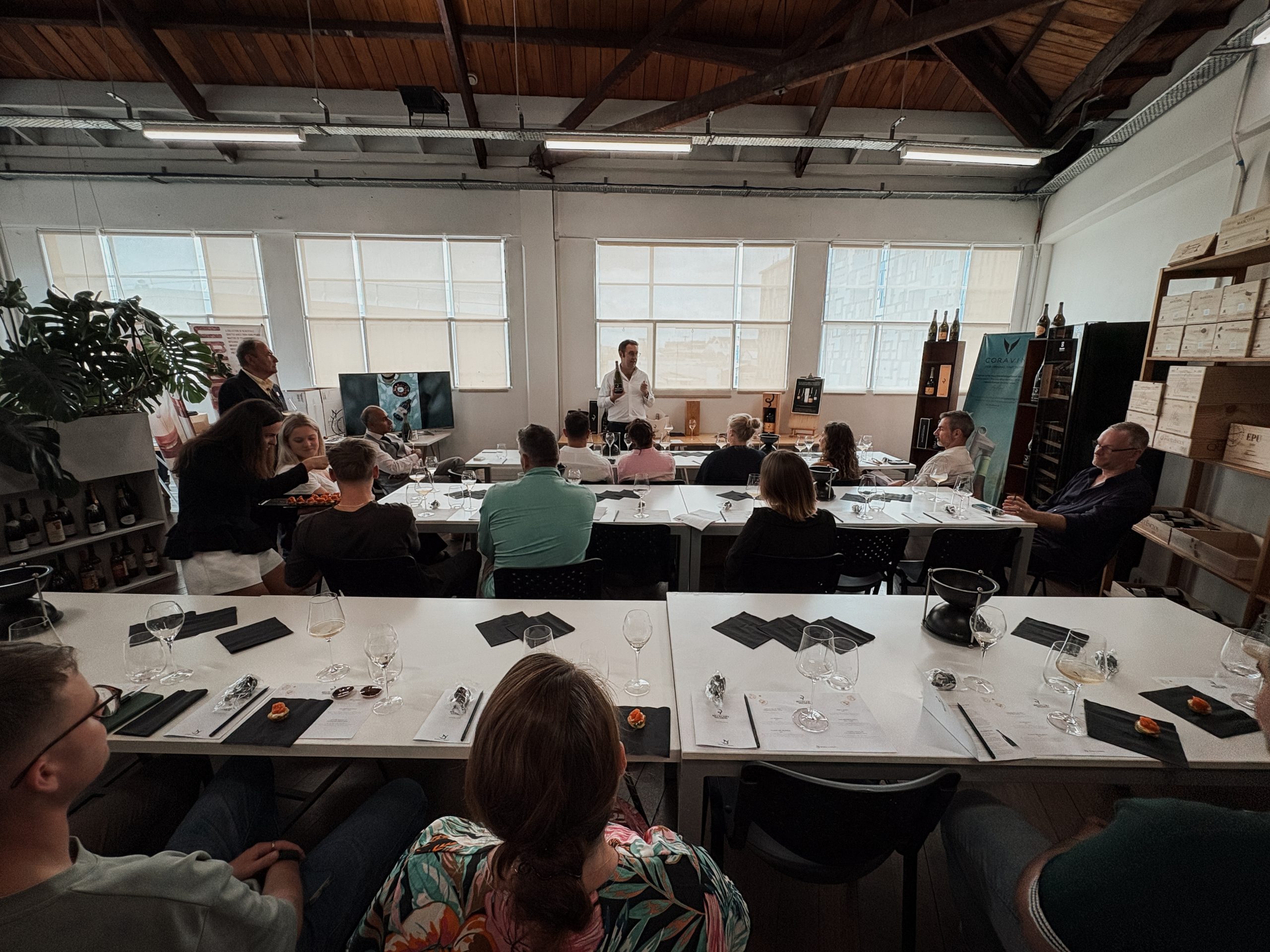
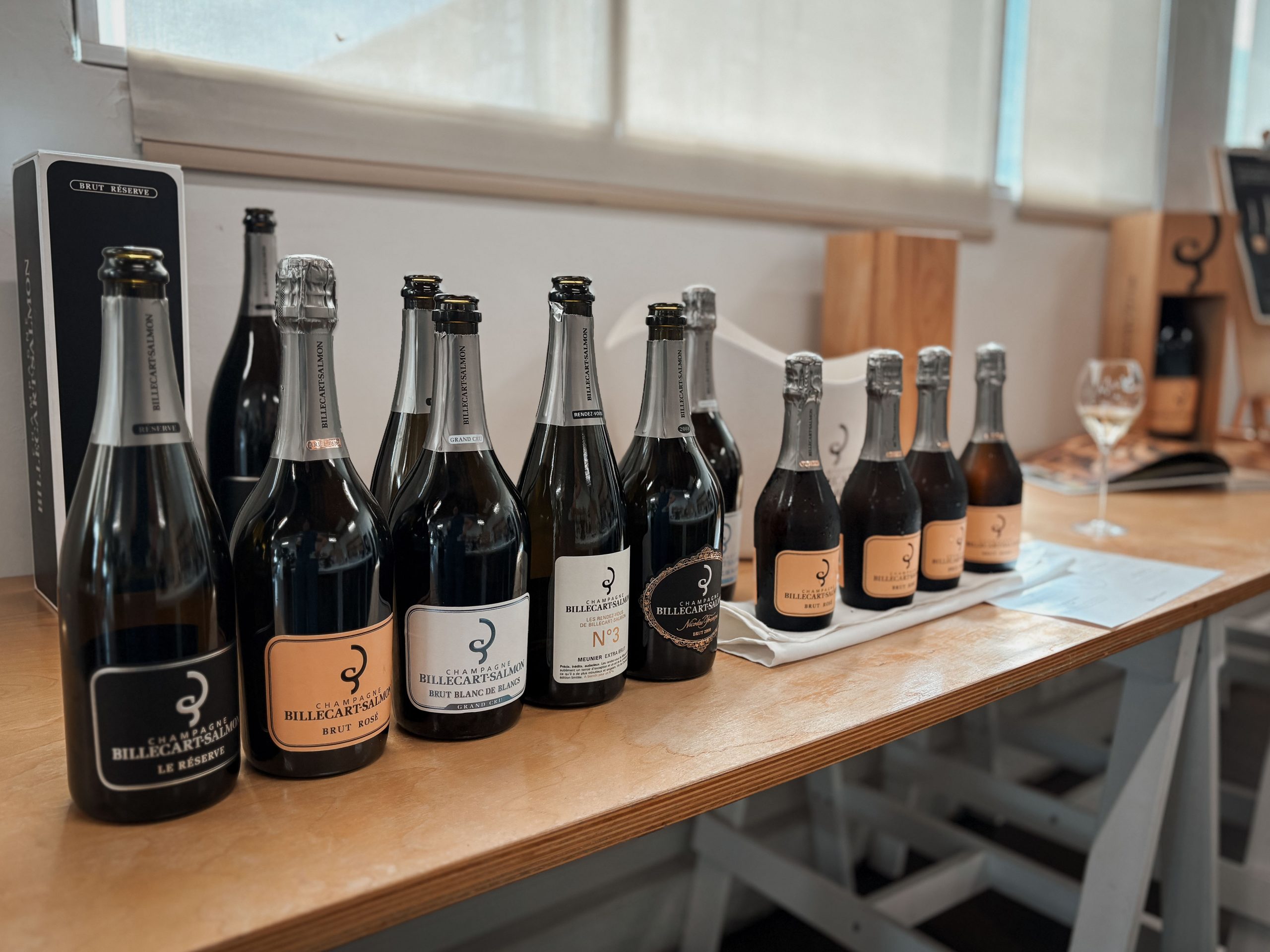
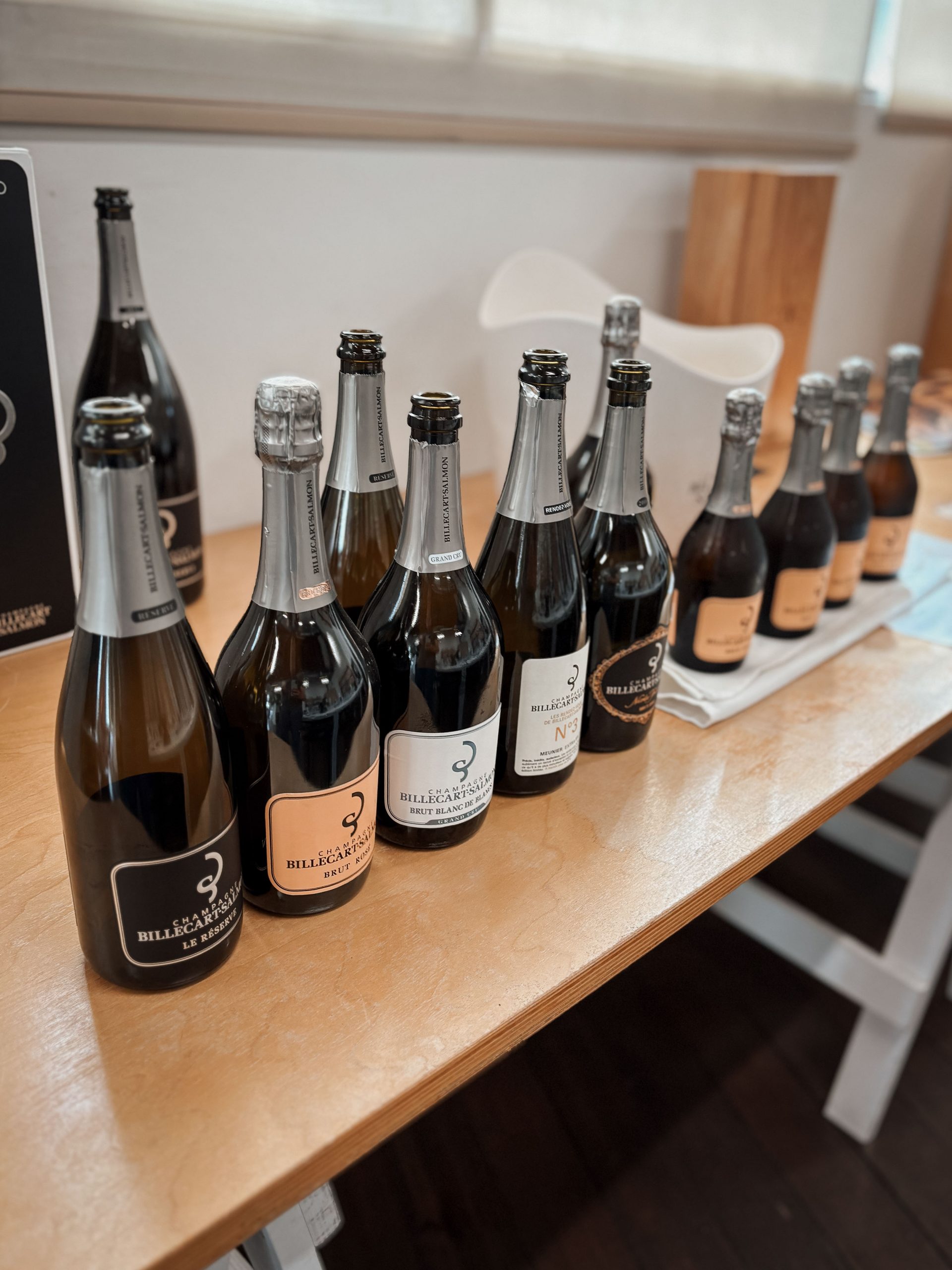
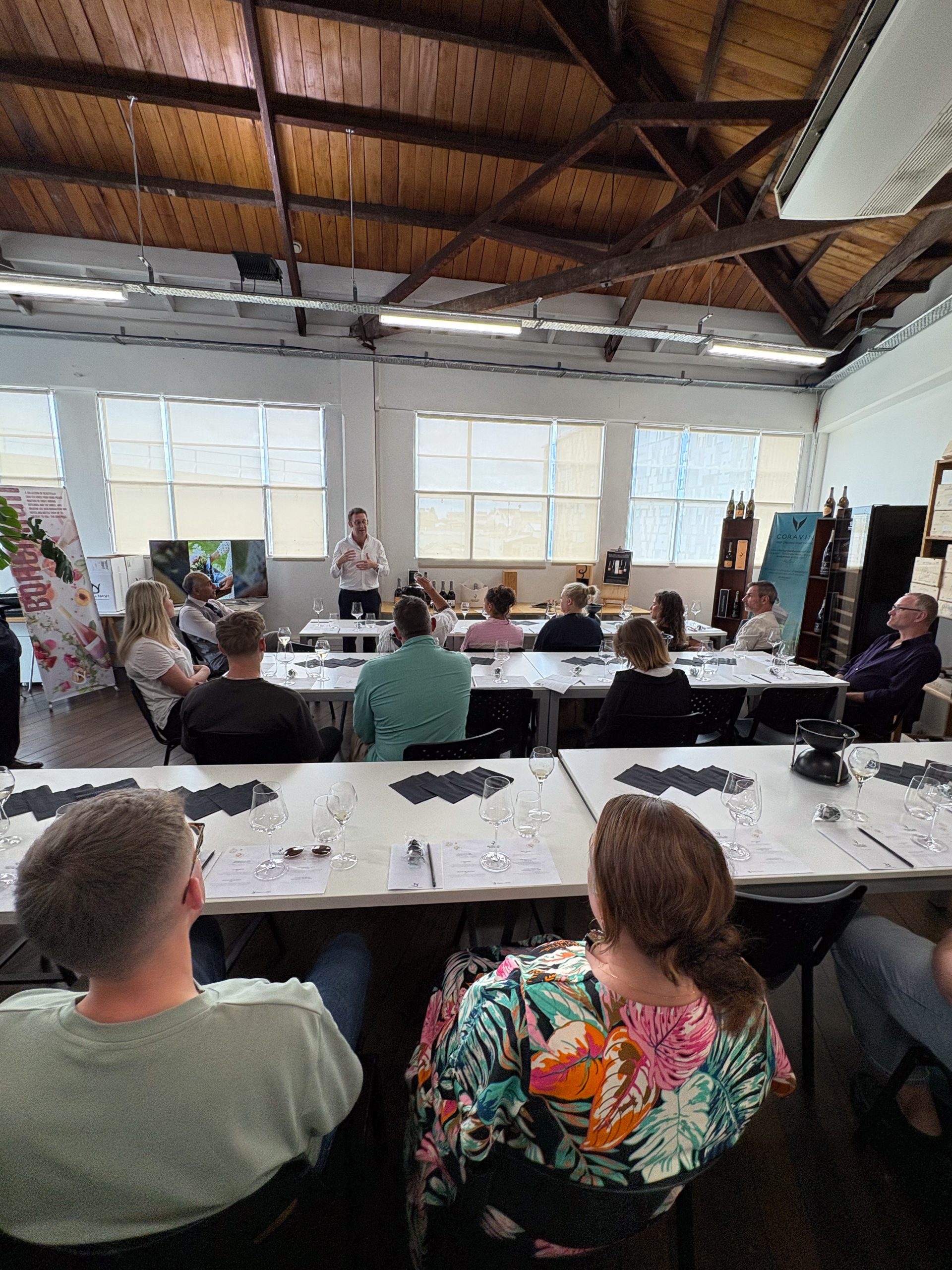
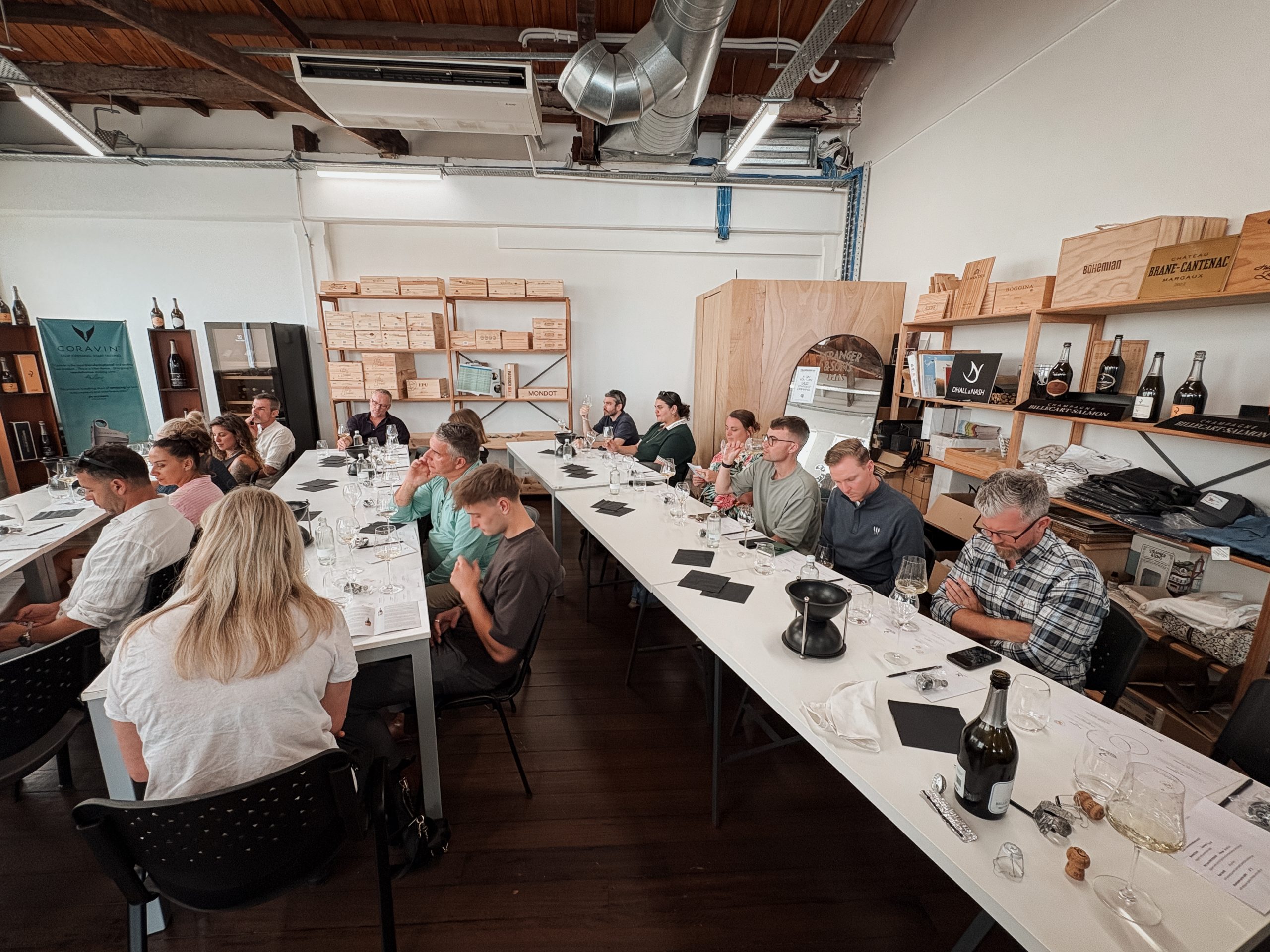
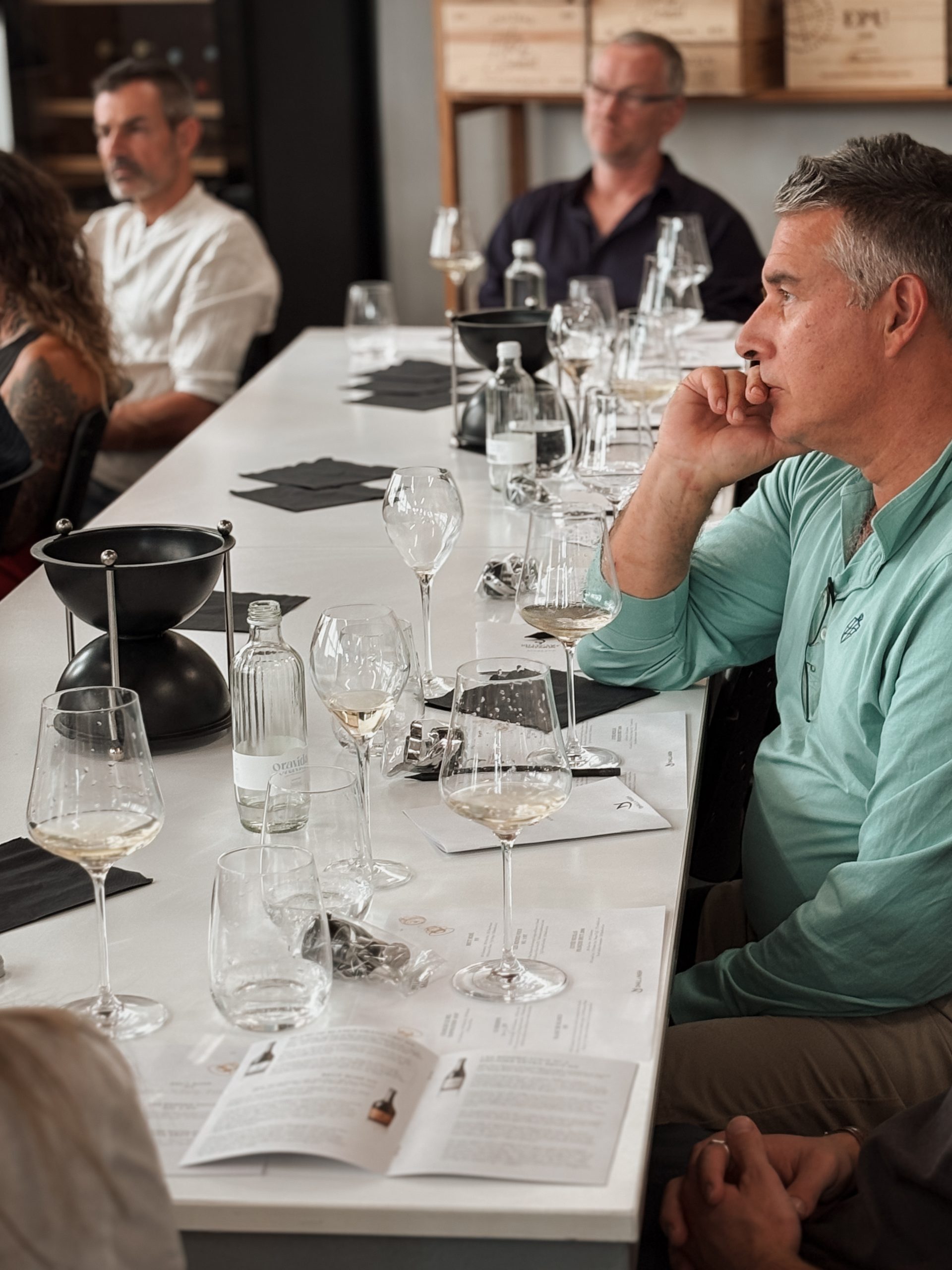
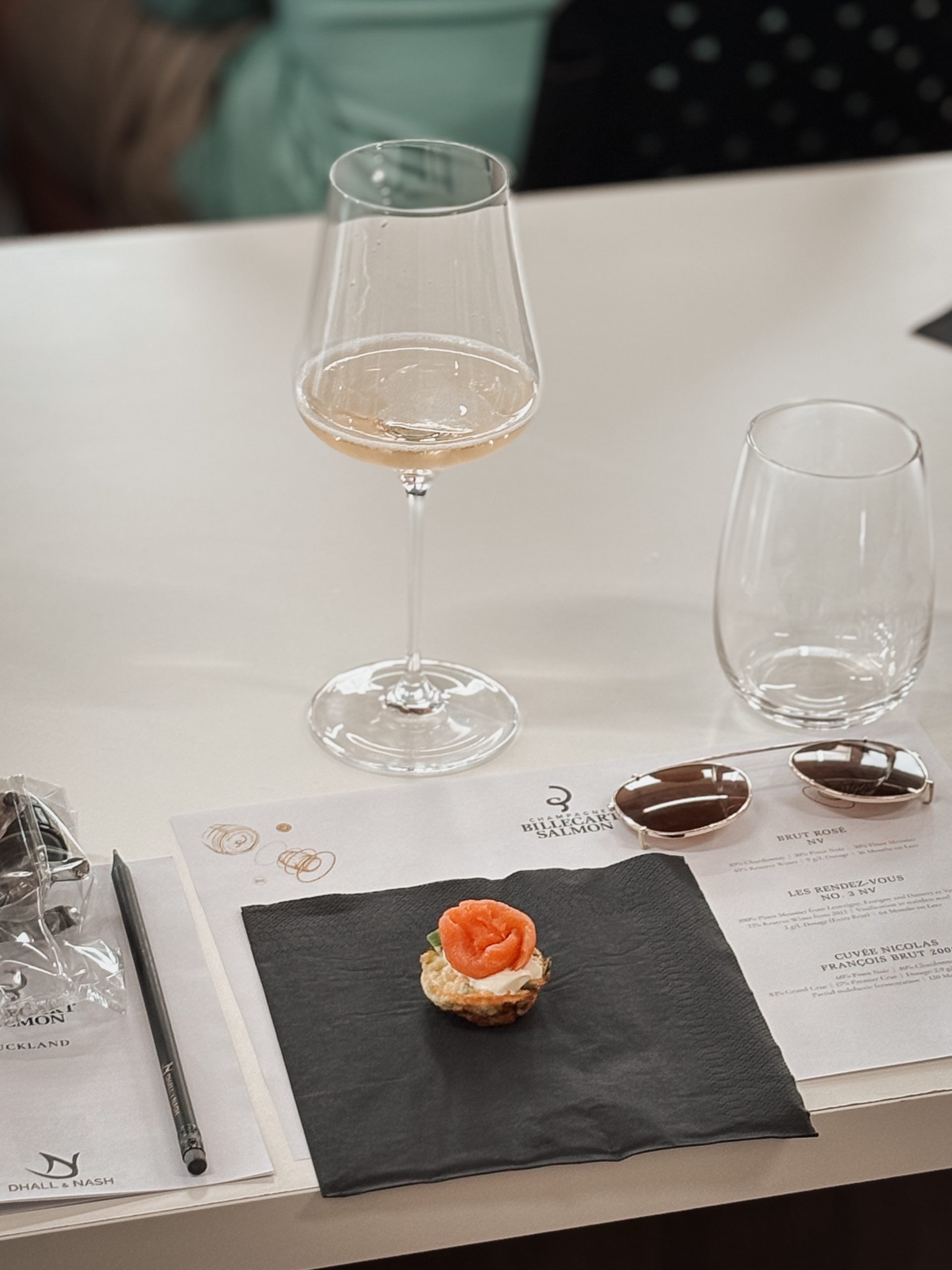
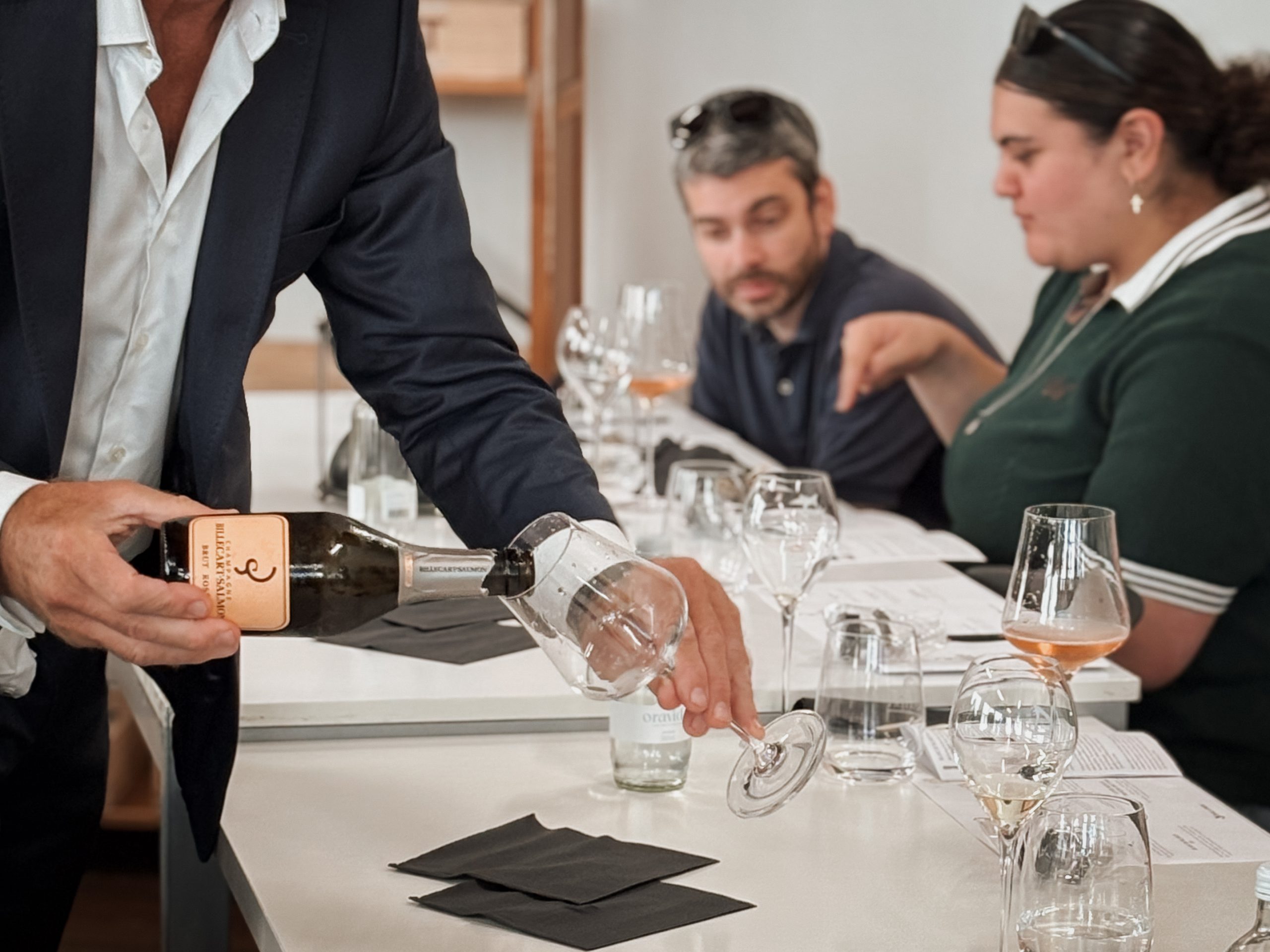
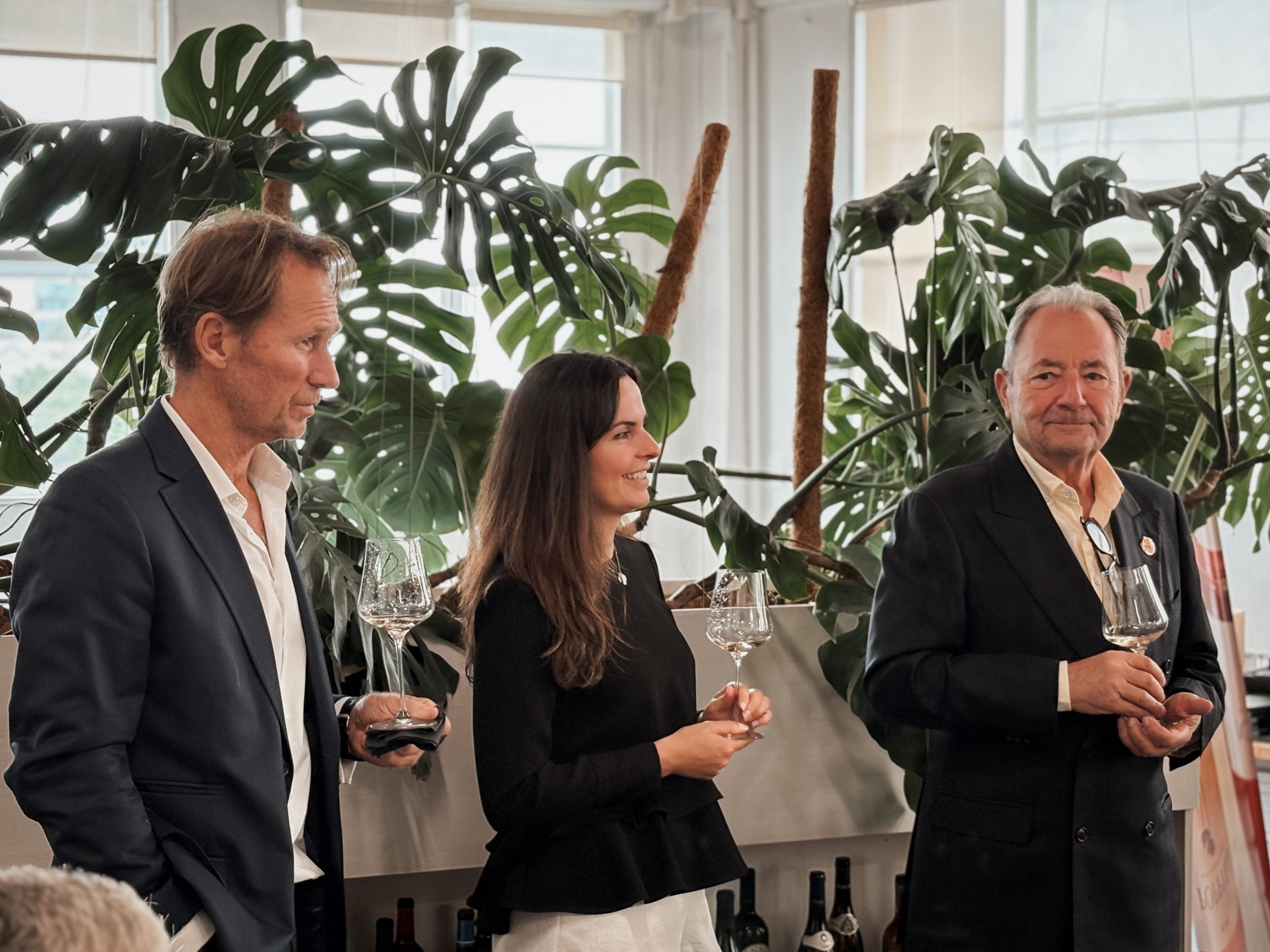
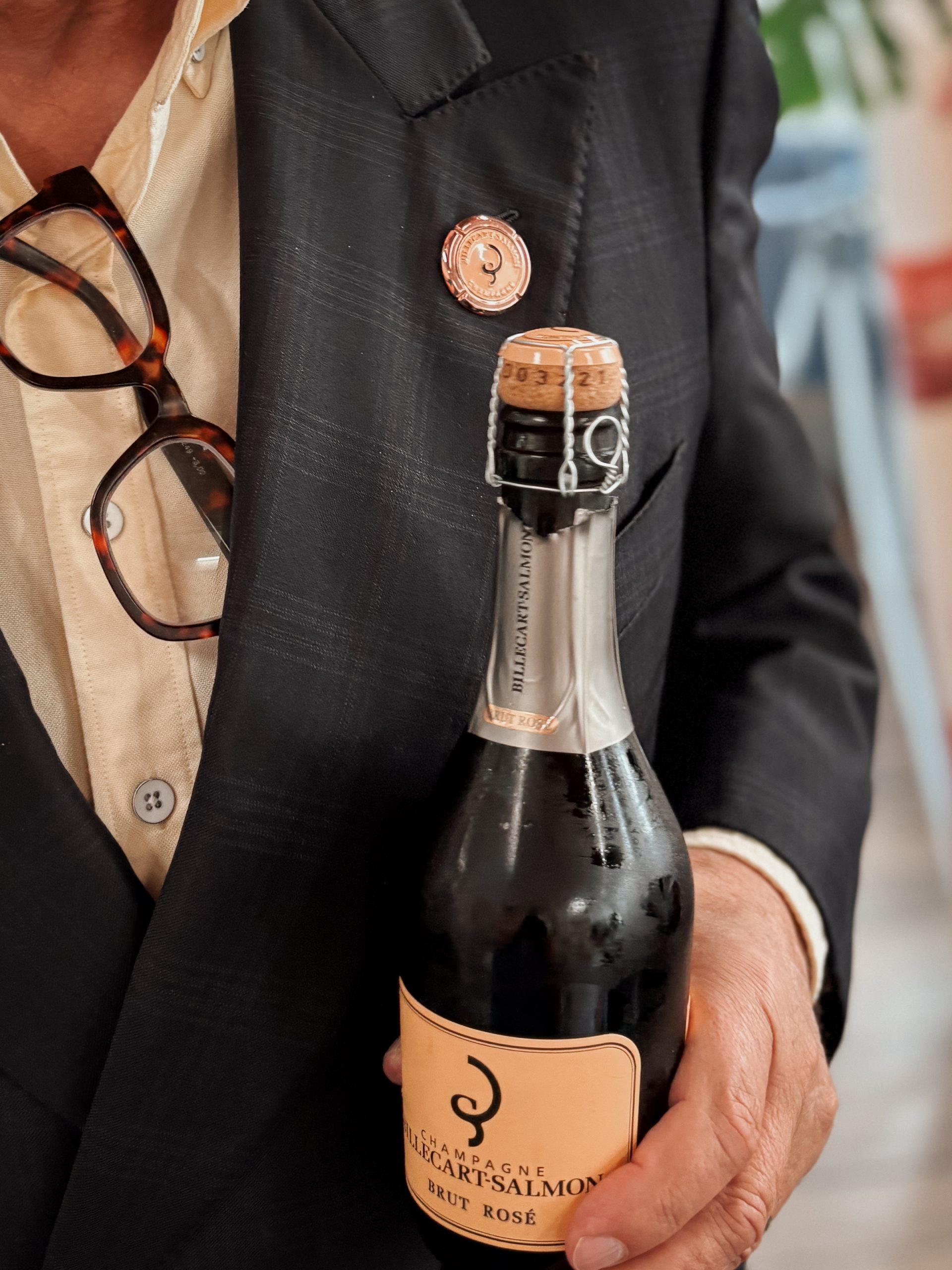
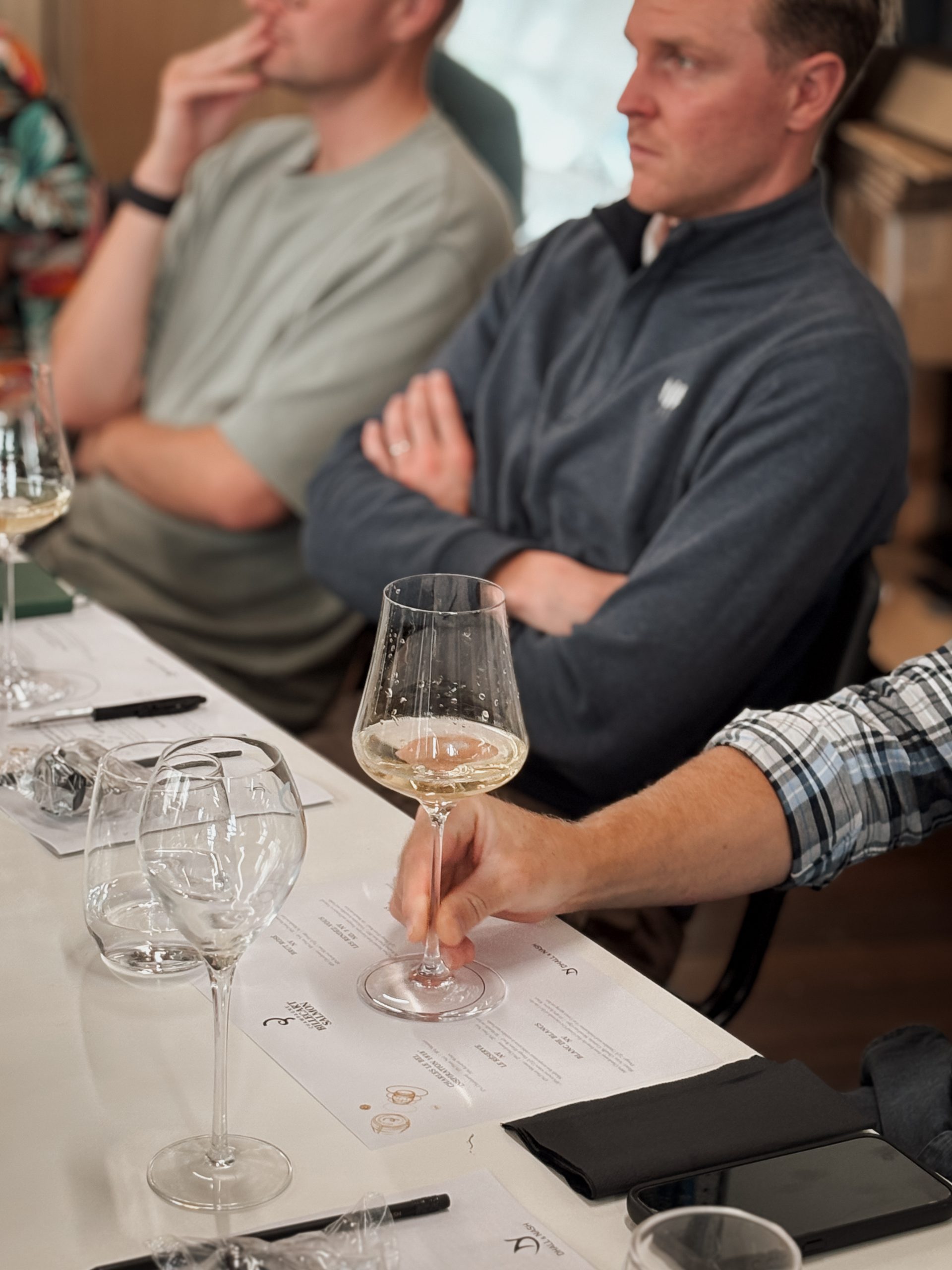
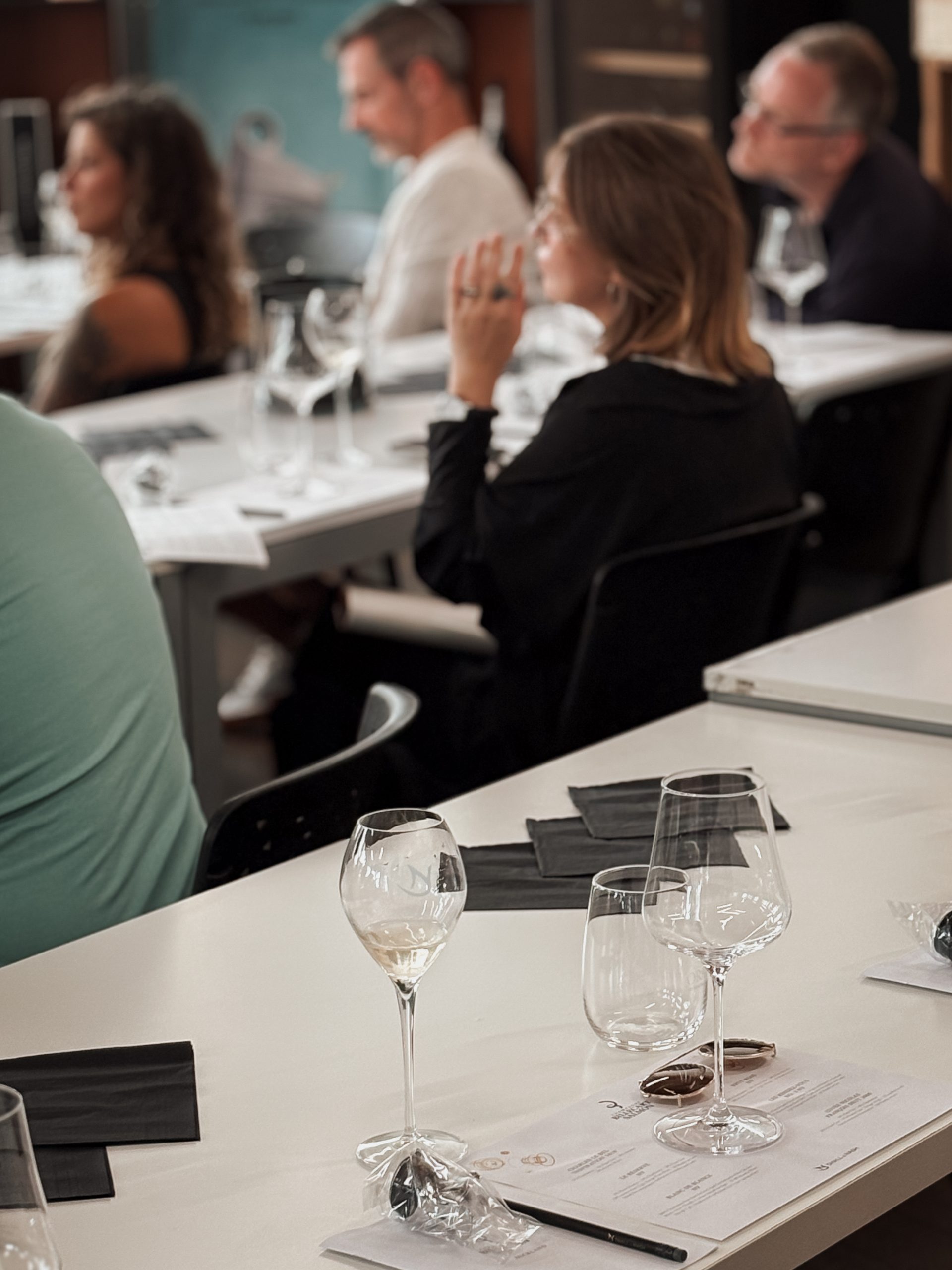
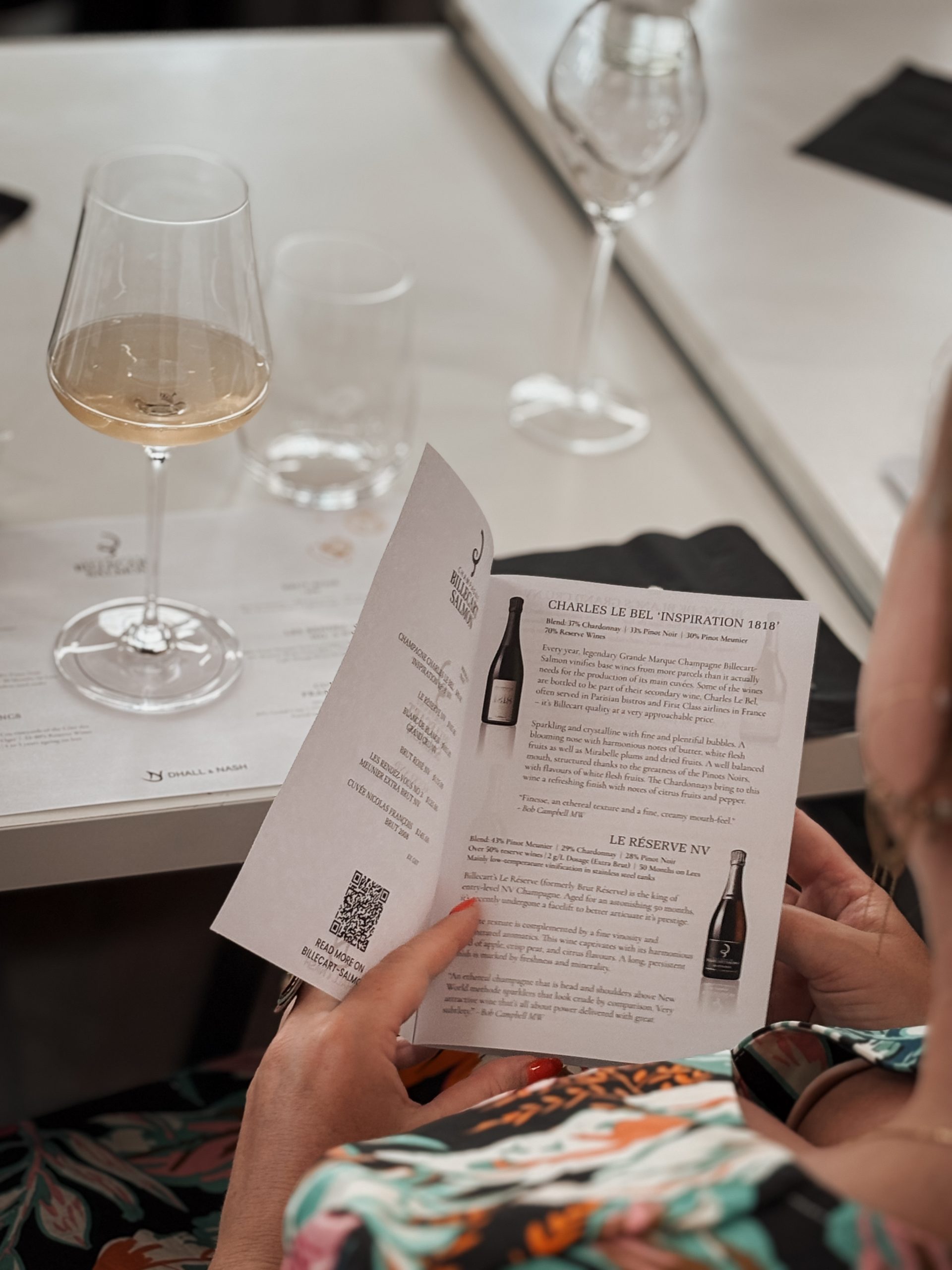
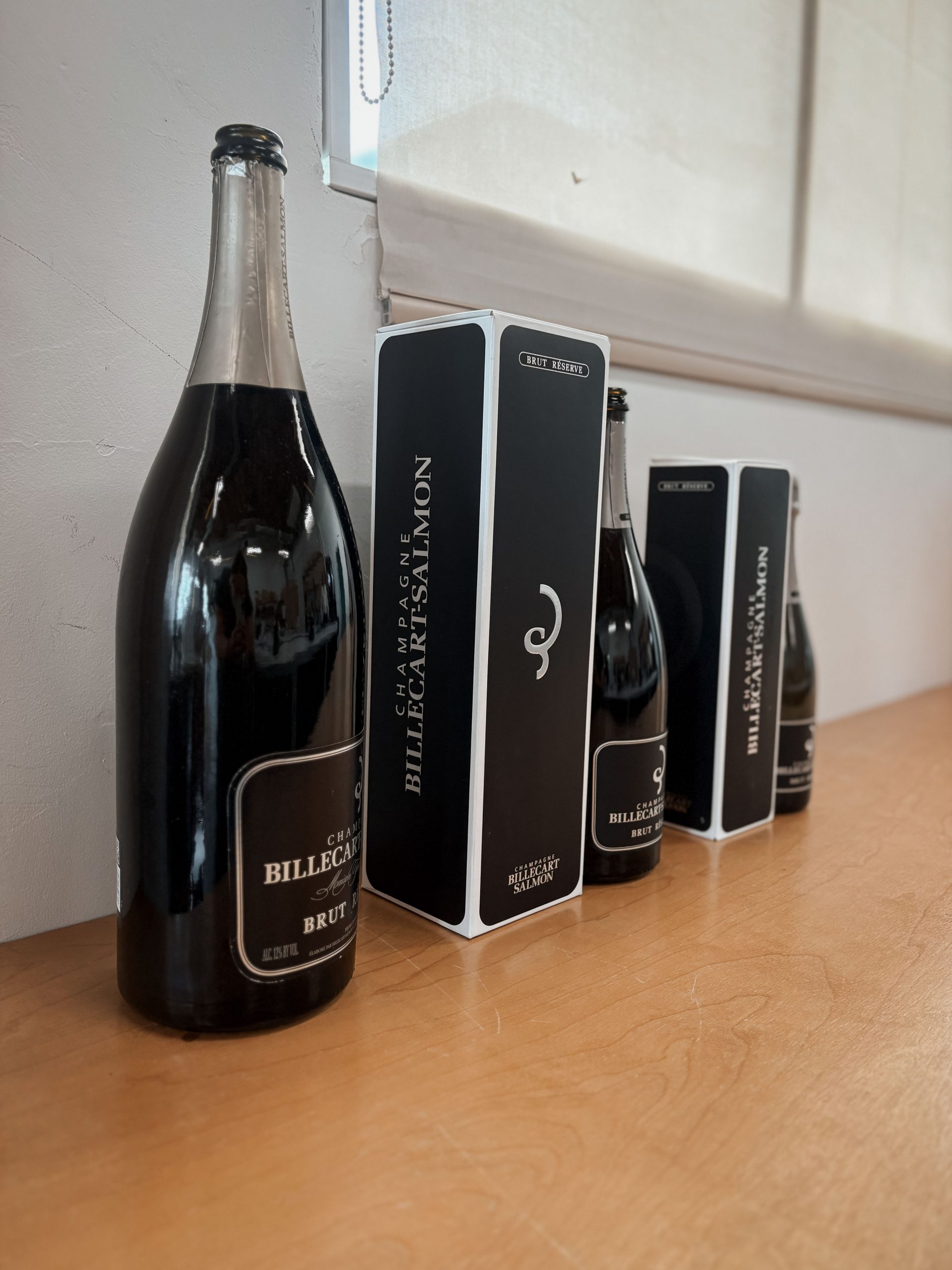
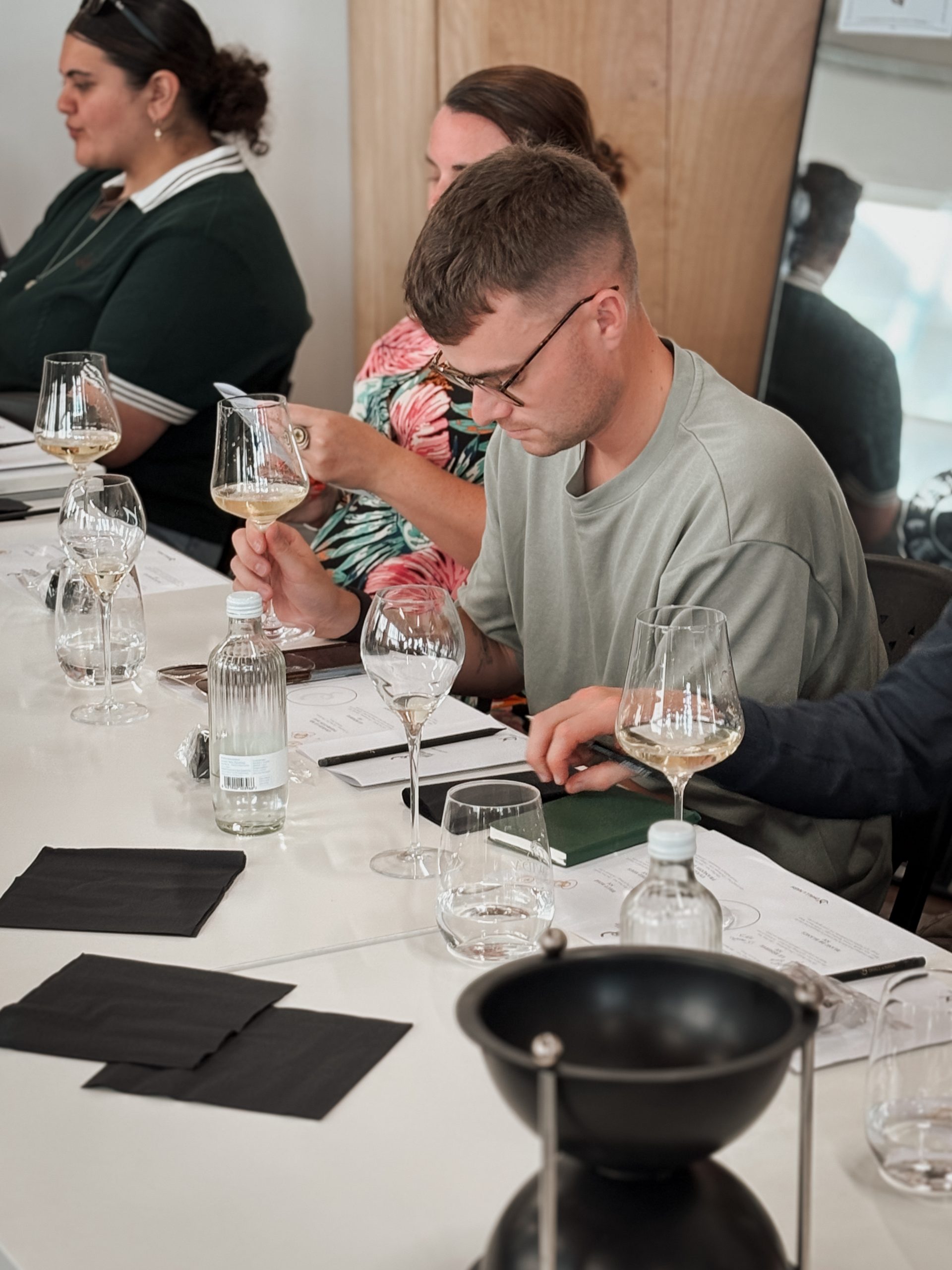
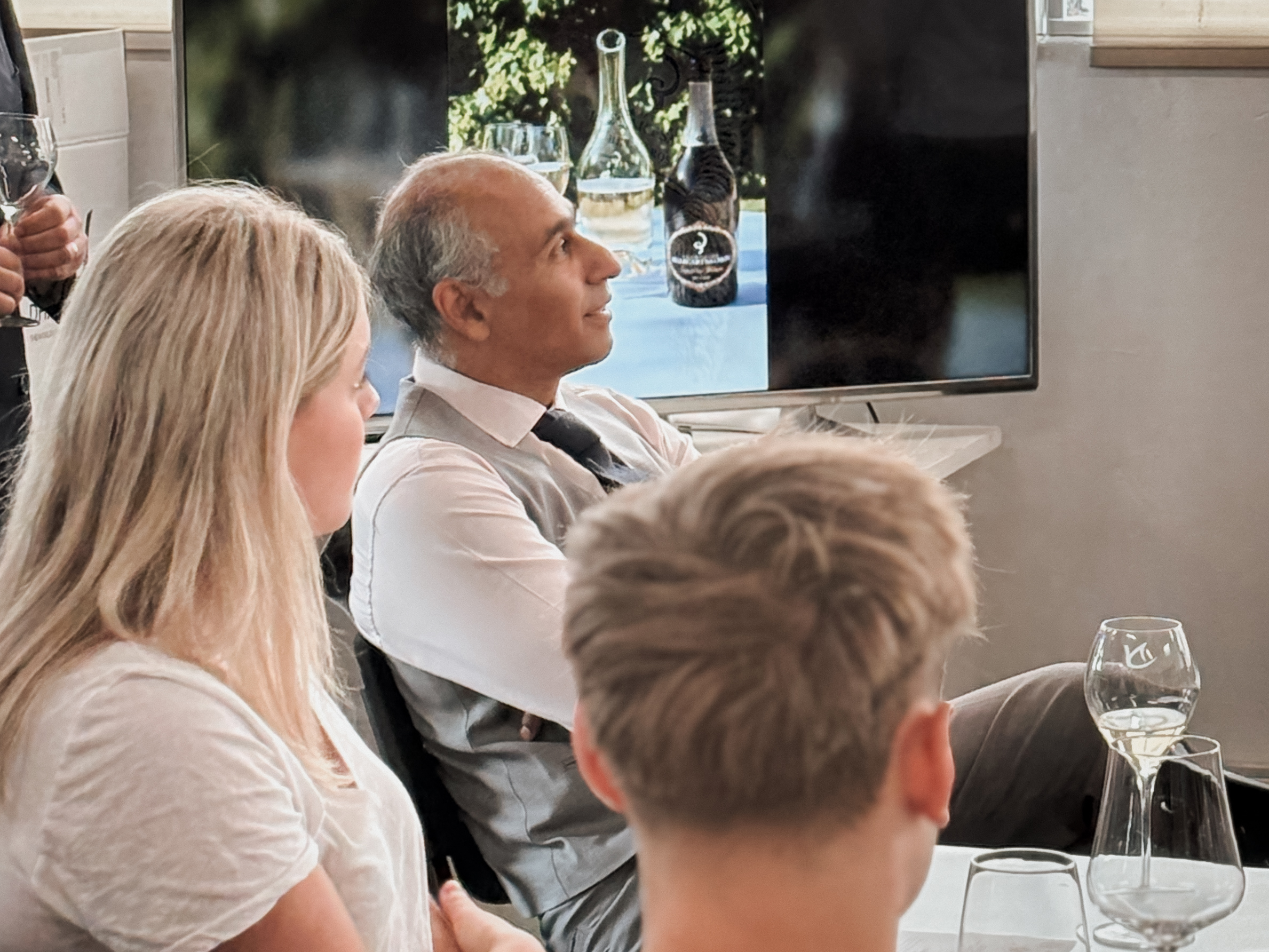
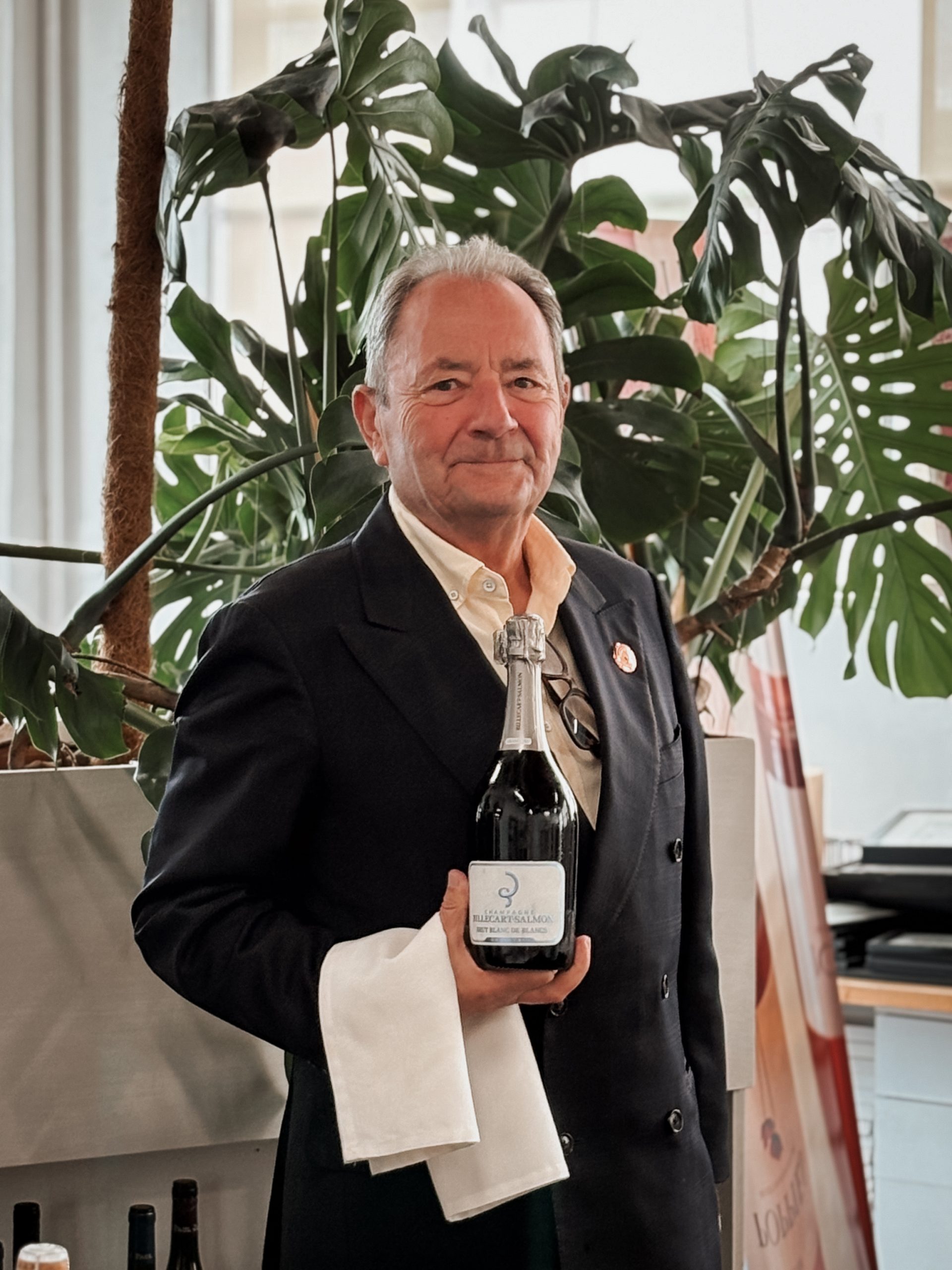
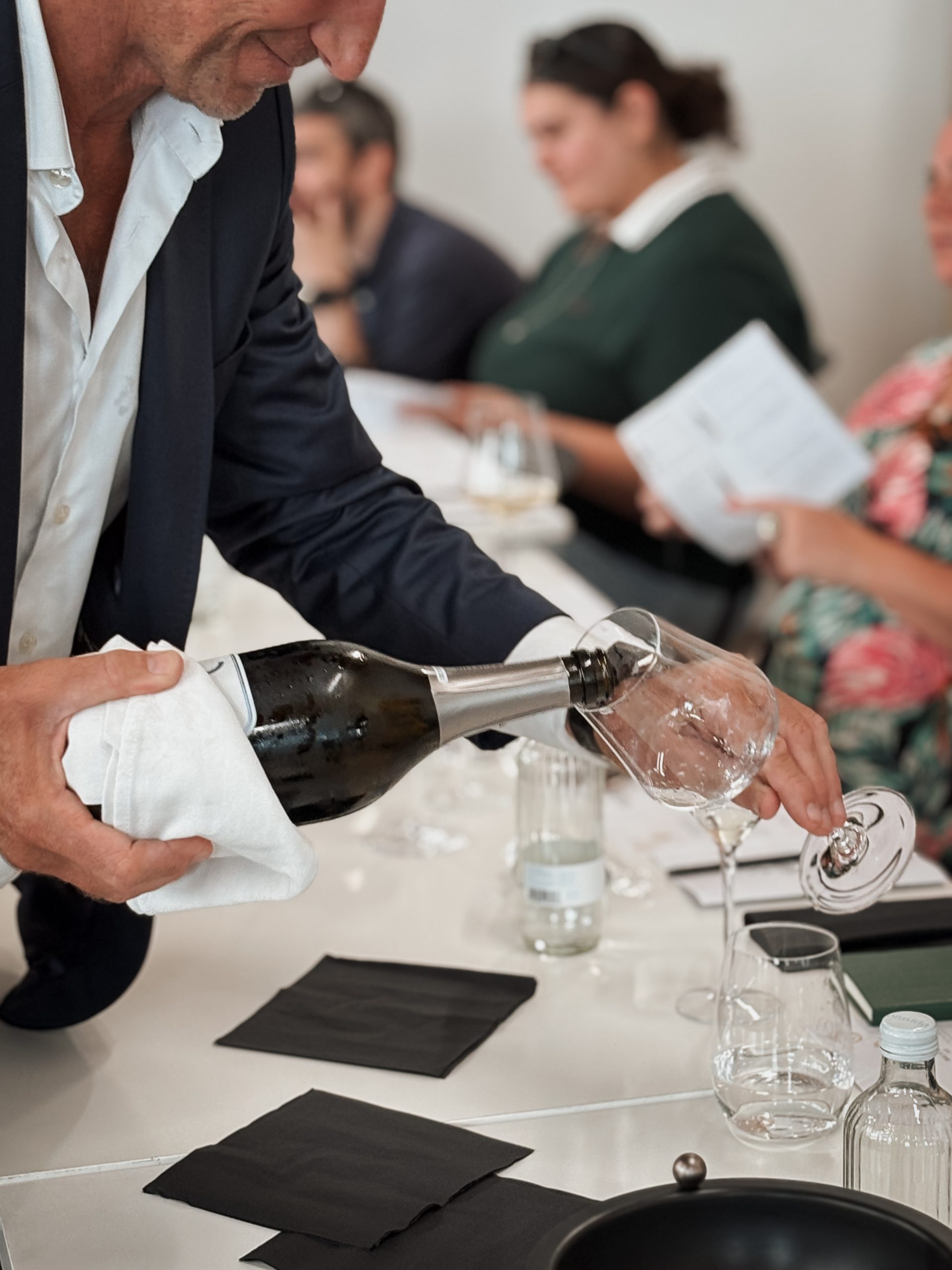
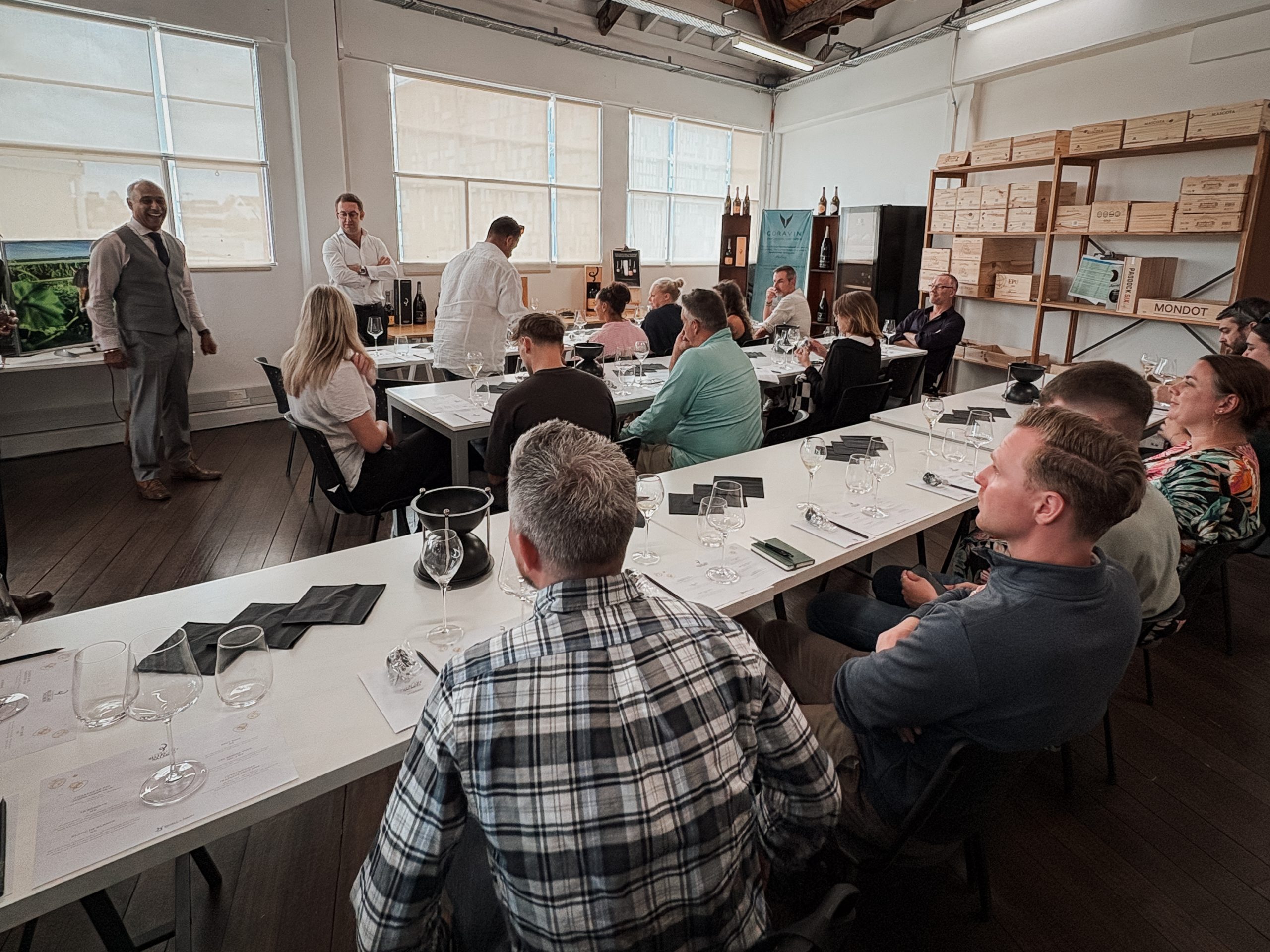
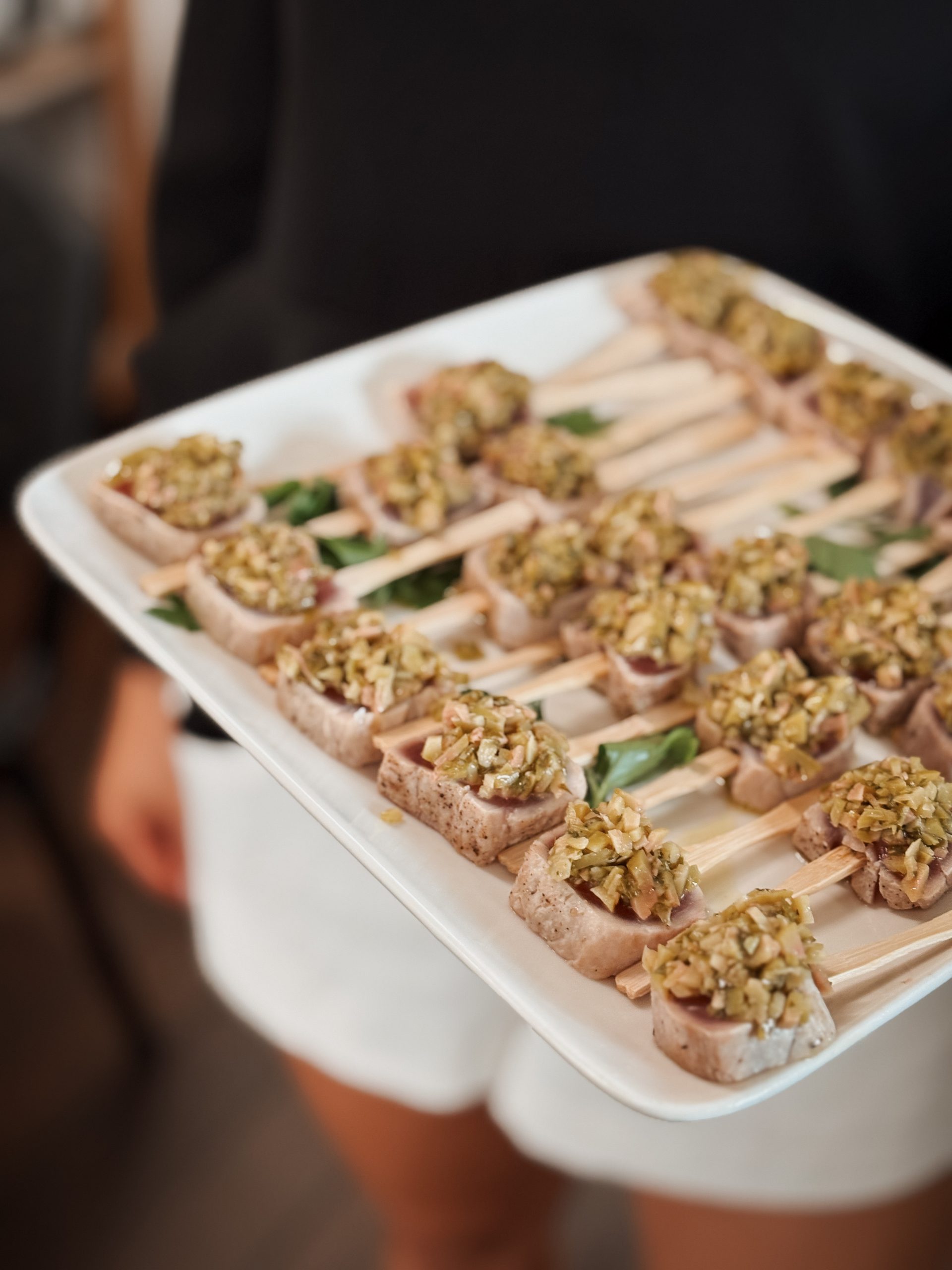
@Panacea
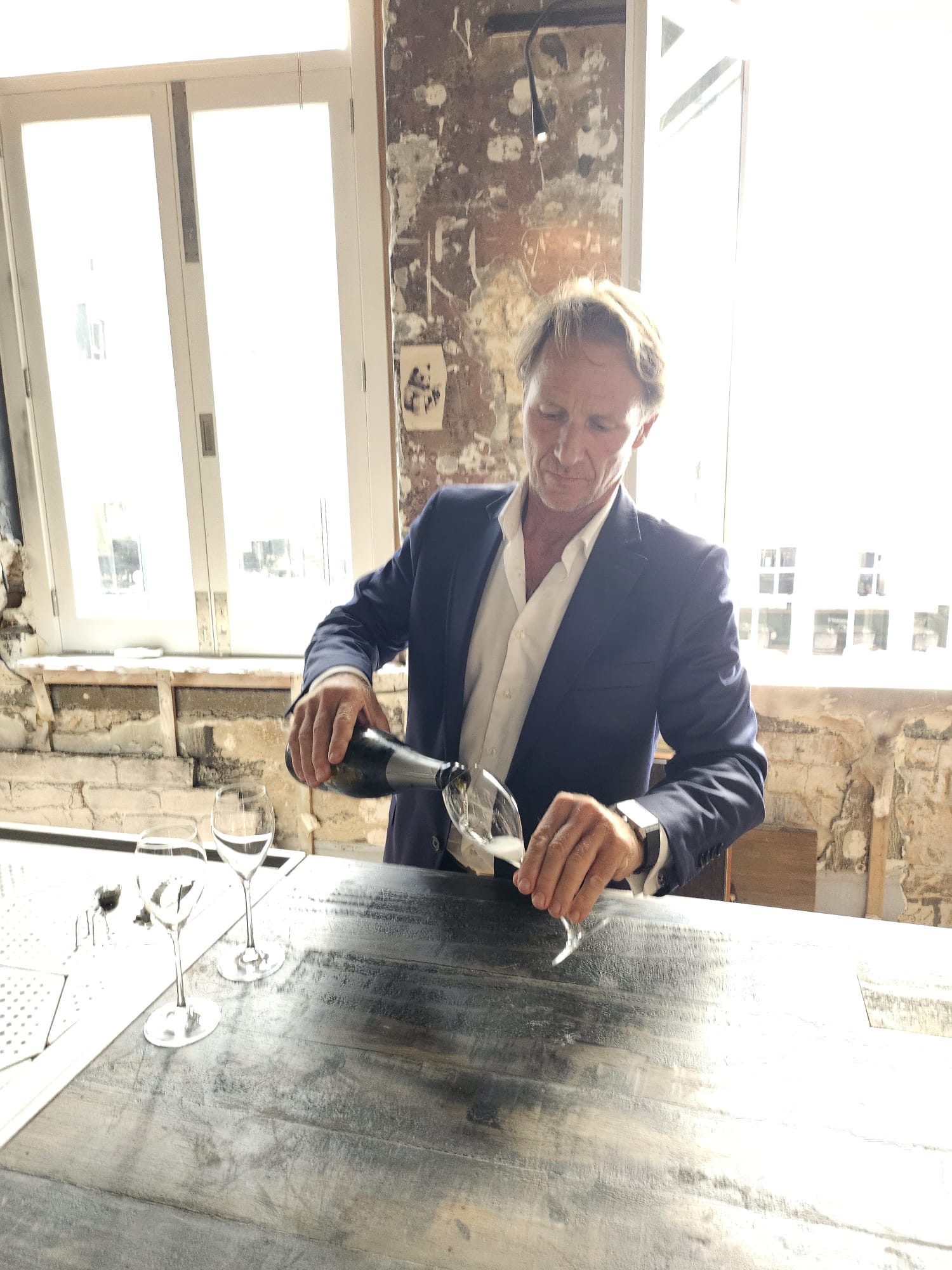
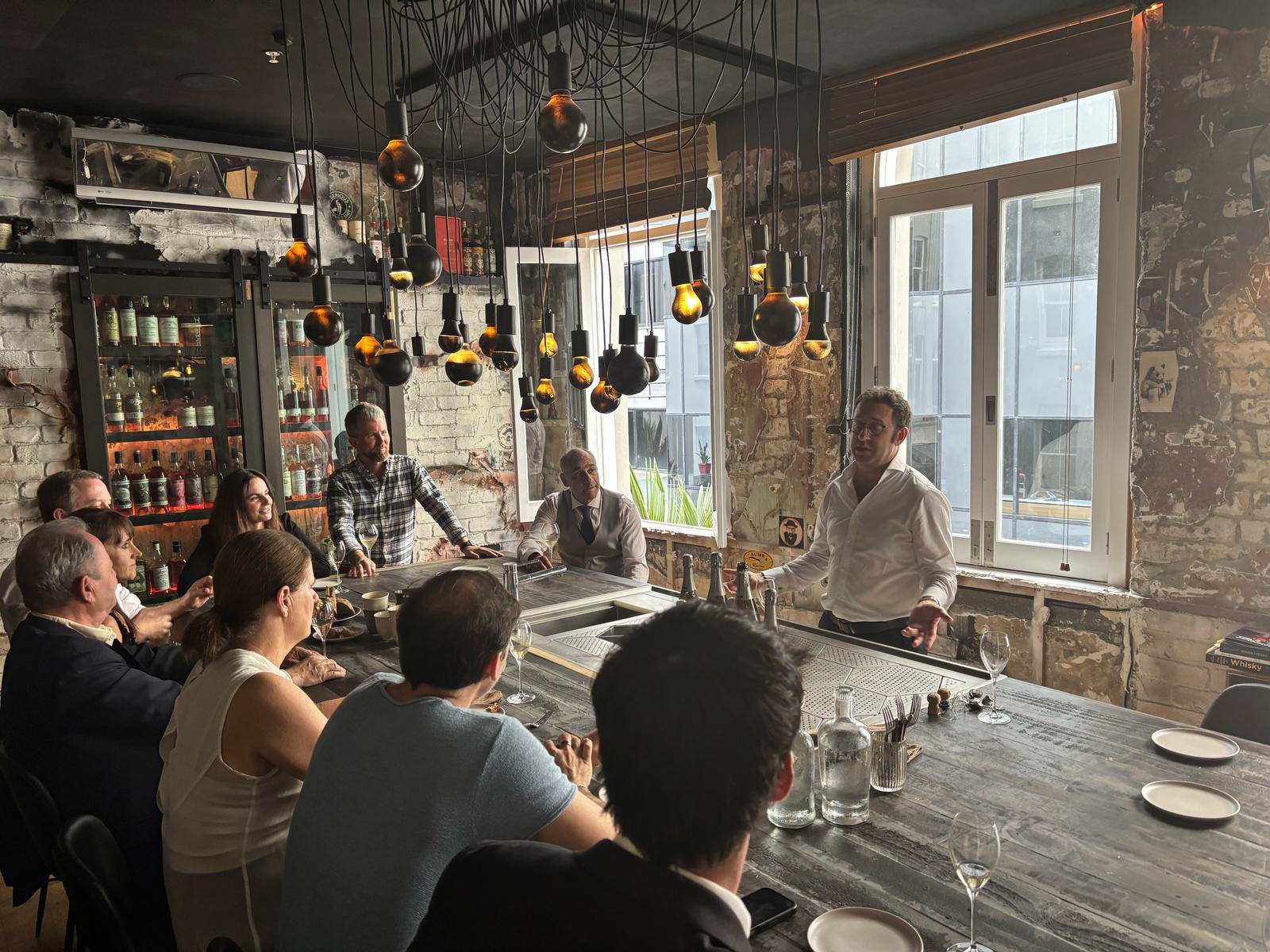
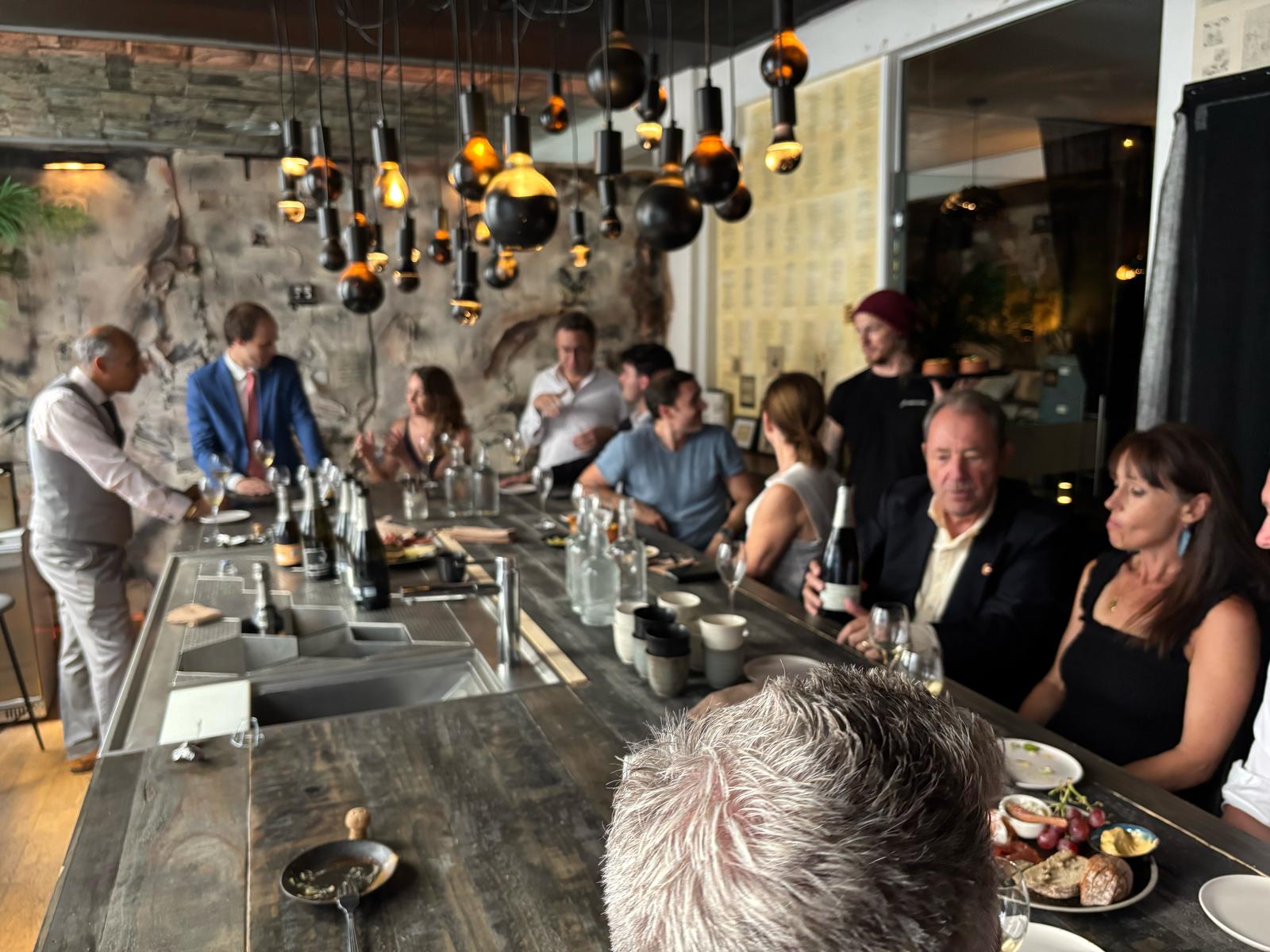
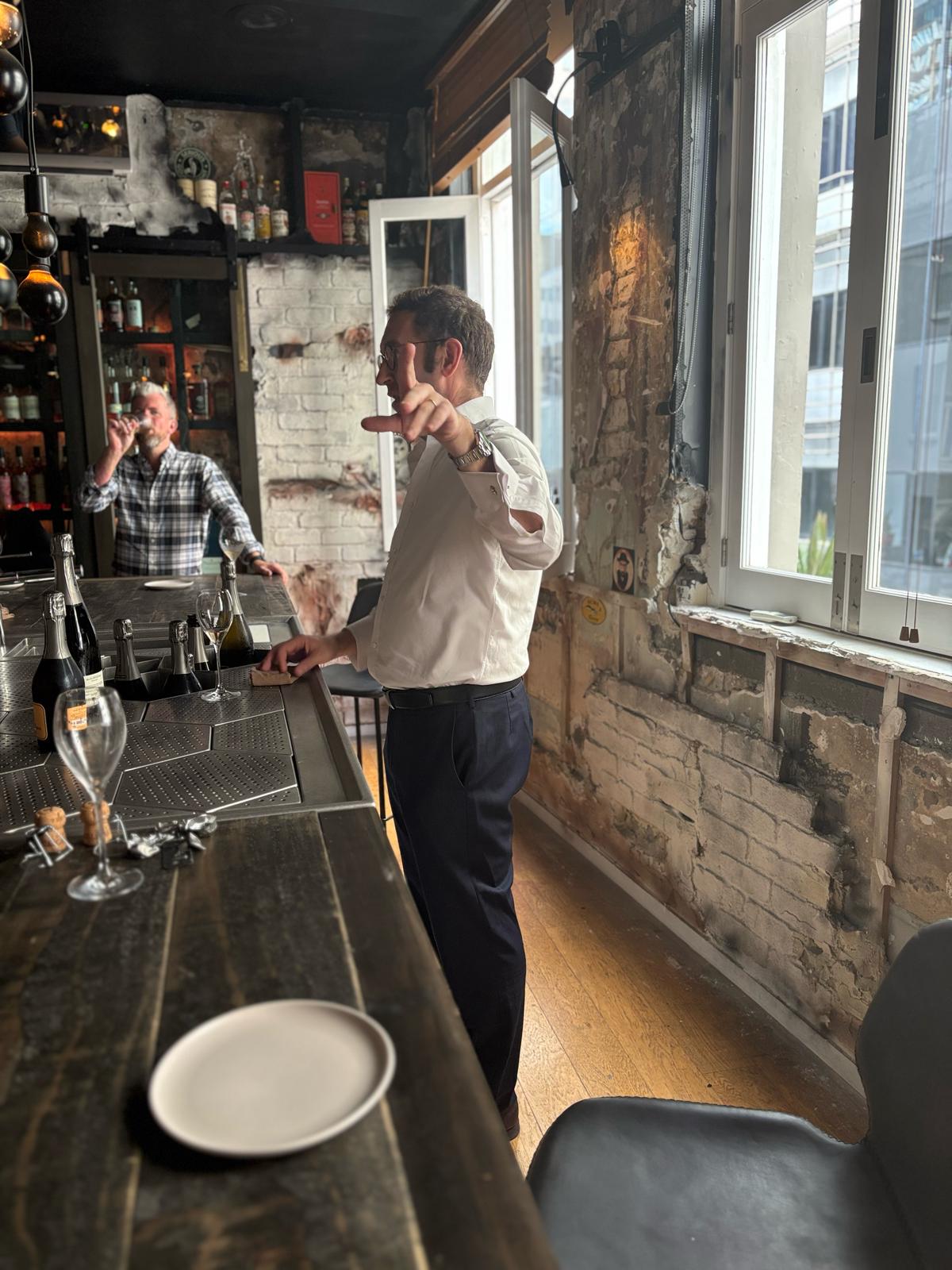
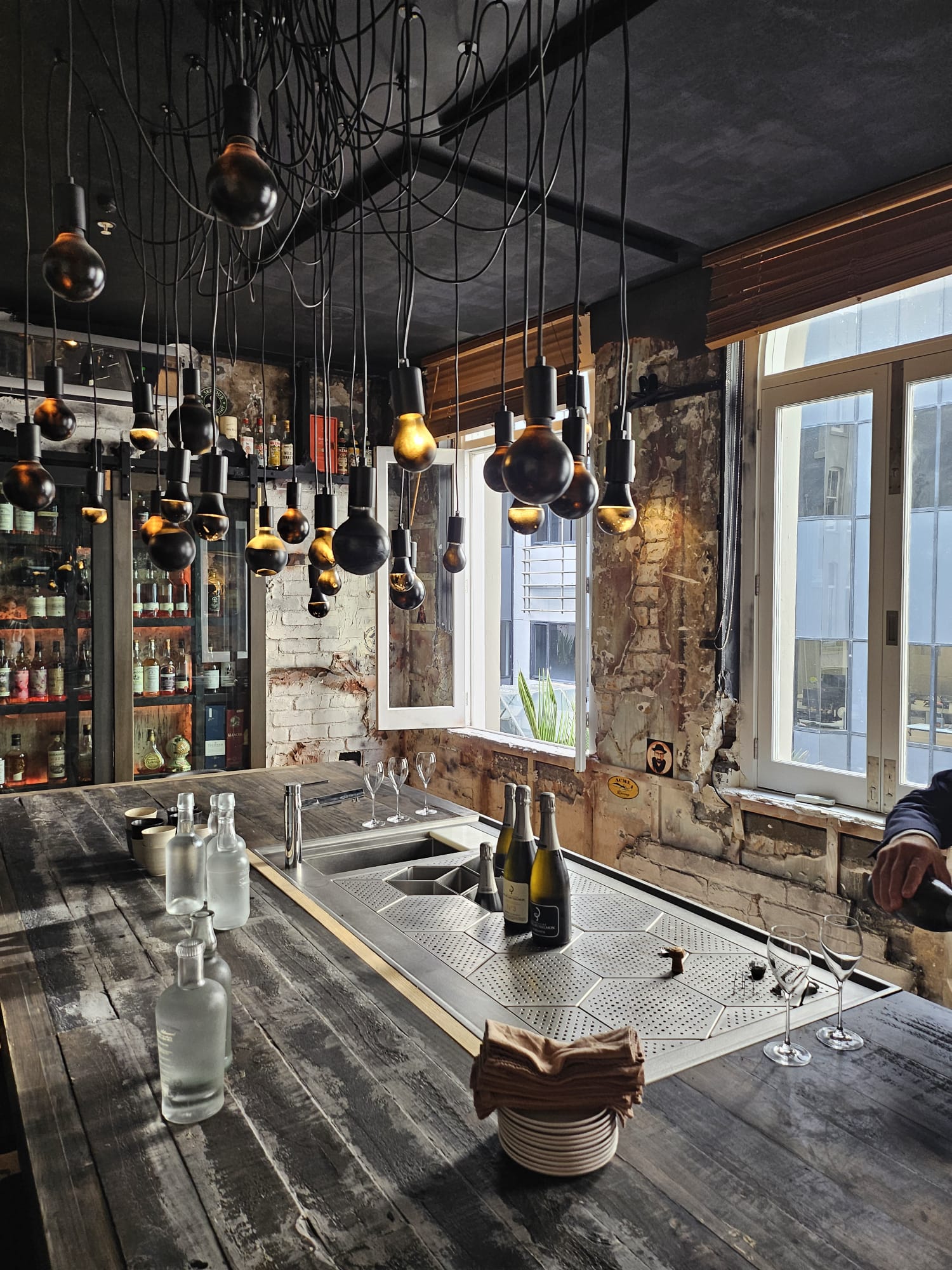
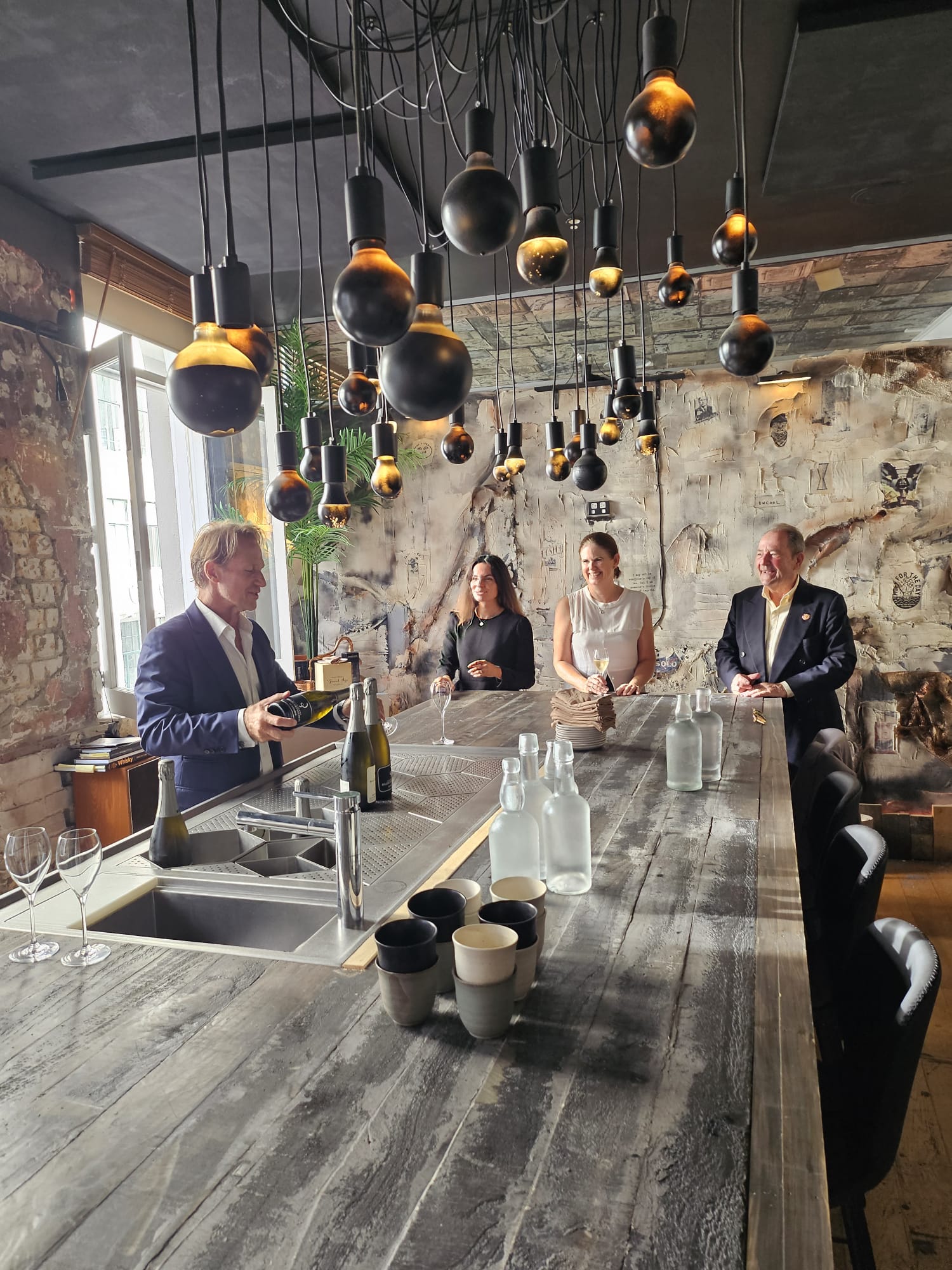
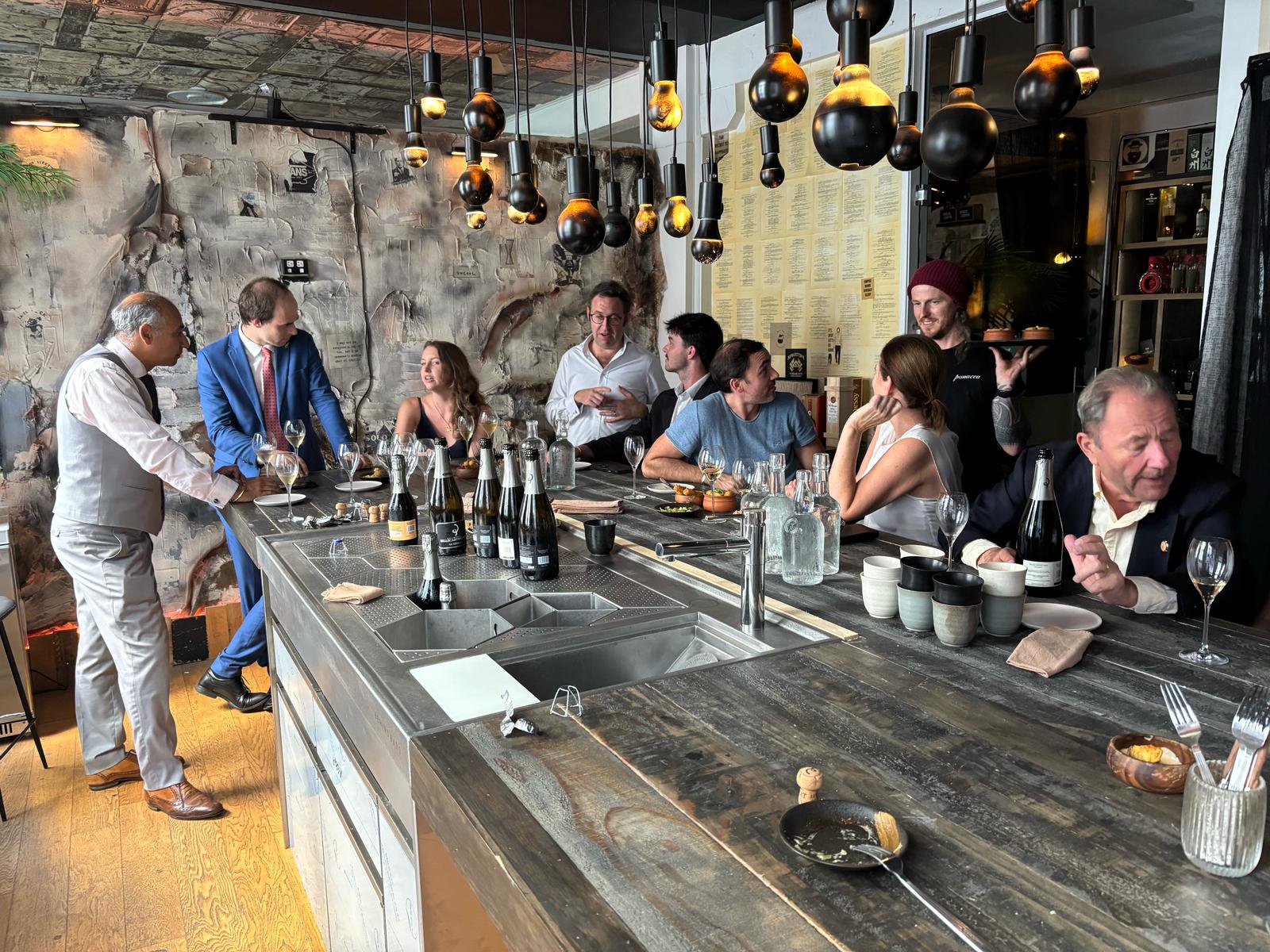
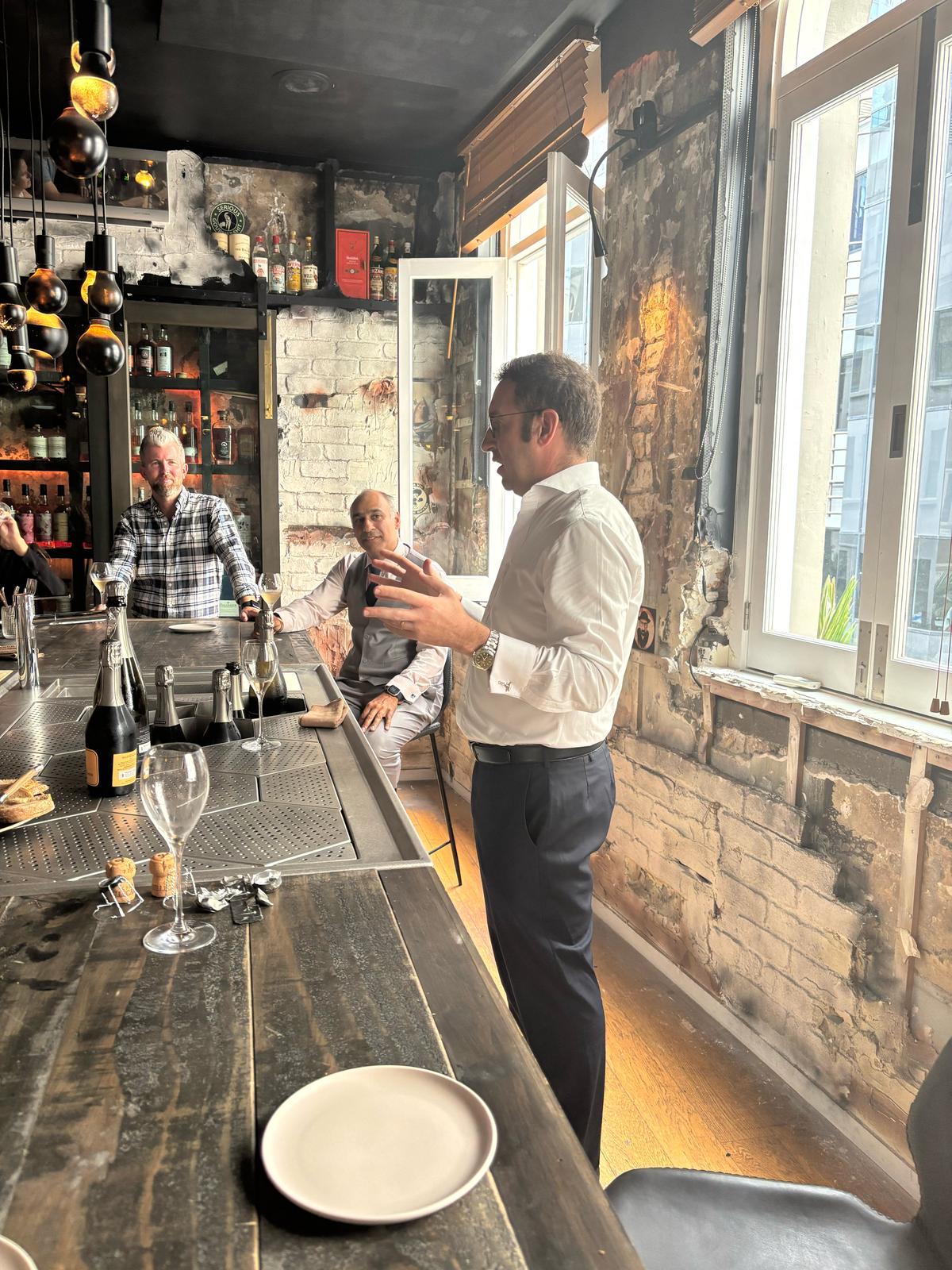
@SidArt
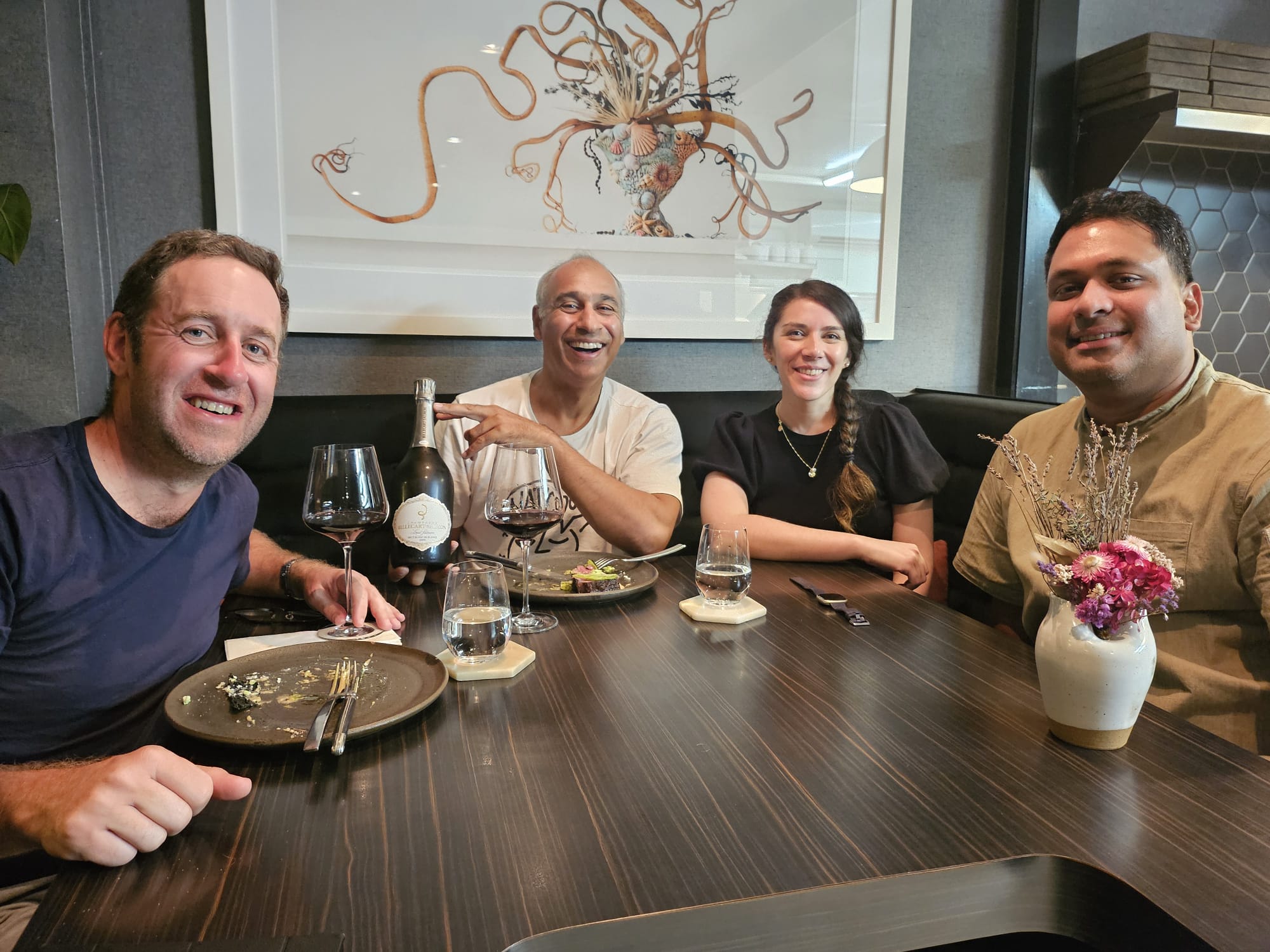

Tauranga
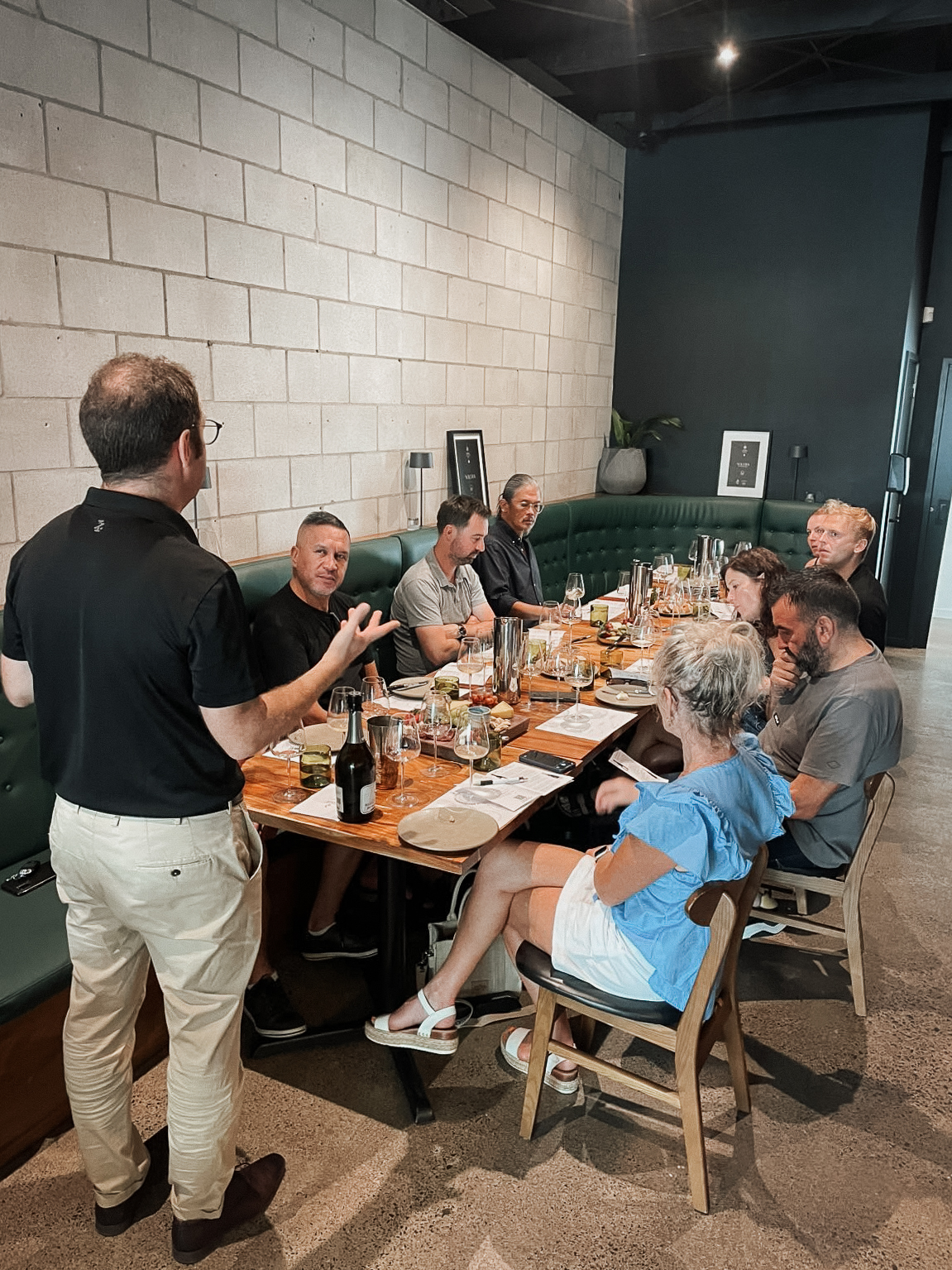
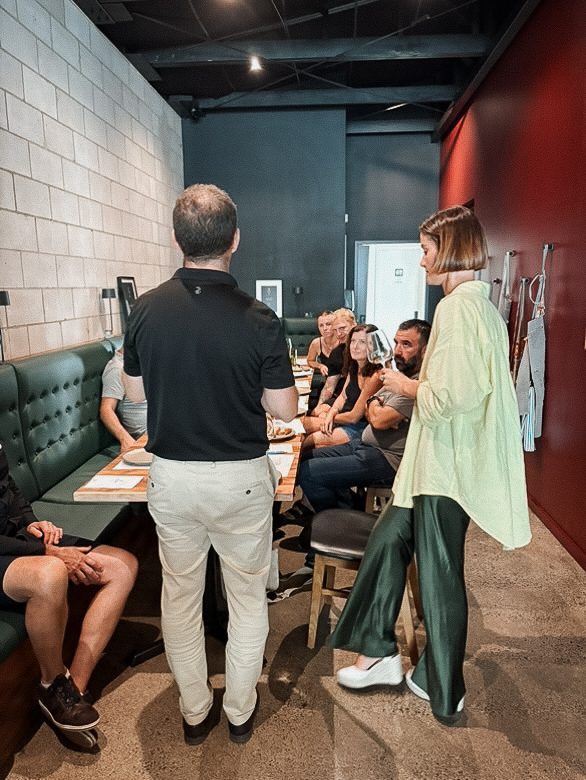
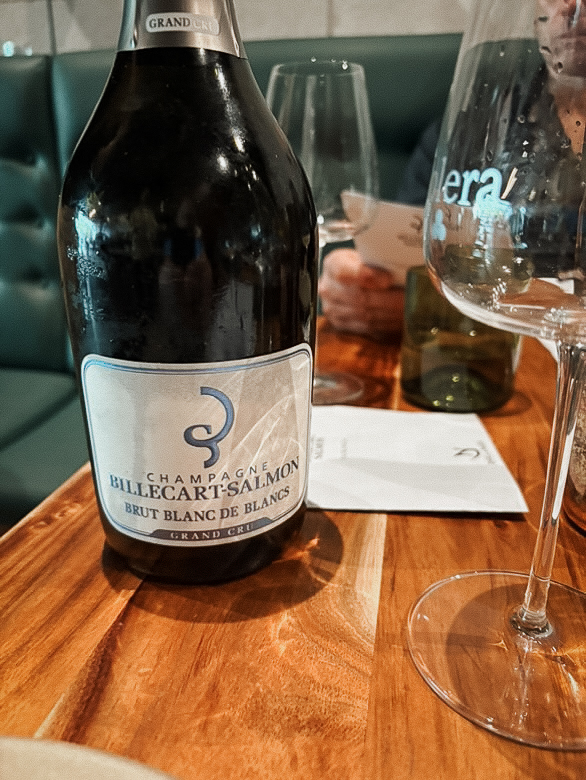
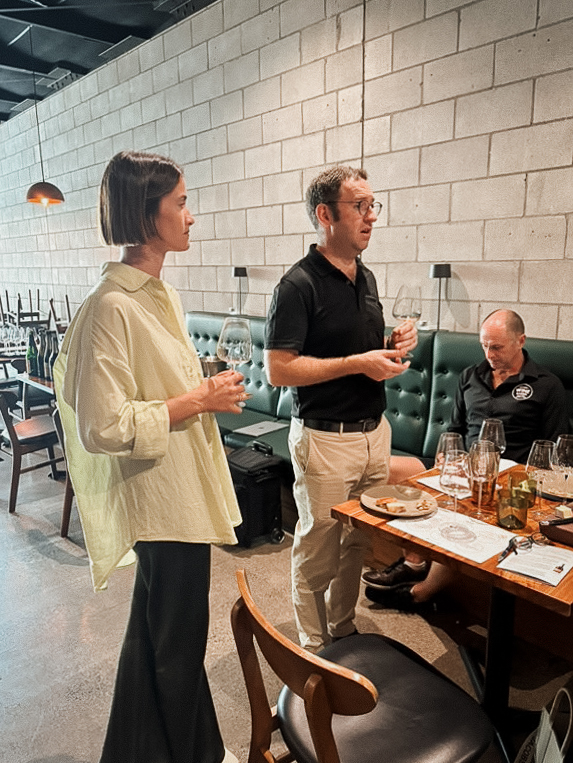
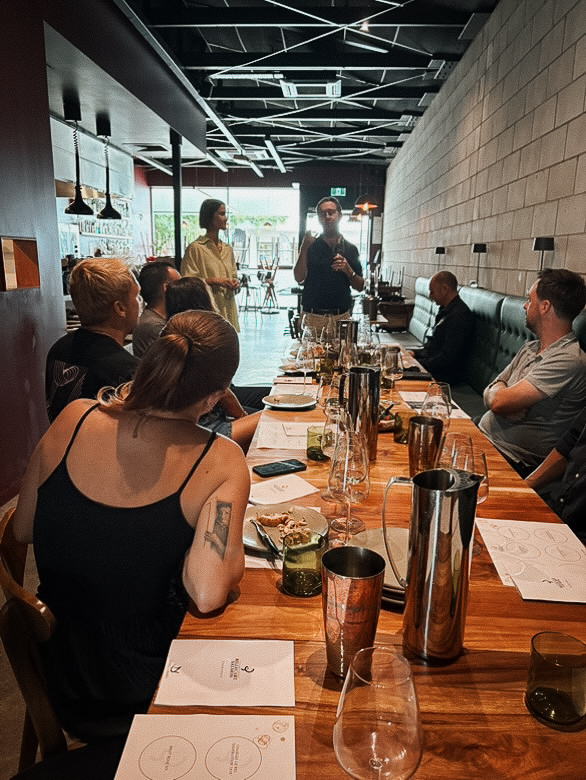
All in a Name: Billecart-Salmon's New Visual Identity
All in a Name: Billecart-Salmon's New Visual Identity
A new look and improved quality for Billecart’s already legendary NV cuvées.
An old favourite, a new identity. In its unwavering pursuit of excellence, Maison Billecart-Salmon takes yet another step forward in the quality and precision of its blends.
“When you make internationally renowned champagne for 206 years you don’t have to rock the boat, but that’s exactly what Billecart-Salmon has done with the new releases of their flagship non-vintage champagnes. If you’re already a fan of Billecart-Salmon, prepare to love them even more. If you haven’t tried Billecart-Salmon before, it’s time to discover this legendary Grand Maison.”
Philip Roufail
The Process
At Billecart-Salmon, the release of each wine is approved by a dedicated tasting committee. It is composed of eight members, four of whom represent three generations of the Billecart family. The committee thus ensures that each champagne offers the best of the House’s style. The family is supported by talented collaborators such as Florent Nys, chief winemaker and Denis Blée, vineyard and wine director.
In 2019, the Tasting Committee embarked on a comprehensive re-evaluation of the ever-popular and ‘most impressive NV’ (according to Jancis Robinson) Brut Réserve cuvée. This aligned with the development of a ’library’ of reserve wines spearheaded by Florent in 2018.
This library allowed Billecart-Salmon to take a new approach to dosage. With more than 50 exceptional wines in a dedicated vat house and reduced doses of sugar (‘dosage’) allow them to release a finer and purer expression in their final champagnes.
Chief winemaker, Florent creates specific “liqueurs” from these reserves for each blend in order to magnify the character of the wines, which are then approved by the tasting committee during blind tastings.
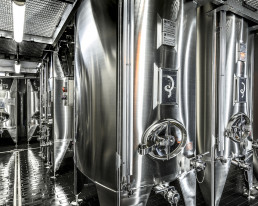
William Kelley for Robert Parker’s The Wine Advocate visited the House in 2022 and noted the work and their potential;
“Another development is investment dedicated to increasing the proportion of reserve wines, which now routinely surpasses 50% for the Brut Réserve (it was more like 35% not long ago). Recent releases from Billecart have been excellent and show all that work very clearly, and surely the upward trajectory will be perpetuated if the house continues to invest in agronomic improvements. Fans of Billecart’s elegant, pillowy but precise style will be delighted by everything…”
The Range
Billecart’s attention to detail extends beyond Brut/Le Réserve – their full range of non-vintage cuvées have been reviewed in the same vein;
- The Brut Rosé will become Le Rosé
- The Brut Sous Bois will become Le Sous Bois
- The Brut Blanc de Blancs will become Le Blanc de Blancs
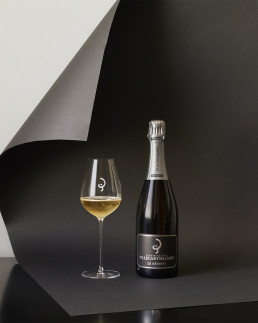
Billecart-Salmon NV Le Réserve
Was ‘Brut Réserve’
What’s Different:
- An extended ageing time on lees, increased from an already astonishing average of 30 to 50 months. The minimum ageing requirement for NV cuvées in Champagne is just 15 months.
- A reduced dosage for greater purity and expression of terroir.
- More depth with 15 vintages in the bottle.
- A larger proportion of wines vinified in barrels, adding richness and density.
- A second wine (Inspiration 1818) was introduced to lift average quality across the board for the house NV range
Fans are already aflutter, with ‘Word on the Grapevine’ calling it “the new benchmark non-vintage champagne”;
“This scale of investment is largely unrivalled amongst grand marques, in part because so many are beholden to shareholders or management, being family-owned and managed liberates long-term vision from quarterly returns. The resultant Le Réserve is a showstopper… Don’t walk, run to taste this new benchmark non-vintage champagne.“
“When you make internationally renowned champagne for 206 years you don’t have to rock the boat, but that’s exactly what Grand Marque (Great Brand) Billecart-Salmon has done with the new releases of their flagship non-vintage champagnes. The Brut Reserve NV, soon to be called “Le [Réserve],” remains a blend of 40% Meunier, 30% Chardonnay, and 30% Pinot Noir, but now incorporates a perpetual blend (62%, 2006-2018) for the first time, adding depth and complexity, and the dosage has dropped from 8g/l to 3g/l, resulting in a much drier and refined style of champagne. In addition, the base vintage (38%) is from the fantastic 2019 “solar” harvest, which produced ripe grapes with high levels of acidity. The majority of wines (92%) were fermented in stainless steel tanks and a small but consequential amount (8%) were fermented in oak casks. Finally, the Brut Reserve only went through partial malolactic fermentation to preserve the freshness of the 2019 vintage. Disgorged in the spring of 2023. If you’re already a fan of Billecart-Salmon prepare to love them even more. If you haven’t tried Billecart-Salmon before, it’s time to discover this legendary Grand Maison.” – Philip Roufail
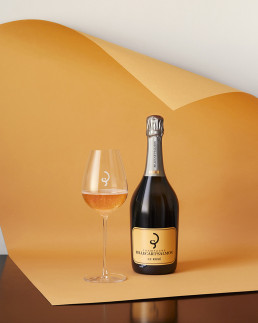
Billecart-Salmon NV Le Rosé
Was ‘Brut Rosé’
- 33% Pinot Noir, 43% Chardonnay, 24% Meunier
- Low-temperature vinification in stainless steel tanks
- Ageing on lees: 36 months
- Extra Brut dosage (4.7 g/L)
“Based on the 2020 vintage, Billecart-Salmon’s signature rosé appears to be on its finest form of recent years under cellar master Florent Nys, full of fragrant, crunchy redcurrant, red cherry and orange fruit with an alluring hibiscus-like floral lift and subtle green peppercorn spicing. The Meunier wraps the intensity of the vintage base in a little softness that keeps the focus on effortless ease (helped by the selection of delicate Chardonnays and young, fresh reserve wines), all adding up to a rosé of immediacy and charm, sweet-natured without sweetness and fragrant without overt fruitiness.”
– Decanter, 92 Points
“The NV Brut Rosé (base 2020) is another wine that points to the progress Mathieu Roland-Billecart has made here in recent years. Pliant, creamy and super-expressive, this edition is striking. It has a good bit of textural richness and is fresher than the 2018 tasted alongside it. Of course, some of that may be as simple as time in bottle. Pomegranate and grapefruit are laced into the brisk, finely cut finish.”
– Vinous
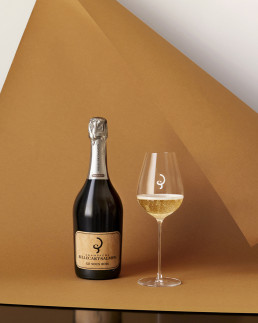
Billecart-Salmon NV Le Sous Bois
Was ‘Brut Sous Bois’
- 48% Pinot Noir, 30% Chardonnay, 20% Meunier
- Low-temperature vinification in oak casks
- Ageing on lees: 5 years
- Extra Brut dosage (2 g/L)
“Based on the 2016 vintage with 26% réserve wines from eight different vintages, Billecart-Salmon’s NV Sous Bois exhales a delicate, toasty bouquet of mirabelle, tangerine, white fruits, ripe orchard fruits and baked bread, mingled with delicate notes of vanilla pod. Medium to full-bodied, round and creamy, it’s perfectly balanced with a vinous, fleshy core of fruit and a delicately toasty finish complemented with gastronomic bitterness… Since Mathieu Roland-Billecart’s arrival in 2018, the estate has expanded its barrel program, focusing on the best terroirs for cuvées like Brut Réserve and Brut Sous Bois…”
– Yohan Castaing for The Wine Advocate
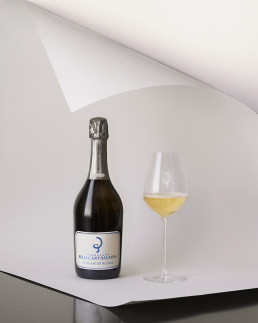
Billecart-Salmon NV Le Blanc de Blancs
Was ‘Brut Blanc de Blancs’
- 100% Chardonnay from the four Grand Cru vineyards of the Côte des Blancs: Avize, Chouilly, Cramant, Mesnil-sur-Oger.
- Low-temperature vinification in stainless steel tanks
- Ageing on lees: 5 years
- Extra Brut dosage (1.7 g/L)
“The NV Brut Blanc de Blancs Grand Cru is showing beautifully today, with aromas of confit citrus, pear, herbs, orchard fruits, pastry and brioche. Medium to full-bodied, it is round and supple with the delicate, bright tension that is the signature of Billecart-Salmon. Perfectly balanced and offering a vinous, toasty and elegantly long finish, it’s based on the 2017 vintage with 23% from 2016. Vinified and matured in stainless steel, it spent five years on the lees in bottle before being disgorged with a dosage of 1.7 grams per liter.”
– Yohan Castaing for The Wine Advocate
My Origin
Unlock the secrets of your cuvée with MyOrigin.
Your digital tool to discover the Champagne you’re about to taste, down to every last detail: grape varieties, dosage, disgorgement date, number of vintages contained in each cuvée, total sugar and food pairings. Billecart-Salmon reveals everything in full transparency thanks to the 6-digit number located on the back label of your bottle.
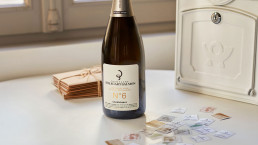
Rendez-Vous N°6 by Billecart-Salmon
Rendez-Vous N°6 by Billecart-Salmon
A Limited Global Release
“Precise, New, Bold, each new release will epitomise an exceptional terroir and a champagne grape variety as well as the art of a meticulous winemaking”
Billecart-Salmon website
Hold on to your hats, Champagne aficionados, because this brand new release from famed Billecart-Salmon may be the most profound Blanc de Blancs of your life!
When it comes to champagne, at D&N we fall very hard for mineral, incisive Blanc de Blancs. The chalkiness, the electrifying acidity, the sense that you’re practically drinking the region’s limestone soil. We can’t get enough of it.
Now, our prestigious champagne Maison, Billecart-Salmon has intensified those extraordinary Blanc de Blancs qualities and shot them into another stratosphere with its limited global release of Rendez-Vous N°6
“Billecart-Salmon is in the very top echelon of Champagne houses – it is one of only four awarded the 10/10 rating”
Tyson Stelzer, Acclaimed Champagne Specialist
We know Champagne is never just a simple glass of fizz… As soon as the cork flies, the first sip reveals a wine of fascinating complexity. For even the most modest cuvée, a bevy of blending decisions, multi layers of history and the incalculable climate of this northern corner of France all come into play.
This is never truer than at prestigious champagne Grande Marque Billecart-Salmon where, the maison has been on a 7 generation quest for excellence, by constantly experimenting with new ideas and methods to highlight the unique quality of its wines and terroirs.
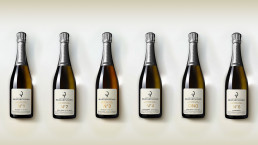
About the Billecart-Salmon Rendez-vous Collection
Mathieu Roland-Billecart, explains: “Billecart-Salmon experiments all the time, whether it’s in the vineyard or in our vinification process. What that means is that we try new things to further improve the quality wherever we can [ ]” And this is what the Rendez-Vous series is all about.
Launched in 2020, the range was created after cellar experiments conducted by the House’s Tasting Committee to assess the evolution of select grape varieties and exceptional terroirs. The most remarkable were chosen and highlighted through this Collection, offering a unique tasting experience in a very limited edition.
The N°6 champagne is made from grapes from one of the most emblematic Grand Cru villages of the Côte des Blancs. The wines of Mesnil-sur-Oger are remarkable for their great tension. This is Chardonnay of unequalled purity and minerality. This stunning release may just be Champagne in its most thrilling form.
“The Billecart family doesn’t rest on its laurels.”
– Decanter, Stephen Brook
Marrying Precision with Purity in Chardonnay
The Billecart-Salmon Rendez-Vous N°6 series release was created to provide a platform for Champagne’s exceptional terroir and a premier grape variety, Chardonnay, and the meticulous art of winemaking.
Precision and Purity of Identity is at the very core of Rendez-Vous N°6. Crafted with an attentive focus on fruit purity and flavour balance, it stands out with its aromatic nose of ripe fruit and spring blossoms. On the palate, tension and tactility emerge, elevated by a seductive chalky imprint and radiant complexity. It is characterized by a pale gold colour with green tints that delights in the glass.
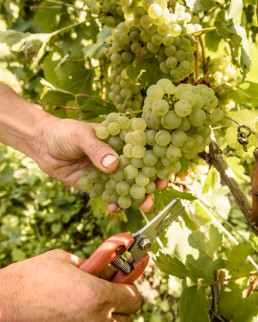
Remarkably, this is fruit taken exclusively from the 2014 vintage. This wine benefits from a slow and meticulous ageing on lees during a period of 82 months. A very selective approach is used, based on the concentration of the fruit and achieving the ultimate balance of flavours.
Let’s talk about the 82 months cellaring!
Billecart-Salmon is famously slow to release all their wines – with over three to four years in cellars the non-vintage champagnes really blossom, staying around twice as long as the fixed regulations of the appellation. The vintage cuvées patiently wait ten years before they begin to reveal their maturity. Allowing time to play its role is behind the grandeur of all Billecart-Salmon champagnes.
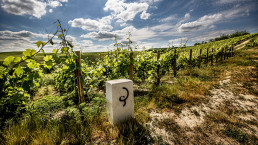
Champagne aficionados will truly appreciate that this a major commitment to our drinking pleasure. A prestige bottle really only starts to strut its stuff after the innumerable calculations of the tasting team and the cellar master indicates that the Champagne is entering its most exciting drinking window.
All the crystalline precision you expect from Grand Cru Blanc de Blancs is here in the Billecart-Salmon Rendez-Vous N°6 along with a serious amount of power.
We didn’t get much, so secure some for yourself before it’s gone – Don’t hesitate – Go deep.
Since 1818, over 7 generations of the Billecart-Salmon family, each member has endeavoured to continue the family tradition, staying faithful to the same motto:
“Give priority to quality, strive for excellence”.
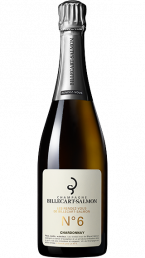
Billecart-Salmon Rendez-Vous N°6 NVChampagne, France
Appearance
Its luminous gold colour offers a radiant, sparkling finish that gives way to a fine persistent bubble.
Aroma
Its sensory development leans on distinguished aromatic floral notes, which speaks to its great minerality of fruits (white roses, jasmine and the flesh of citrus fruit). Its sensual, meringue flavour is based on white pome fruit (tart pear and clementine juice). It is the perfect expression of subtly disciplined Chardonnay, meticulously matured on the lees.
Palate
A captivatingly tense tactile sensation is dominated by a chalky, seductive spirit (double cream, almond powder and tender nougat). A radiant complexity combined with a characteristic touch of salinity of the great terroirs of the Côte des Blancs. A delicate finish with hints of bergamot, iodine and white pepper
- From – Florent NYS, oenologist and Billecart-Salmon’s Chief Winemaker.
- 100% Chardonnay from Mesnil-sur-Oger from the Côte des Blancs, year 2014
- 100% Grand Cru
- Vinification in stainless steel tanks
- Maturation on lees / in cellar: 82 months
- Dosage: 5.6 g/l