

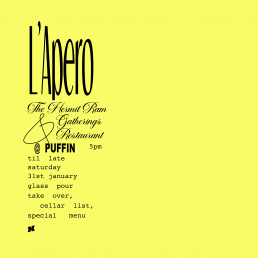
Hermit Ram x The Gatherings – Puffin Takeover
Puffin Wine Bar hands the keys over for one night only to two of the most exciting names in wine and food.
Hermit Ram will be taking over the bar, pouring a curated lineup of their characterful, site-driven wines including current releases, a new launch, and a few special bottles pulled from the cellar. Expect wines with personality, texture, and a strong sense of place.
In the kitchen, The Gatherings will be serving thoughtful, seasonal food designed to pair seamlessly with the wines. Simple, generous plates, bold flavours, and the kind of cooking that’s made to be shared over a glass (or three).
No formalities, no fuss, just great wine, great food, and a buzzing Puffin atmosphere. Come early, stay late, and settle in for a night that celebrates collaboration, craft, and good times.
About Hermit Ram
“It all began in 2002 when I stumbled across an etching of a large gnarly looking ram standing in a field during my travels. He was defiant, a little sauvage, had an old world charm and was very New Zealand. I bought him, had him framed and hung him up in my lounge…”
10 years after finding his gnarly ram etching, winemaker Theo Coles met Gareth Renowden, the owner of the Limestone Hills vineyard in the Waipara Gorge. Gareth’s vineyard ticked all the boxes of what Theo looked for in an interesting site, being close planted, naturally farmed and small.
"I made the first vintage of Pinot Noir in 2012, all naturally, no additions and matured in neutral oak hogsheads. As the wine progressed through maturation it got better and better, and revealed its true vineyard character to me. It had an exciting mix of savoury fruit aromatics and salivating salty acidity. I had to bottle it.
I was sitting on my couch contemplating how I’d present the wine in bottle and I looked up. There staring me in the face was the framed etching of the Ram. It all made sense."
So ‘The Hermit Ram’ came into being. He summed up the ethos of working with tiny sites and ancient techniques applied to New Zealand flavours, that Theo really wanted to pursue.
Today, the range of wines has expanded. In general the fruit comes from tiny vineyards throughout the Canterbury region of New Zealand. Every wine has it’s own story to tell. The vines are naturally farmed and the wines made with the minimal amount of additions. Old techniques are employed. They are wines of depth, complexity, individuality and most importantly drinkability.”
About The Gatherings
Led by Chef Alex Davies, The Gatherings translates place onto the plate.
The restaurant’s philosophy centres on respect — for the growers, producers, hunters, and fishers who shape the ingredients, and for the shared act of dining itself.
Guided by the seasons, the menu reflects Aotearoa through a focus on organic vegetables, wild meats, and sustainably sourced New Zealand kaimoana.
About Puffin Wine Bar
Locally owned and operated in Wellington, Puffin is a wine bar with a focus on organic and minimal intervention wines. And some food. Small plates, charcuterie, cheese. All the salty, tasty, umami, acid driven deliciousness you could want.
"It’s important to be open-minded here and in life generally - Our aim is everyone’s enjoyment, all the time."

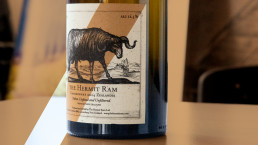
The Hermit Ram - a bit gnarly, a bit wild and a lot delicious
The Hermit Ram
A bit gnarly, a bit wild and a lot delicious
“It all began in 2002 when I stumbled across an etching of a large gnarly looking ram standing in a field during my travels. He was defiant, a little sauvage, had an old world charm and was very New Zealand. I bought him, had him framed and hung him up in my lounge…”

Theo Coles is no stranger to winemaking in New Zealand. He was the hands and palate behind the likes of Kalex and Mountford Estate – both brands we’ve enjoyed enough to have represented at some stage in our DN journey.
The Hermit Ram is Theo’s own personal wine ‘experiment’, if you will. It’s how he can express himself freely and work really naturally using ancient techniques in this new-world country.
“One of the more unusual North Canterbury producers is Theo Coles of the Hermit Ram… Mr. Coles is an iconoclast, much given to experimentation. His wines are unusual… but they are almost always interesting and distinctive.
“I make wines with structure but without tannins,” he said. “What does New Zealand taste like? Forest and animals.””Eric Asimov for The New York Times
The “Reasons” Explained by Theo
10 years after finding his gnarly ram etching, Theo met Gareth Renowden, the owner of the Limestone Hills vineyard in the Waipara Gorge.
“Along with a truffiere he had 1000 Pinot Noir vines planted on beautiful active limestone soil. He wanted help to make some wine, after a walk and a talk we agreed to make the wine together. I thought ‘at least I’ll have some decent Pinot to drink..’
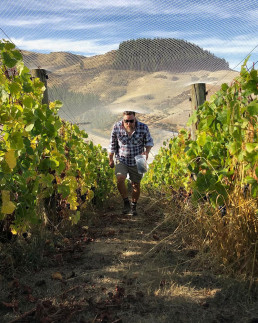
Gareth’s vineyard ticks all the boxes, it is close planted, naturally farmed and small. I made the first vintage of Pinot Noir in 2012, all naturally, no additions and matured in neutral oak hogsheads. As the wine progressed through maturation it got better and better, and revealed its true vineyard character to me. It had an exciting mix of savoury fruit aromatics and salivating salty acidity. I had to bottle it.
I was sitting on my couch contemplating how I’d present the wine in bottle and I looked up. There staring me in the face was the framed etching of the Ram. It all made sense.
So ‘The Hermit Ram’ came into being. He summed up the ethos of working with tiny sites and ancient techniques applied to New Zealand flavours, that I really wanted to pursue.
Today, the range of wines has expanded. In general the fruit comes from tiny vineyards throughout the Canterbury region of New Zealand. Every wine has it’s own story to tell. The vines are naturally farmed and the wines made with the minimal amount of additions. Old techniques are employed. They are wines of depth, complexity, individuality and most importantly drinkability.”
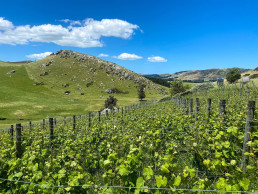
“Theo Coles makes quite remarkable wines from the Limestone Hills Vineyard… They are so far removed from what most people experience as New Zealand wines, and yet they are full of excitement, even if that sometimes takes them close to the edge.”
David Crossley’s World of Fine Wine
The Limestone
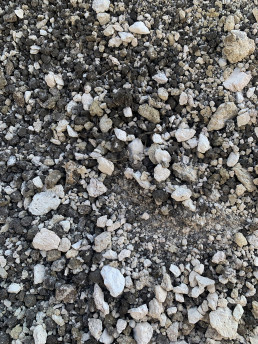
One of the driving passions behind the Hermit Ram is the seeking out of Pinot Noir planted on active clay limestone soils. The activity in the soil promotes a salinity and acidity in the wine which surpasses tannins for structure.
Ultimately this structural profile drives an incredible link between the flavours of the resultant wine and the conditions unique to that site. The wines can be haunting and fine yet salty and assertive. They tell a story about their little patch of dirt.
To make certain that the story they tell is true, all the wines are made with as little interference as possible and bottled with a minimal amount of Sulphur.
“One of the more unusual North Canterbury producers is Theo Coles of the Hermit Ram… Mr. Coles is an iconoclast, much given to experimentation. His wines are unusual… but they are almost always interesting and distinctive.
“I make wines with structure but without tannins,” he said. “What does New Zealand taste like? Forest and animals.””Eric Asimov for The New York Times
“The more winemakers we meet, the more we understand that the greatest winemakers are also the most humble. That’s definitely the case when it comes to Theo Coles of the Hermit Ram. When we chat with him, it’s clear his enthusiasm for his craft grows on a daily basis, but so does his way of thinking – with experience, he becomes more open-minded, not less.
It’s arguably this mindset that has brought him to where he is today; creating some of the most thrilling and exciting wines that New Zealand has to offer.”Christina Rasmussen for Little Wine
“Theo told us that “Europe has the benefit of many generations of winemakers who did the exploring – out here, we need to do it all in a single life.” This statement resonates with his wines, deep and clear, and which taste refreshingly full spectrum.”
“The Hermit Ram is one of New Zealand’s most idiosyncratic and compelling wine projects.”
Normanby
“My region tastes like kelp and the sea and shellfish. A lot of people try to remove these notes, but I want to lengthen and deepen them.”
The Wines
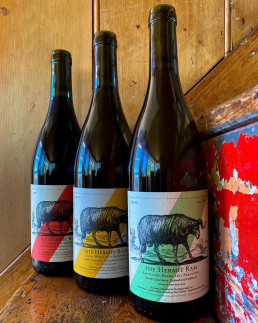
“For me, The Hermit Ram is about capturing the raw, wild spirit of New Zealand’s South Island—its rugged landscapes shaped by volcanic and seismic forces over millions of years. The limestone soils here tell a story of ancient seas, but beneath the surface, the land’s restless energy continues to pulse through the earth, giving our wines a vibrant mineral backbone and a sense of place that’s both dynamic and alive.
These wines take a very different journey to the New Zealand norm—driven by curiosity and a love of experimentation. There are no strict rules here, only one guiding principle: that the wines must be delicious.”
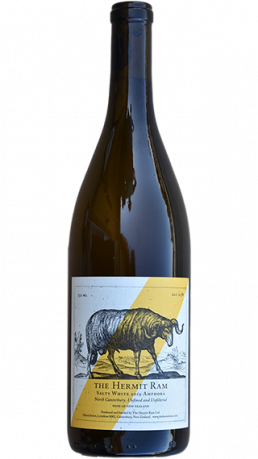
The Hermit Ram Salty White 2022
- Pinot Blanc, Sauvignon Blanc and Riesling
- Whole bunch fermentation, partially in stainless steel, and partially in amphora. Two barrels are filled and left untopped to develop a layer of flor.
- Video of it being made here
“Salty White is my ode to the New Zealand coastline, an attempt to marry both the saline and floral elements of our land.” – Theo Coles
- Jamie Goode’s The Wine Anorak, 94 Points: “The latest hit from the ever-interesting Theo Coles. 11.5% alcohol. Full golden colour, this is beautifully salty and fruity with pineapple, pear, ripe apple and some grapefruit. Dense and ripe with nice intensity and a lovely tangy edge from some Flor involvement. Such goodness here.”
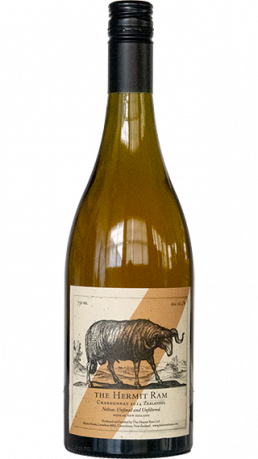
The Hermit Ram Zealandia Chardonnay 2024
- 100% Chardonnay
- Foot-crushed Chardonnay from Nelson fermented in tank then matured in ancient 500L barrels for 24 months
- Grown on gravels and marine clay
Saline and textural this wine straddles the divide between new world and old world Chardonnay.
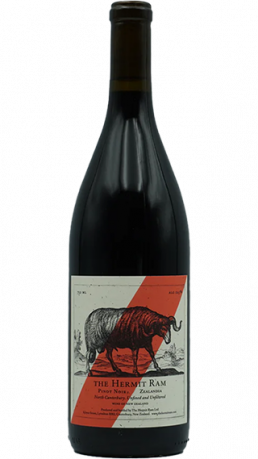
The Hermit Ram Zealandia Pinot Noir 2024
- 100% Pinot Noir | 12.5% alc
- Whole berry fermented, short maceration
- From several vineyards in North Canterbury. Grown on clay limestone and gravels
The Pinot Noir grapes come from organically-grown vineyards around North Canterbury. They are destemmed, fermented with native yeasts (with just one gentle punchdown) and macerated on skins for six weeks. The wine is matured in Tinajas (lined Spanish clay amphora) and bottled unfined, unfiltered with only minimal sulphur.
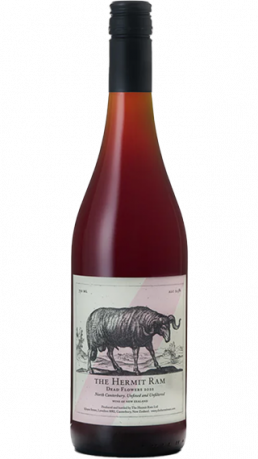
The Hermit Ram Dead Flowers 2023
- Pinot Noir and Gewurztraminer blend
- Whole bunches Gewürztraminer fermented in Gewürztraminer juice, pressed when dry and matured in tank for 18 month
- Blended with Pinot noir which was macerated for 6 weeks on skins to create a supple, aromatic yet mineral light red wine.
- Grown on clay limestone and glacial gravels.
“I loved his 2023 Dead Flowers, that blend of pinot and gewürz, juicy, saline and easygoing — ‘one plus one equals three,” is how Mr. Coles described it.” -Eric Asimov, New York Times
“The Hermit Ram is one of New Zealand’s most idiosyncratic and compelling wine projects.”
Normanby

Kongsgaard: As Close To Perfection As They Come
Kongsgaard: As Close To Perfection As They Come
Is this the greatest Chardonnay we’ve ever bought?
“As with all magical experiences, I remember with absolute clarity my first Kongsgaard moment.
It was 2018 and I was in Napa Valley. I had headed to Yountville intending to dine at the French Laundry, but for various reasons this did not happen. I was pointed to a bistro down the road connected to the iconic restaurant. I picked up the wine list and saw that they had a Coravin section… BOOM Kongsgaard By the Glass. I was with my family – before they’d even sat down I’d ordered my wine!
The Kongsgaard Chardonnay was one of the greatest wine experiences I have ever had. The wine was delicious and as close to perfection as wine can get – but like all great things, it felt effortless, it was just beautiful.”
Puneet
Ever since Puneet returned from this 2018 Napa Valley trip, he’s been determined to get Kongsgaard to New Zealand. Each year, he’s tried for an allocation and finally, this year is the year. Eight years on and it’s official, we’re getting an extremely limited but extremely real allocation of Kongsgaard
The Wine, The Myth, The Legend
“John Kongsgaard is in search of the Holy Grail and these are the most interesting, naturally made wines one will find on Planet Earth.”
– Robert Parker
Many legendary wines hark from the old-world with grand domaines or châteaux spanning back centuries, so Kongsgaard is admittedly very unique, having had its inaugural vintage less than 30 years ago. But in these short decades, a true legend has been created.
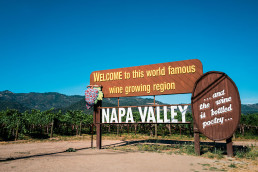
While Kongsgaard’s winemaking history is more recent, their roots in Napa are not. The saga started in the 1970’s when fifth-generation Napa natives, John and Maggy Kongsgaard planted the 6 acre “The Judge” vineyard to Chardonnay in the 1970s on family land in the hills east of Napa. 1996 was the inaugural vintage, meaning the vines already had more than 15 years of age under their belts upon release.
Alex Kongsgaard and Evan Frazier, both winemakers, joined the partnership a decade later.
Kongsgaard limits its production every vintage to what John, Alex, and Evan can make with their own hands – usually around just 4000 cases per year, and “has become one of the most sought-after… Chardonnays in the world” (Lisa Perrotti-Brown)
“Robert Parker once called Kongsgaard’s technique “The Death & The Resurrection.” Clearly, it works—these classically forged Chardonnays are consistently jaw-droppingly incredible… The Judge vineyard’s signature clearly, impactfully, beautifully shines through. I can’t recommend these wines highly enough.”
– Lisa Perrotti-Brown
John Kongsgaard

Wine wasn’t always California’s claim to fame – the 1970’s and 80’s saw immense time and effort go into building the foundation for the famous region we love now. Our hats go off to a number of pioneering winemakers and visionary growers, one of which is John Kingsgaard.
“A Chardonnay Master in Cabernet Country”
– Wine Spectator
Throughout his high-school years in the 60’s, John recounts that the number of wineries nearby were probably in the teens. Undeterred and able to see this diamond for what it was becoming, he studied for a master’s degree in viticulture and enology and by the time he graduated, this number had started to accelerate (albeit still only in the double digits, a faraway figure from the 1800+ today.)
“St. Helena, Yountville, and Napa were just one-horse-towns back then,” The Wine Independent explains, “While the valley transitioned from being mom-and-pop orchard fruit growers into a growing community of small, family-owned wineries and vineyards… Fifth-generation Napa native John Kongsgaard remembers the construction of this region’s wine industry infrastructure well, having paved many of those roads himself.”
While “The Judge” vineyard was planted in the 1970’s shortly after his graduation, he was not ready to produce wines from it just yet. In the meantime, he honed his knowledge, working at Spring Mountain, Stony Hill, Luna and Newton Vineyards (where he worked until Kongsgaard’s 1996 launch), doing two harvests at the Christian Brothers and one at Stag’s Leap Wine Cellars.
It was at Newton Vineyards that he became the first Californian winemaker to produce and market an unfiltered commercial white wine. He studied in this period under Bordeaux based master blender Michel Rolland. This, coupled with visiting and researching prominent winemaking regions in France, really started to help him find his preferred style which most definitely has a strong European influence.
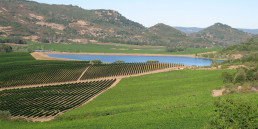
Aside from Michel Rolland, John was also influenced by Fred McCrea of Stony Hill, Warren Winiarski from Stag’s Leap Wine Cellars, and André Tchelistcheff of Beaulieu Vineyards – “André Tchelistcheff was our near neighbor on Stonecrest Drive,” John told The Wine Independent. “He and my dad, the Judge, and my mother were social friends.” Ultimately, it was André who advised John to plant Chardonnay at Stonecrest Drive which would later become The Judge vineyard.
All of this to say, John Kongsgaard was onto something when he planted that lot in the 70’s, and knew even more by the time he launched the inaugural 1996 vintage.
The success since the launch has been meteoric, and today The Judge is one of the most sought-after chardonnays in the world less than 30 years after its first vintage.
“All of his wines are unfined, unfiltered, singular in style, and often some of the most expressive and remarkable wines in Napa Valley. Talking to John Kongsgaard is akin to talking to some medieval wizard or mystic, but it all makes sense.”
– Robert M Parker Jr.
“That’s kind of the hallmark of John’s white wine. If you close your eyes, it could be red,” says Lee Hudson of Hudson Vineyards, talking to the San Francisco Gate. “It’s one thing to make big Chardonnay. It’s another thing to make big Chardonnay that’s light on its feet, and that’s what John’s Chardonnay does. It’s athletic. It’s got great abs.”
“Today, he makes two of California’s most acclaimed Chardonnays, the products of a unique fusion of Napa’s cultural heritage, time-honored Burgundian techniques and precisely farmed fruit.”
– Wine Spectator
A Generational Project

First there was The Judge, John Kongsgaard’s father. Then John himself, the pioneer and now, the new guard – Alex Kongsgaard.
“The best thing about my winemaking and grape-growing career is that my son has become my colleague and partner.” John remarks to TWI.
Alex came on board alongside Evan Frazier in 2007. It was an after-college job but unfortunately in 2011, Alex’s mum and John’s wife – Maggy – became unwell and so Alex stepped up to take on more responsibility.
One of Alex’s main responsibilities is perhaps one of the most critical – care of the famed Judge vineyard. From his first day working the vineyard, he started working toward organic farming.
“Alex has been slowly evolving the wine style,” John told TWI. “And 2021 is like a perfect vintage — so saline on the finish and intense. Maybe the best Judge ever. The high notes are so high, and there’s almost a caraway note.”
“As the second generation, I see it as my role not to change the wines but to refine them.”
Critics would agree with the trajectory of this – the 2021 vintage of The Judge has received scores of 100 from multiple wine reviewers, with Vinous’ Atonio Galloni remarking “The stylistic change here in recent years has been so remarkable.”
The pride that John feels for his son is evident. “Alex and his generation are bringing an impressive level of refinement and thoughtfulness to winemaking and grape growing.”
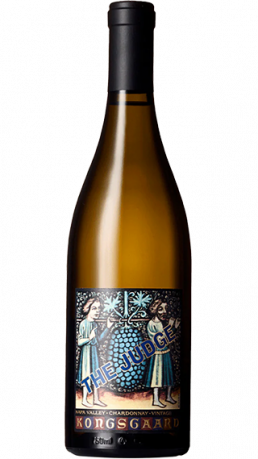
Kongsgaard ‘The Judge’ Chardonnay 2023
- On Order: 1 case only
- Named for John Kongsgaard’s father, who was the Superior Court Judge and a prominent local civic figure. From the 6-acre original planting with some vines going back to the 1970s, this gnarly old vineyard miraculously gives Kongsgaard, year in year out, a wine completely unique in the world and offers proof of the French adage that the greatest vineyards are not subject to much vintage variation.
- It’s like a riddle: how can a wine be so sublimely subtle and so unbelievably intense at the same time? The Judge (John’s father and the wine’s namesake) would have been 103 this year.
This vintage allocation has not been received yet and thus no reviews are available. To demonstrate the wine’s calibre, please see this round up of previous vintage scores, including the 2021 which has scored 100 Points across the board:
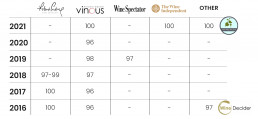
2021:
100 Points
Lisa Perrotti-Brown for The Wine Independent: “The 2021 The Judge Chardonnay is slightly more closed than the Napa Chardonnay at this stage, needing some coaxing to bring out notes of ripe apricots, candied ginger, baking bread, and white truffle giving way to nuances of orange blossom, chalk dust, and lime zest with a hint of brine. The full-bodied palate is paradoxically both rich and elegant, with a myriad of savory and mineral accents complementing the mouth-coating stone fruit flavors, framed by a decadently creamy texture and great tension, finishing in a whole firework display of spices, chalk, saline-coated nuts, and things that are absolutely indescribable. A masterpiece. Drink 2026-2041”
100 Points
Vinous: “The 2021 Chardonnay The Judge is dazzling. Bright, precise and crystalline, the 2021 possesses stunning concentration and textural intensity without being over-the-top in any way. The stylistic change here in recent years has been so remarkable. Crushed rocks, mint, white pepper, lemon peel and slate all grace this mind-blowing Chardonnay from John and Alex Kongsgaard.”
2013:
100 Points
Robert Parker’s Wine Advocate: “Of course, it’s hard to find any, but there are usually about eight to 15 barrels of his estate Chardonnay from Coombsville called “The Judge” in honor of his father. From old Wente clones originally planted in 1975, yields are rarely in excess of one ton of fruit per acre, which no doubt accounts for its extraordinary intensity and richness. The 2013 Chardonnay The Judge is perfect, and certainly one of the greatest Chardonnays I have ever tasted. Keeping in mind that Kongsgaard is no youngster at this game (2015 was his 41st vintage making wine), his 2013 The Judge, from the white volcanic soil in Coombsville called tufa, is an amazing wine of great intensity, power, glory, elegance, texture, density and richness. The wine offers up loads of tangerine oil, caramelized citrus, honeysuckle, white peach, apricots, and wet stones. It seems to be a smorgasbord of aromas and flavors that just keep opening as the wine sits in the mouth. This is an amazing effort and one of the greatest Chardonnays ever made in California.”
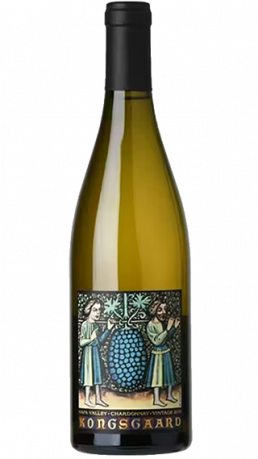
Kongsgaard Chardonnay 2023
- On Order: 3 cases only
- The Chardonnay has been primarily sourced from the Carneros growers Lee Hudson and Larry Hyde. Beginning in 2020, Kongsgaard have been privileged to include fruit from the spectacular Coombsville vineyard planted by Warren Winiarski.
- In line with the previous bottlings, the wine is defined tension of mineral energy and opulence, honoring its Burgundian antecedents.
This vintage allocation has not been received yet and thus no reviews are available. To demonstrate the wine’s calibre, please see this round up of previous vintage scores:
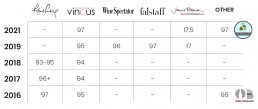
2001:
Robb Report #1 Best Californian Chardonnay (Best 50 Californian Chardonnays of the 21st Century): “We received Kongsgaard 2001 Chardonnay as a Christmas gift in December 2004 and as staunch devotees of Burgundian whites we were both blown away by this Napa Valley gem. It had everything we loved about Chardonnay from Burgundy including aromas and flavors of lemon curd and white peach with bracing minerality on the palate. We hate to use the term “ah-ha moment,” but this was definitely one of those instances for us that highlighted the quality of well-made California Chardonnay.”
2021:
97 Points – The Wine Palate “The 2021 Chardonnay comes bounding out with eager-to-please notes of fresh grapefruit, Golden Delicious apples, and juicy pineapple plus suggestions of nutmeg, yuzu zest, and Marcona almonds with a hint of struck flint. The medium to full-bodied palate is super intense, with a crisp line of freshness cutting through the tightly wound citrus and tropical fruit flavors, finishing long and sparkly.”
17.5 Points
Jancis Robinson: “Medium cloudy lemon. Creamy lemon mousse with chalky undertones to the nose. Rich and layered with buttery, lightly salted brioche, spread with lemon cream and swathed in high-quality oak leading to aromatic vanilla and cedar notes. Bright acidity and a pinch of lemon pith at the end. It’s classic California and absolutely brilliant.”
97 Points
Vinous: “The 2021 Chardonnay (Napa Valley) is stellar. Wonderfully refined and airy, the 2021 impresses with its total harmony. It is especially elegant. Whether that is due to the vintage, a tendency to pick on the earlier side these days, or the combination of sites, the 2021 is magnificent, if a bit less showy than it used to be.”
2019:
97 Points
Falstaff: “Medium green-yellow color, silver reflections. A hint of Bourbon vanilla, delicate yellow tropical fruit, a floral touch, a delicate hint of baby pineapple, light nougat in the background, incredibly fine and complex. Full-bodied, powerful, and complex, ripe yellow peach notes, subtle wood nuances, mineral undertones, a salty finish, still showing some baby fat on the finish, undeniable Grand Cru quality, with assured development potential.” (Translated from German)
96 Points
Wine Spectator: “A stunning wine, showing both power and elegance, this has a creamy, supple texture paired with vibrant, mouthwatering acidity that turns up the intensity. Presents plump, fleshy apricot, peach cobbler and dried mango flavors complemented by notes of savory Himalayan salt and butterscotch. The long, harmonious finish features lingering accents of candied ginger peel.”
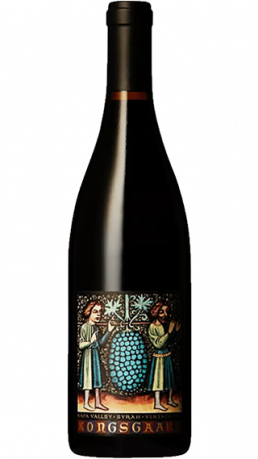
Kongsgaard Syrah 2023
- On Order: 1 case only
- Kongsgaard have made Syrah from the 2+ acre Hudson vineyard in Carneros since the inception of the brand in 1996. Over 27 vintages it has been as distinct from its competition as the Judge is from the rest of California Chardonnay.
- This Syrah is a force of nature. Of course, they make a lot of winemaking decisions as the wine ferments and ages for the 20 months before bottling, but this wine’s magnificent, undeniable voice is beyond man’s control. More animal than vegetable, Kongsgaard’s savory Syrah lives in its own rarefied world.
This vintage allocation has not been received yet and thus no reviews are available. To demonstrate the wine’s calibre, please see this round up of previous vintage scores:
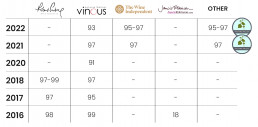
2022:
95-97 Points
The Wine Palate: “The 2022 Hudson Vineyards Syrah, tasted as a barrel sample, is deep garnet-purple in color. Notes of juicy ripe plums, boysenberries, and star anise leap from the glass, plus hints of peppered salami and candied violets. The medium to full-bodied palate is surprisingly bright and crunchy, with great freshness and super-plush tannins, finishing long and peppery.”
99 Points
Vinous: “The 2016 Syrah Hudson Vineyards is simply magnificent. Deep and unctuous, yet also exquisitely layered, the 2016 has so much going on. A rush of black pepper, menthol, lavender, licorice, cured meat and smoke build into the explosive finish as this dramatic, statuesque Syrah shows off its personality and pedigree. In a word: tremendous.”
Frank Cornelissen 2020 - New Vintage, New Hotness
Frank Cornelissen 2020: New Vintage, New Hotness
Another Hot Drop from the Godfather of Natural Wines

It’s 2024 and not only have we secured the newest vintages from the volcanic slopes of Sicily’s Mount Etna, but there’s a new hotness among them from the Godfather of Natural Wines: Frank Cornelissen’s Susucaro Rosso 2022! Produced with the same thought process and vinification techniques that’s made Frank’s other wines an organic icon of the winemaking industry, we’re very excited to introduce this new icon to the New Zealand market.
“Cornelissen is pushing toward the top of his dramatic arc, as I discovered during a recent visit with him. His wines have never been better”
– Monica Larner for Robert Parker’s The Wine Advocate, 2023
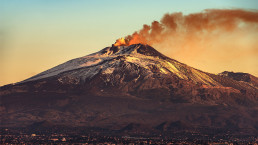
For anyone that’s watched The White Lotus Season 2, you’ll know how beautiful active stratovolcano Mt Etna is, and how it dominates the landscape with its ever-steaming activity. On its slopes, beneath the glow of molten rock is where you’ll find Azienda Agricola Frank Cornelissen, led by – you guessed it – Frank Cornelissen. Here, they grow grapes, olives and forage for juniper berries for winter stews (it’s like a lava-tinged Disney scene).
About Frank Cornelissen
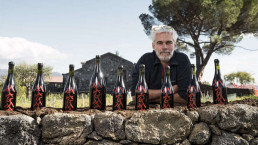
“One of the most significant figures in the revival of winegrowing on the slopes of Mount Etna”
– Robin Lee for The World of Fine Wine
Robin Lee sums Frank up nicely, and we’ve blogged extensively about this humble icon before, which you can read here:
- Oct 2023: New Year, New Frank
- May 2023: Red Hot ‘n’ Smokin’
- May 2020: Too HOT to Handle
But for those not wanting to go down a click rabbit-hole, let’s summarise…
When the Belgian ex-fine wine dealer came to Etna in 2001, his vision was that this is one of the few locations on Earth where wine could be made without any manipulation. He purchased old vines that had been planted during the Phylloxera crisis (which couldn’t survive in the volcanic soils here).
Mistakes were made as he learned along the way, but with time, the style of Frank Cornelissen became renowned. His hands-off approach was deemed extreme, even by his own standards and he admits that perhaps he took it a little too far sometimes. “My wines used to be anti-wines,” admits Cornelissen. His initial philosophy was never to use sulphur dioxide (SO²) in his wines. In every wine making decision, his aim was for absolute purity. His uncompromising and often extreme, (but always creative) visionary efforts to maintain the highest level of cellar hygiene without using SO² made him an idol of the natural wine world. However, over the past 22 years, trailblazing Cornelissen has needed to evolve. He has modified his thinking and methodology of this earlier philosophy.
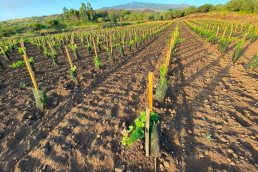
Still today, this is a winery that practises non-interventionist principles across their twenty-four hectares and eschews overhandling of the wines in the winery and cellar. However, there have been a number of changes to the process, including the fact he’s now using minimal amounts of SO² during racking and before bottling. “Quality- focused with natural being the inspiration, not the destination” explains Jancis Robinson MW.
“Frank Cornelissen is an Etna pioneer, and his contributions to the success of this special Sicilian wine region are immeasurable. His influences on Italy’s natural wine movement are equally important, and he was alone in embracing both concepts (Etna and natural wine) simultaneously. His winemaking experiments on the volcano started in 2001, and Cornelissen emerges as a major figure today”
– Monica Larner for Robert Parker’s The Wine Advocate, 2023
In a profile by Jancis Robinson, Cornelissen confessed that “2015 was my learning vintage that showed me the limit [of non intervention]. 2018 showed that I should have added a little SO² to 2015. 2017 was OK but 2018 really needed the SO². It was 2018 that changed my mind about SO². I’m very happy with the new technique, and 2020 is where I really want to get to. 2019 was deceptive. The fruit was very, very clean but we still needed the sorting table because there was a lot of variation. 2018 though was really difficult.”
“[Cornelissen] calls his 2019s ‘pretty’ and likens his 2019 Nerello Mascaleses to Pinot Noir whereas 2017 was more like Nebbiolo. His favourite vintages are 2011 and 2020.”
– Jancis Robinson “Soldera and Cornelissen” 2022
The 2020 Vintage
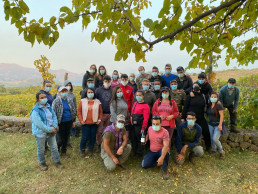
“What can I say, Frank Cornelissen is at the top of his game, [] and I can honestly say that I have never seen such precision, purity, and consistency as I’ve seen tasting the last few vintages”
– Eric Guido for Vinous
Our newest shipment of Frank Cornelissen wines includes a wave of goodies from the 2020 vintage, as well as a new gem – Susucaru® Rosso – from 2022.
Every year, Frank releases a vintage report. For the 2020 wines, he’s dubbed the vintage officially ‘Great’:
“The real winter came only at the end of January but with good snow; the pruning was finished late as we had to do some corrective pruning in a new vineyard which took more time than planned.
“The rest of the season was relatively balanced and we slid into the harvest pretty smoothly, albeit with some stress for some workers concerned about getting COVID and sending the whole team in quarantine… It was very stressful to keep everybody safe and sound but we managed with lots of precautions.
“Harvest went pretty easy as the nice weather was continuing until late autumn. A nice compensation for the COVID stress!
“The reds have a nice balance and I like the structure of the wines as tannins are present and it all fits nicely.
“Magma was picked in perfect zodiac and I was really happy. The Bianco Vigne Alte will be promising.
“My preferred wine of this vintage: Susucaru® Rosato for its rich flavours and freshness combined.”
Susucaru® Rosso The New Kid on the Block
The Susucaru® wines are the entry-level range from Frank, and after the roaring success of the Rosato (which we almost have to hide from our DN staff) we’re super excited to add the Rosso to the lineup.
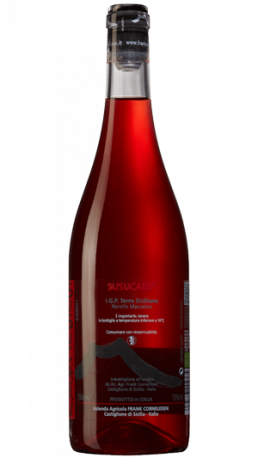
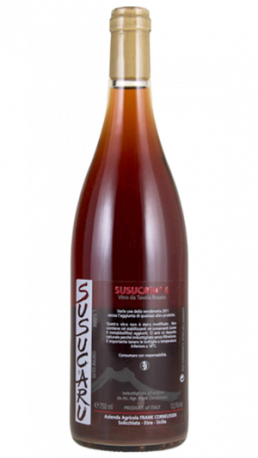
2022 Frank Cornelissen Susucaru Rosso
The 2022 Susucaru Rosso is a field-blend of mostly Nerello Mascalese (85%) with other local varietals all the vineyards: Nerello Cappuccio, Allicante Boushet, Minnella and Uva Francesa. Susucaru® Rosso perfectly expresses Etna, as it is produced in a more traditional way, blending different contrada’s as well as different varietals to obtain a fragrant, elegant and fluid wine with structure and personality.
The name Susucaru® comes from a Sicilian expression meaning “they stole it”, which is what Frank’s crew shouted when they realised most of the grapes from their first vintage had vanished.
From Vineyards Picciolo, Malpasso, Campo Re, Crasà, Piano Daini, Feudo di Mezzo. Grapes were destemmed and lightly crushed, before fermentation with a “pied-de-cuve” using only indigenous yeasts and skin contact for about 30 days. It was aged in neutral epoxy tanks from 2500-7000 litres. No fining, and filtering occurred before bottling with cartridges of 3 micron.
The Explosive New 2020 Batch from Frank Cornelissen
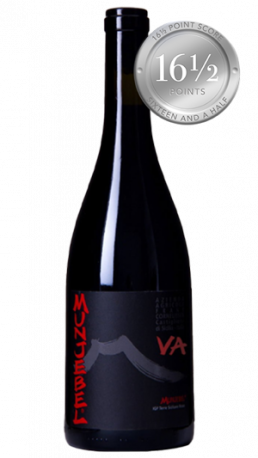
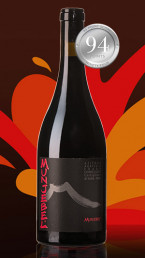
2020 Frank Cornelissen MunJebel Rosso 'VA' (Vigne Alte)
A blend of ungrafted Nerello Mascalese from Cornelissen’s three highest vineyards (hence Vigne Alte or ‘Tall/High Vineyards’): Tartaraci (1000m. asl), Barbabecchi (910m. asl), Rampante soprana (870m. asl)
“The most Burgundian of all our crus.” Nerello Mascalese 100% from 90+ year old ungrafted vines. With an annual production of only 2,500 bottles. Grapes were destemmed and lightly crushed before a “pied-de-cuve” fermentation using only indigenous yeasts and skin contact for about 60 days. Aged in neutral epoxy tanks from 1500-2500 litres for 18 months and another 18 months in bottle. No fining. Filtering before bottling with PP cartridges of 5 micron.
Previous Vintages Accolades:
- 16.5+ Points Jancis Robinson (2019)
- 97 Points Robin Lee World of Fine Wine (2019)
- 96 Points Decanter (2017)
- 93 Points Robert Parker (2017)
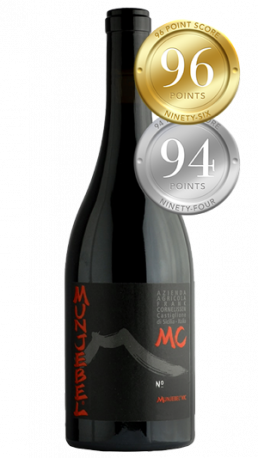
2020 Frank Cornelissen MunJebel Rosso ‘MC’ (Monte Colla)
This pure Nerello Mascalese comes from contrada Monte Colla. An extremely steep and terraced vineyard, beautifully exposed to sun and wind and right in front of Mount Etna. The sandy clay soil and the old-vine Nerello Mascalese, planted in 1946, produces a rich and powerful wine, maintaining grace and elegance. Our “Hermitage” of Etna.”
“Monte Colla MC delivers punchy red fruit flavors with rose, lilac and hints of powdered licorice root. There is a subtle play of fruit versus floral intensity in this wine. The vineyards enjoy heavier soils, with clay in part, that are rich in silicon at 780 meters in elevation. The vines were planted in 1948 and 1949 with south-southwest exposures, where they get the last light of the day. These are ancient soils, and marine fossils are sometimes found on Monte Colle. Geologically speaking, this site is unique in the Etna context.”
94 Points, Robert Parker’s The Wine Advocate
“Lovely cool berry, orange blossom, pumice, smoke and lava aromas, but subtle and complex. Bark and mushroom, too. Full-bodied and very structured with powerful tannins that are polished and thought-provoking. This needs time to soften. Clearly one for the cellar. Best after 2026.”
96 Points – JamesSuckling.com (8/4/23)
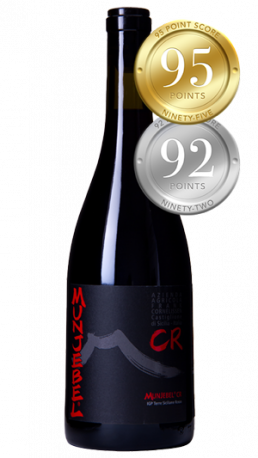
2020 Frank Cornelissen MunJebel Rosso ‘CR’ (Contrada Campo Re)
This pure Nerello Mascalese comes from a partly ungrafted vineyard ‘Campo Re’, situated at the far western side in the valley floor, at the entrance of Randazzo. The vineyard altitude is 735m. asl and is characterised by deep soil which, in humid vintages creates major difficulties to obtain ripe fruit. The wines are profound and tannic, and more Nebbiolo-ish compared to other crus.
“I like the aromas of vine bark, rose stem, light parsley, and red fruits that follow through to a medium body, with white pepper and cloves with a fresh and vivid finish. Tight and tannic. Shows tightness and focus. Best after 2025 but already fascinating to taste. (8/4/23)”
95 Points – JamesSuckling.com
“These results from 2020 show a lot of fruit character and dark cherry concentration with hints of curry leaf, mint, oregano and some of the wild herbs that grow on the volcano. The tannins are softly integrated and the acidity is bright. Mineral nuances add complexity.”
92 Points – Robert Parker’s The Wine Advocate
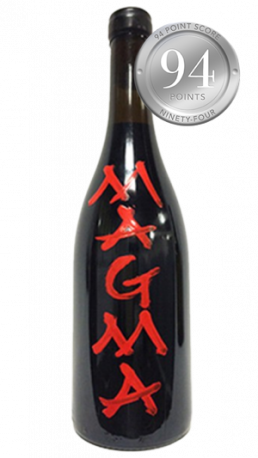
2020 Frank Cornelissen Magma
Magma® is Frank Cornelissen’s top cuvée, their “Grand Vin” and is produced only in great vintages where they achieve phenolic ripeness. Hailing from the Barbabecchi vineyard at 910m. asl. Planted around 1910 and North-North East exposed, capturing the first and cool morning sun rays. A profound wine, rich as well as elegant, with character, personality and great finesse. Vinification starts with a “pied-de-cuve” using only indigenous yeasts and skin contact for about 50 days before aging in neutral epoxy tanks 1500-2500 liters for 18 months and another 18 months in bottle. Annual production in the years it’s produced is around 2,000 bottles.
Bottles are hand-painted and to combat the increasing risk of counterfeit bottles, since 2016, Magma® has an NFC chip integrated into the label of each bottle which contains information regarding the authenticity of the wine.
In addition to the microchip, Magma® uses unique Ardeaseal closures on the bottles and magnums, further guaranteeing authenticity as these patented closures are manufactured in only one factory in the world.
“The Frank Cornelissen 2020 Sicilia Nerello Mascalese Vigna Barbabecchi Magma is a creative and original wine that is a lot of fun to drink and dissect. Fruit comes from a vineyard site at about 1,000 meters in elevation above the Contrada Rampante. This 2.5-hectare site was planted in 1910, and more than half of the fruit goes toward this production. The wine offers ample richness and volume with dark berry, campfire ash, grilled herb and cola.”
94 Points – Robert Parker’s Wine Advocate
Previous Vintages Accolades:
- 18 Points Jancis Robinson (2019)
- 96 Points Robin Lee World of Fine Wine (2019)
- 97+ Points Decanter (2019)
Also Still Available...
2022 Frank Cornelissen Susucaru Rosato
(Prior vintages sold out!)
Frank’s famous Malvasia, Moscadella, Insolia, and Nerello Mascalese Rosato blend – made with skin contact for texture and territorial identity, malolactic fermentation fully finished for density, fluidity and stability. A bright salmon pink. Intense perfumes of young fruits introduce sapidity and minerality. Drinking Window: 2023 – 2030
“I was privileged to taste the wine – Susucaru… bottom line is I taste this natural stuff and my eyes just lit up, some lightbulb went off and I feel like this is where the journey of life has taken me, and where I need to continue to explore.”
Action Bronson for Vice’s Munchies Series
2021 and 2019 Frank Cornelissen MunJebel Rosso
The Classic MunJebel Rosso is Frank’s vision of a traditional, balanced and rich Northern Valley Etna wine. A rich and fragrant wine of pure Nerello Mascalese from different vineyards, partly from their best parcels where we produce our crus (Zottorinoto-Chiusa Spagnolo, Feudo di Mezzo-sottana and Porcaria) as well as designated vineyards for this specific wine (Rampante Sottana, Piano Daini and Crasà).
2021: “Expressive and decidedly gentle and harmonious in the main profile, it shows notes of black plums, marjoram, lavender, hibiscus, black olives, strawberries, geraniums and white pepper. Medium body, creamy tannins of splendid elegant shape, perfectly polymerized and a finish of commendable beauty.”
94 Points WinesCritic.com
2021: “Seduces with a rich and sweetly scented bouquet of crushed black cherries, dried roses, and cloves. It’s silky in texture, enveloping all that it touches with ripe red fruits and spices, nicely framed by saturating minerality, as inner violet florals form toward the close. There are tannins here, but they don’t get in the way; instead, they create a perfectly dry platform where notes of lavender, plum and allspice hover above.”
92 Points Vinous
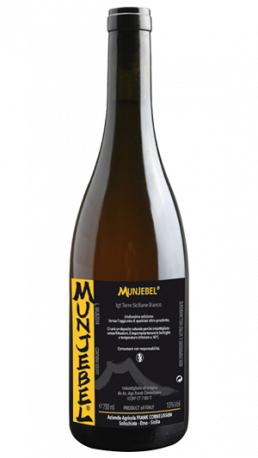
2020 Frank Cornelissen MunJebel Bianco
Cornelissen’s first white wine started out as an orange wine, fermented with the skins for an extended period. Frank liked the tactile feeling and density, but missed the finesse and precision of the classic French white wines, so he changed the technique to search for the purity and flavours of Etna. This transpired as a short period of skin contact and ageing for an extended period in the coldest part of the cellar before bottling. The obtained elegance, purity and density makes this wine very suited to accompany a wide variety of dishes and cuisine, from fish to white meat. 50% Grecanico and 50% Carricante.
“It is beautifully pure for a natural wine, and while rich, almost oily, there is drive and persistence to the gingery, herbal and stonefruit flavours.”
Different Drop
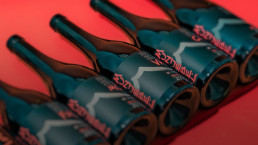
New Year; New Frank! 🔥 Fresh drop from the Legendary Frank Cornelissen
You Loved 'em, We Listened - MORE Newly Arrived Wines from Legendary Frank Cornelissen
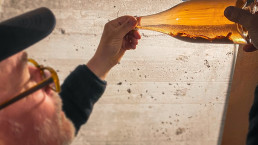
“What can I say, Frank Cornelissen is at the top of his game, [] and I can honestly say that I have never seen such precision, purity, and consistency as I’ve seen tasting the last few vintages. It all seems to have come to an apex with the 2019 crus.”
Eric Guido, for Vinous
Three years ago we excitedly blogged about the arrival of Frank Cornelissen, the demi-god of natural wines, to our D&N Portfolio, and in May, we got a very hot allocation of Frank’s 2019 vintage, including some of his PREMIUM single-vineyard MunJebel Rossos which you can read alllll about here…
NOW we have two fresh and highly anticipated drops hitting our cellar shelves… 2021 MunJebel Rosso & 2022 Susucaru Rosato!
So Are The 2019s Old News?
(No!)
While a number of Frank Cornelissen’s wines are accessible early – the ’22 Rosato being a prime example – a lot of Frank’s wines are designed to cellar for a few years, and in fact the 2019 Rossos are just coming into their prime drinking window now, and depending on the bottling, will likely remain so for another 5-10 years. (Which is amazing considering Frank considers this not a ‘cellar’ year!)
In a nutshell, the 2019s are from an ‘apex’ vintage for Frank, with highly rated bottlings across the entire range. (Not that Frank subscribes to the whole media-ratings vibe, he just has to put up with everyone loving him anyway.)
Don’t just take our word for it (but, really, do… they’re so delicious,) Dhall & Nash is currently filling seats at a premium masterclass for trade and an exclusive wine-matched dinner to showcase the immense calibre of the 2019 cuvées Frank has produced…
TL;DR: No, the 2019s are perfect RIGHT NOW!
“Quality- focused with natural being the inspiration, not the destination”
Jancis Robinson MW on Frank Cornelissen.
Will You Be Around?
We've a few tasting events on if you're around...


Frank's Turning Point
When the Belgian ex-Fine wine dealer came to Etna in 2001, his vision was that this is one of the few locations on Earth where wine could be made without any manipulation. Mistakes were made as he learned along the way, but with time, the style of Frank Cornelissen became renowned.
Still today, this is a winery that practices non-interventionist principles across their twenty-four hectares and eschews overhandling of the wines in the winery and cellar. However, there have been a number of changes to the process.
“My wines used to be anti-wines”
admits Cornelissen
The 2019 vintage is the first that Cornelissen has released under the new regime. SO² is a standard preservative that has been used in winemaking for centuries to protect grapes, must, and wine in its various stages against harmful yeasts and bacteria, as well as the negative impacts of oxygen. The decisions about whether to use SO², how much to use, and when, are open to infinite debate.
In a hot climate, however, where pH levels are high, the grapes, must, and wine have less natural in-built protection than lower-pH wines from cooler climates. The amount of SO² also needs to be higher than in a cooler climate for it to be effective. Cornelissen is adding 10mg/L at the first racking, with total SO² ending up at around 30mg/L, keeping free SO² at a minimum, under 5mg/L. He pointed out that his beloved Nerello Mascalese “likes to eat SO²” so free SO² levels are always exceptionally low.
“You have to be intellectually honest,” Cornelissen explains. “I am searching for quality and precision, so I either have to play with the pH or add SO². People think Etna wines are high acid, but it’s the minerals and the other components that give it that tension.”
Justifying his evolution, Cornelissen says;
“natural wine was a counter-reaction to an excess of enology: too much wood, too much extraction, too many chemicals. Natural wine will never be a category. To make it a category is to put it in a prison, which is the opposite of individualism. It’s uncategorizable, which is its greatest asset.”
Cornelissen considers his SO²-free winemaking experience was an extreme that now enables him to make decisions he would never have had the knowledge to make otherwise.
“If you haven’t gone over the edge, how do you know where the edge is? Now, after 20 years, I know where the edge is.”
Tl;DR: Frank pushed the boundaries a little more each year until he reached ‘the edge’, and in 2019 started pulling back some of his more ‘extreme’ winemaking approaches to come back to a place where it was about the wines, not necessarily the methodology.
Vintage Report
The 2019 Vintage: “After a disastrous 2018, we were ready for everything…but nature was gentle and treated us with impeccable fruit after a relatively balanced growing season. What a relief!
But looks deceive: although the picking was less stressful, we had trouble with uneven maturation within the clusters. The sorting table was very useful during this harvest for picking out the unevenly ripened clusters and increasing the quality at this stage.
The red wines have good tension and overall balance. Although this is not a cellar vintage, the phenolics are good, structure is present and these wines are a welcome relief after a terribly complicated 2018!
My preferred wine of this vintage: Munjebel Rosso “MC” for the smooth tannins, balance and elegance“
So if 2019 is so good, why buy these new ones?
Just because the 2019s are drinking superbly doesn’t mean you don’t want to get the jump on the 2021 and 2022 vintages!
Of the 2021 Vintage, the Magma and the MunJebel Rosso were Frank’s personal favourites, “for their overall balance.”
Frank sums up both the 2021 and 2022 vintages as ‘Very Good’ on his special scale. (Medium, Medium+, Good, Good+, Very Good, Very Good+, Great)
[Cornelissen is] “the most driven, ardent, zealous, perfection-oriented winemaker in the world”
Tom Hyland, The World of Fine Wine
The 2021 Vintage: “We lacked a real winter with no snow in the lower vineyards. The pruning of the vines and winter work was finished in time due to the many days of nice weather. In March, we had some frost damage (although very little.)
A very dry growing season overall put the young vines to a real stress test as well as our team to keep the new plantations alive with water. A really tough job on the terraces… We deliberately planted a new vineyard extremely late, in May, in order to get even a little rain.
Green harvest was done more severe for the vines to breath better and suffer less with the drought. The first grapes for the rosato arrived in the cellar on August 17th which was the earliest so far and we finished on October 16th picking the grapes for Magma, another record for early picking.
Yields were very low, especially in the beginning of the harvest. Finally at the beginning of October we had the rain to balance out the sugar/acidity and a week after, the fruit was starting to prepare for ripeness. Although at the start of the harvest, our calculations were going towards a 50% less production, we managed to balance the loss of yield and grapes out to around 25% due to the canopy management and sitting out the picking to get the necessary rain.
Although the reds have a relatively high Ph and lower than average acidity, the wines have grip, texture and personality. In the end, even in an extreme vintage like this, incredibly so, the wines are finding their balance.“
The 2022 Vintage: “We had a good winter with regular snow in the higher vineyards. The pruning of the vines and the winter works were finished in time as we invested in more people.
In March it was still quite cold while we were planting a new vineyard site in Contrada Scimonetta. April and May we had more humidity compared to the very dry 2021. The dry growing season started around June which put stress on the young vines which needed water in order to survive the summer, exactly like in 2021.
Strenuous summer work which has become a classic. On August 8th we had some rain which gave the vines energy again. Unfortunately we also caught hail in the middle which damaged some of the grapes.
End of August we had to pick the first grapes for the rosato as we had another hail blast which devastated a lot of the Muscat for the rosato. Magma was picked on October 11th.; again one week earlier compared to a record early in 2021… Yields were average to low.”
Our DN allocation of the 2021 MunJebel Rosso first arrived in late May, and since, we have sold over a quarter of the stock, as well as a good number of the single-vineyard premium cuvées. This lit a fire under us, and urged us to get more on a boat stat!
The 2022 Susucaru Rosato – we had to pry out of the hands of the logistics team who are completely in love with it! We won in the end and urge you not to sit on your laurels here, as the previous vintage was very popular and ran out of stock before we could even land the 2022!
TL;DR: the 2019 Rossos are good and are drinking perfectly due to having 4 years under their belt, but the 2021 is approachable even earlier and is drinking well already (and will also age well.) The Susucaru Rosato is also slamming as its made to be quaffable from the get-go. You can’t go wrong here.
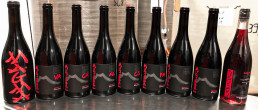
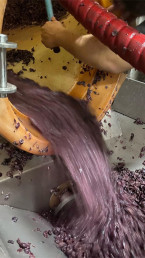
“The greatest wines are the wines with personality. They have flaws that give them character. Great wines always have a quirk”
Frank Cornelissen
Frank Cornelissen - Newly Landed!
Explosive Wines of Energetic Purity & Precision
Frank Cornelissen MunJebel® Rosso 2021
Frank’s Fave!
The MunJebel is a blend of fruit from Frank Cornelissen’s vineyards across the northern valley of Etna. It aims to please, and it will excel at doing so through short-term cellaring.
94 points “Expressive and decidedly gentle and harmonious in the main profile, it shows notes of black plums, marjoram, lavender, hibiscus, black olives, strawberries, geraniums and white pepper. Medium body, creamy tannins of splendid elegant shape, perfectly polymerized and a finish of commendable beauty. Drink now.”
“Rich, powerful and driven by a core of minerality, it’s very hard to quantify what the experience of drinking Etna Rosso for the first time is. There is truly nothing like it in new-world wine, the tastes and aromas are so entwined with the soils and grapes indigenous to Etna, and so specific to the place.
Wild spices, complex fruit notes, the depth and singularity of this wine, makes the first experience, an epiphanic moment in a wine lover’s life.”
Different Drop
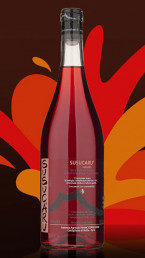
Frank Cornelissen Susucaru® Rosato 2022
Prior vintages sold out!
Frank’s famous Malvasia, Moscadella, Insolia, and Nerello Mascalese Rosato blend – made with skin contact for texture and territorial identity, malolactic fermentation fully finished for density, fluidity and stability.
A bright salmon pink. Intense perfumes of young fruits introduce sapidity and minerality. Drinking Window: 2023 – 2030
Frank Cornelissen Winery
“I was privileged to taste the wine – Susucaru… bottom line is I taste this natural stuff and my eyes just lit up, some lightbulb went off and I feel like this is where the journey of life has taken me, and where I need to continue to explore.”
Frank Cornelissen - The Lauded '19s

Frank Cornelissen Magma Rosso 2019
The Nerello Mascalese fruit for Magma hails from the Barbabecchi cru in the North valley between 870-910 metres, with its ungrafted vines that are over 100 years old. After a sixty-day maceration, the wine is vinified completely in neutral epoxy tanks, and the bottle hand-painted before release.
97+ points “It’s almost impossible to pull away from the 2019 Nerello Mascalese Magma Rosso, with its beguiling bouquet of white pepper-tinged dusty rose offset by nuances of tangerine, pomegranate, and the slightest hint of animal musk. This is a seriously textural expression, with smooth contours and admirable weight that’s perfectly balanced by stimulating acidity. Its fruit is decidedly red and sapid, yet with violet-tinged inner florals and sweet minerality. While structured, the 2019 maintains fantastic energy throughout the long yet remarkably fresh finale, as licorice and hints of hard candies slowly taper off into oblivion.” Drinking Window: 2023-30
Eric Guido, Vinous
(This one gets our D&N Fine Wines recommendation stamp to it 100%!)
96 points “This is the icon wine that Cornelissen has made since his first vintage from vines planted in 1910, now more than a century old. Lean, restrained, and transparent but dense, with a firm, structured character, and taut tannins. Tensile and throbbing with pent-up energy, like scooped-up dewdrops from cherry skins served over black lava rock, like something there and not there, this is a wine you can never quite pin down. More of an experience than just a wine.” Drink 2022-2030
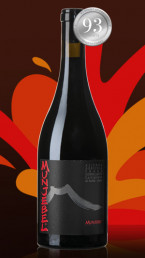
Frank Cornelissen MunJebel Rosso 2019
The Munjebel is a blend of fruit from Frank Cornelissen’s vineyards across the northern valley of Etna. It aims to please, and it will excel at doing so through short-term cellaring.
92 points “Seduces with a rich and sweetly scented bouquet of crushed black cherries, dried roses, and cloves. It’s silky in texture, enveloping all that it touches with ripe red fruits and spices, nicely framed by saturating minerality, as inner violet florals form toward the close. There are tannins here, but they don’t get in the way; instead, they create a perfectly dry platform where notes of lavender, plum and allspice hover above.” Drinking Window: 2021 – 2027
EricGuido, Vinous
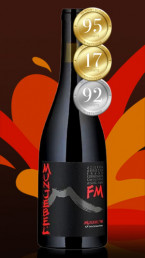
Frank Cornelissen MunJebel Rosso FM (Feudo di Mezzo Sottana) 2019
The Munjebel FM is 100% Nerello Mascalese produced from the lower elevations of the Feudo di Mezzo cru.
95 points “The entrancing 2019 Munjebel Rosso FM blossoms in the glass, with a dusty mix of sweet minty herbs and bright cherry complemented by a hint of cinnamon sugar. Its textures are like pure silk slowly draped across the palate, creamy, smooth, yet lifted and refined, delivering ripe red and hints of blue fruit under an air of lavender and violets. A pleasant inner sweet lingers on, along with a coating of fine tannins, as residual acids and hints of sour citrus maintain a lovely balance. The word “radiant” comes to mind and stays with me throughout the entire experience. Bravo. This is pure class.” Drinking Window: 2023 – 2028
Eric Guido, Vinous
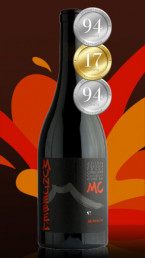
Frank Cornelissen MunJebel Rosso MC (Monte Colla) 2019
The Rosso MC is from the steeply-terraced Monte Colla vineyard, with its seventy five-year-old Nerello Mascalese vines planted in sandy clay soils.
94 points “is deep and inward in character, but also remarkably pretty. This dark beauty wafts up with dried cherries and crushed rocks complemented by nuances of rosemary and balsam. It greets the palate with the silkiest of textures and ripe wild berry fruits, yet with a core of nervous acidity that builds an energetic tension. This is like the proverbial iron fist in the velvet glove, tapering off long with talcum-like tannins, as sweet tobacco and lavender tones fade over a contrasting savory bitter twang of balsamic spice. It’s an utter beauty, and it’s already showing so well.” Drinking Window: 2023 – 2028
Eric Guido, Vinous
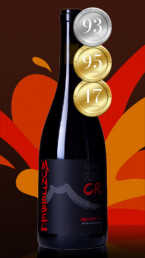
Frank Cornelissen MunJebel CR Contrada Campo Re 2019
The Campo Re hails from the western part of the northern slope of Etna at around 735 metres. The wine undergoes indigenous fermentation, followed by fifty days of maceration on skins and eighteen months of refinement in neutral epoxy tanks.
93+ points “Woodsy herbs and wet stone take on an air of white smoke and peppery florals as the 2019 Munjebel Rosso CR (Campo Re) unfolds in the glass. This takes its time, slowly opening, as wild strawberries, stems, and all, lazily come to the fore. It’s seamlessly silky and pliant upon entry, cool-toned as well, with a mounting saturation of red berries toward the close, adding an almost-chewy sensation. While structured with angular tannins, there’s a burst of inner sweetness that adds balance, as notes of fresh tobacco mix with licorice and hard red candies to create a finish that seems to linger on and on. The CR may be the longest lived of Cornelissen’s 2019 Rossos, but also the one that will take the most time to come around.” Drinking Window: 2024 – 2032
Eric Guido, Vinous
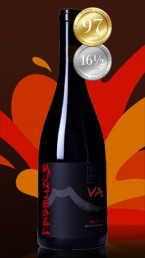
Frank Cornelissen MunJebel VA Cuveé (Vigne Alte) 2019
So hot off the docks, we’re still waiting on the reviewers to release their thoughts, but here’s some reviews of the 2019 release…
97 points “Here we are with ungrafted 90-year-old vines at altitudes of between 870–1,000m. Complex and multi-layered, with pistachio notes overlaying pristine damson and juicy pomegranate, with dark notes of savoury bitter greens, black garlic, dandelion leaves, and nettles. Wild and elemental in character, with long and intense flavours, this is a fine example of Cornelissen’s signature style.”
Robin Lee, The World of Fine Wine
16.5 /20 “A blend of ungrafted Nerello Mascalese from Cornelissen’s three highest vineyards (hence vigne alte): Tartaraci at 1,000m at Bronte, Barbabecchi at 910m and Rampante Soprana at 870m at Solicchiata. First made in 2010. Bright crimson with a restrained nose. Backward and very tannic. Not to my taste – too introvert and tough at the moment – but it may get there in the end. Certainly ambitious!” Drink 2025 – 2035
16.5/20 Jancis Robinson
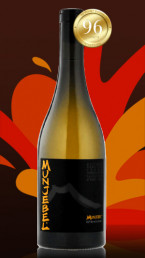
Frank Cornelissen MunJebel Bianco 2020
The Munjebel Bianco wine is made in a super complex way with a brief 4-day skin maceration, giving the wine some density and tannins whilst also bringing out the wine’s stony aromatics and smoky taste. Stunning! Electric!
“A veiled yellow colour. Complex aromas of pineapple, mango, and peach. Orange zest, honey, and sweet spices. Fascinatingly rich and salty. An oily, gingery, herbal flavour with a stonefruit body.”
Frank Cornelissen Winery
“…the wines we tasted were precise and expressive, the Nerello Mascalese, his main red variety, transmitting the origin of the wines without any deviation due to winemaking. He is now set on the course of what he calls ‘high-fidelity’ winemaking.”
Julia Harding MW, for JancisRobinson.com
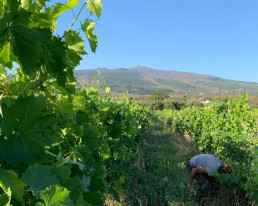
New Arrivals from the Legendary Frank Cornelissen
Red Hot 'n' Smokin' - Newly Arrived Wines from Legendary Frank Cornelissen
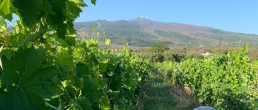
“What can I say, Frank Cornelissen is at the top of his game, [] and I can honestly say that I have never seen such precision, purity, and consistency as I’ve seen tasting the last few vintages. It all seems to have come to an apex with the 2019 crus.”
Eric Guido, for Vinous
Seen as the rebellious rock star winemaker for many in the world of wine, three years ago we excitedly blogged about the arrival of Frank Cornelissen, the demi-god of natural wines, to our D&N Portfolio. With all his wild and sometimes zany ideas, Frank has never been one to rest on his laurels even after quickly reaching the lauded status of the Godfather of Natural Wines. But that was never the endgame for Frank. Evolution, innovation, and revelation are part of his questing personality – and also within his wines’ DNA.
Back in the early days of the natural wine movement, everyone was beating a drum of how minimalist you could go. And Frank Cornelissen was exalted by the new vanguard as the ultimate anti-hero naturalista! Today, Cornelissen concedes that his first ten years were very experimental and that he took things too close to the edge.
“My wines used to be anti-wines”
admits Cornelissen
When the Belgian ex-Fine wine dealer came to Etna in 2001, his vision was that this is one of the few locations on Earth where wine could be made without any manipulation. Mistakes were made as he learned along the way, but with time, the style of Frank Cornelissen became renowned.
Still today, this is a winery that practices non-interventionist principles across their twenty-four hectares and eschews overhandling of the wines in the winery and cellar. However, there have been a number of changes to the process. Let’s check out the new vintage releases and the unrelenting journey of the Mt. Etna maestro himself, Frank Cornelissen.
[Cornelissen is] “the most driven, ardent, zealous, perfection-oriented winemaker in the world”
Tom Hyland, The World of Fine Wine
This Man is on a Mission
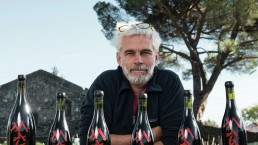
From the outset, Cornelissen had a dogged determination to make fine wine on Mt. Etna, to create a true expression of this distinctive place. His initial philosophy was never to use sulphur dioxide (SO²) in his wines. In every winemaking decision, his aim was for absolute purity. His uncompromising and often extreme, and always creative visionary efforts to maintain the highest level of cellar hygiene without using SO² made him an idol of the natural wine world. However, over the past 22 years, trailblazing Cornelissen has needed to evolve. He has modified his thinking and methodology of this earlier philosophy.
On a visit to Bordeaux during an en primeur campaign he met Guillaume Thienpont of the esteemed estate Vieux Château Certain of Pomerol. He learned that Thienpont did some consulting, specifically with the aim of minimising bacterial infection, a bugbear of the no-sulphites Cornelissen. Thienpont subsequently visited Cornelissen in Etna, tasted his wines, and started working closely with his agronomist Stefano Amadeo. This has been a major turning point for such a perfectionist as Cornelissen—who has always forged his own path, relying entirely on inspired intuition and his own painstaking research and experiments.
An initial outcome of the collaboration with Thienpont is that Cornelissen has decided to break the natural wine taboo and is now using minimal amounts of SO² during racking and before bottling.
“Quality- focused with natural being the inspiration, not the destination”
Jancis Robinson MW on Frank Cornelissen.
The New Philosophy in Practice
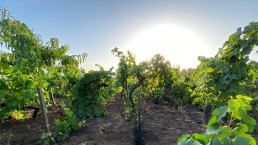
The 2019 vintage is the first that Cornelissen has released under the new regime. SO² is a standard preservative that has been used in winemaking for centuries to protect grapes, must, and wine in its various stages against harmful yeasts and bacteria, as well as the negative impacts of oxygen. The decisions about whether to use SO², how much to use, and when, are open to infinite debate.
In a hot climate, however, where pH levels are high, the grapes, must, and wine have less natural in-built protection than lower-pH wines from cooler climates. The amount of SO² also needs to be higher than in a cooler climate for it to be effective. Cornelissen is adding 10mg/L at the first racking, with total SO² ending up at around 30mg/L, keeping free SO² at a minimum, under 5mg/L. He pointed out that his beloved Nerello Mascalese “likes to eat SO²” so free SO² levels are always exceptionally low.
“You have to be intellectually honest,” Cornelissen explains. “I am searching for quality and precision, so I either have to play with the pH or add SO². People think Etna wines are high acid, but it’s the minerals and the other components that give it that tension.”
Justifying his evolution, Cornelissen says that “natural wine was a counter-reaction to an excess of enology: too much wood, too much extraction, too many chemicals. Natural wine will never be a category. To make it a category is to put it in a prison, which is the opposite of individualism. It’s uncategorizable, which is its greatest asset.”
Cornelissen considers his SO²-free winemaking experience was an extreme that now enables him to make decisions he would never have had the knowledge to make otherwise.
“If you haven’t gone over the edge, how do you know where the edge is? Now, after 20 years, I know where the edge is”
Frank Cornelissen
Cornelissen has already built a new, colder cellar for protecting his white wine by keeping it stable at 12°C. “My white-wine model is Alsatian,” he explains. “They have volume and character, but without the cold room they become too evolved.”
He has also introduced a customized de-stemmer and a sorting table that is constantly disinfected with ultraviolet light. Fastidious selection saved the 2019 vintage. Customized pumps, a modified press, ozone machines integrated with the air-conditioning system, specialized nozzles on all the tanks, and a state-of the-art bottling line attest to Cornelissen’s newfound fascination with cutting-edge technology.
In Frank’s own words he sees it thus: “High-personality wines are not high-precision wines, but high-precision wines have the possibility of being boring. To put some of yourself into the wine—the right amount of quirk, organizing the right amount of chaos, giving it that edge— is why making wine requires a split personality, 50 percent intuitive, 50 percent rational.”
In reviewing his 2019 vintage releases, Jancis Robinson sums up his new regime: “The amazing thing is that tiny doses of SO² very early block risk of mousiness and brett [Brettanomyces], while allowing happy ferments, and bottling with relatively low totals. Having taken this step, it’s like a load has been lifted from his shoulders.”
According to Cornelissen, in this evolutionary process, his objectives have not changed; he has merely changed his strategy for achieving them. He still believes in the original recipe—old vines and low yields. Ultimately, the subtle changes he has introduced enable the fruit of the vineyards to shine even more brightly.
“The greatest wines are the wines with personality. They have flaws that give them character. Great wines always have a quirk”
Frank Cornelissen
Cornelissen is a fan of fibreglass, using neutral epoxy tanks, which he says works well for his minimal interventionist technique – no unwanted tannin added from wood which is better for Nerello.
In his experiments with clay amphorae, he has also decided – after a process of trial and error – that the inside of the vessels must be coated so that the oxygen exchange is reduced. Of course, his wines with more tannic structure are aged in epoxy-coated terracotta amphorae buried up to their necks in ground volcanic rock.
As for whole-bunch fermentation, it was 2018 that marked a big change of policy. Obviously, with his perfectionist sensibilities he started with 15% whole bunch in 2019. Then in 2018 he felt you could sense the whole bunch element but not in the more concentrated 2020. So, for 2021 there was 20% whole bunch, and it was perfectly absorbed.
Cornelissen’s mantra has always been for ‘precision’ in his single-vineyard wines, for the detailed distinctions that define them to be revealed across the vintages. He has always been a remarkable nonconformist, yet now allowing himself to accept bravely the necessity to modify his approach when needed to unwrap an unblemished expression in all his wines.
“As even many of the most devoted aficionados of natural wine now acknowledge—because they have, unfortunately, learned from experience—oenological flaws only distort terroir; they do not reveal it”
Robin Lee, The World of Fine Wine
The 2019 Vintage
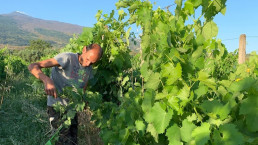
This was a challenging year that—thanks to Cornelissen’s extreme sorting in the vineyard ahead of harvest—produced pure, clean, impeccable fruit, although with many small berries due to difficult weather conditions during flowering. Further, they carried out a second meticulous sorting selection, reducing production volumes by nearly 30 percent.
Notwithstanding the hot summer, the cool weather in the weeks before harvest contributed depth and complexity, as well as preserving natural acidity for this classic vintage. Coming in at less than 14% ABV, the wines are significantly lower in alcohol than previous vintages.
All up, the 2019s are concentrated, fruit-driven, and vibrant—a “Pinot-ish vintage,” as Cornelissen calls it—with tremendous elegance.
“A man on a mission to make pure & vineyard-expressive wines”
Julia Harding MW, for JancisRobinson.com
Born of soils formed by prehistoric lava flows, Frank Cornelissen’s latest New Zealand releases carry the seriousness of many of the world’s greatest wines while simultaneously tasting like nothing you’ve ever had.
When wine geeks speak of Frank Cornelissen, they get reverential, almost mystical, in tone. One sip of this stuff and you’ll see why; it’s bottled volcanic energy, ready to WOW right now and reward years in your cellar.
Load up fast! (Stocks are extremely limited)
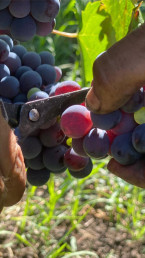
Frank Cornelissen - Explosive Wines of Energetic Purity & Precision
Frank Cornelissen Magma Rosso 2019
The Nerello Mascalese fruit for Magma hails from the Barbabecchi cru in the North valley between 870-910 metres, with its ungrafted vines that are over 100 years old. After a sixty-day maceration, the wine is vinified completely in neutral epoxy tanks.
97+ points “It’s almost impossible to pull away from the 2019 Nerello Mascalese Magma Rosso, with its beguiling bouquet of white pepper-tinged dusty rose offset by nuances of tangerine, pomegranate, and the slightest hint of animal musk. This is a seriously textural expression, with smooth contours and admirable weight that’s perfectly balanced by stimulating acidity. Its fruit is decidedly red and sapid, yet with violet-tinged inner florals and sweet minerality. While structured, the 2019 maintains fantastic energy throughout the long yet remarkably fresh finale, as licorice and hints of hard candies slowly taper off into oblivion.” Drinking Window: 2023-30
Eric Guido, Vinous
(This one gets our D&N Fine Wines recommendation stamp to it 100%!)
96 points “This is the icon wine that Cornelissen has made since his first vintage from vines planted in 1910, now more than a century old. Lean, restrained, and transparent but dense, with a firm, structured character, and taut tannins. Tensile and throbbing with pent-up energy, like scooped-up dewdrops from cherry skins served over black lava rock, like something there and not there, this is a wine you can never quite pin down. More of an experience than just a wine.” Drink 2022-2030
Frank Cornelissen MunJebel Rosso 2019
The Munjebel is a blend of fruit from Frank Cornelissen’s vineyards across the northern valley of Etna. It aims to please, and it will excel at doing so through short-term cellaring.
92 points “Seduces with a rich and sweetly scented bouquet of crushed black cherries, dried roses, and cloves. It’s silky in texture, enveloping all that it touches with ripe red fruits and spices, nicely framed by saturating minerality, as inner violet florals form toward the close. There are tannins here, but they don’t get in the way; instead, they create a perfectly dry platform where notes of lavender, plum and allspice hover above.” Drinking Window: 2021 – 2027
EricGuido, Vinous
Frank Cornelissen MunJebel Rosso FM (Feudo di Mezzo Sottana) 2019
The Munjebel FM is 100% Nerello Mascalese produced from the lower elevations of the Feudo di Mezzo cru.
95 points “The entrancing 2019 Munjebel Rosso FM blossoms in the glass, with a dusty mix of sweet minty herbs and bright cherry complemented by a hint of cinnamon sugar. Its textures are like pure silk slowly draped across the palate, creamy, smooth, yet lifted and refined, delivering ripe red and hints of blue fruit under an air of lavender and violets. A pleasant inner sweet lingers on, along with a coating of fine tannins, as residual acids and hints of sour citrus maintain a lovely balance. The word “radiant” comes to mind and stays with me throughout the entire experience. Bravo. This is pure class.” Drinking Window: 2023 – 2028
Eric Guido, Vinous
Frank Cornelissen MunJebel Rosso MC (Monte Colla) 2019
The Rosso MC is from the steeply-terraced Monte Colla vineyard, with its seventy five-year-old Nerello Mascalese vines planted in sandy clay soils.
94 points “is deep and inward in character, but also remarkably pretty. This dark beauty wafts up with dried cherries and crushed rocks complemented by nuances of rosemary and balsam. It greets the palate with the silkiest of textures and ripe wild berry fruits, yet with a core of nervous acidity that builds an energetic tension. This is like the proverbial iron fist in the velvet glove, tapering off long with talcum-like tannins, as sweet tobacco and lavender tones fade over a contrasting savory bitter twang of balsamic spice. It’s an utter beauty, and it’s already showing so well.” Drinking Window: 2023 – 2028
Eric Guido, Vinous
Frank Cornelissen MunJebel CR Contrada Campo Re 2019
The Campo Re hails from the western part of the northern slope of Etna at around 735 metres. The wine undergoes indigenous fermentation, followed by fifty days of maceration on skins and eighteen months of refinement in neutral epoxy tanks.
93+ points “Woodsy herbs and wet stone take on an air of white smoke and peppery florals as the 2019 Munjebel Rosso CR (Campo Re) unfolds in the glass. This takes its time, slowly opening, as wild strawberries, stems, and all, lazily come to the fore. It’s seamlessly silky and pliant upon entry, cool-toned as well, with a mounting saturation of red berries toward the close, adding an almost-chewy sensation. While structured with angular tannins, there’s a burst of inner sweetness that adds balance, as notes of fresh tobacco mix with licorice and hard red candies to create a finish that seems to linger on and on. The CR may be the longest lived of Cornelissen’s 2019 Rossos, but also the one that will take the most time to come around.” Drinking Window: 2024 – 2032
Eric Guido, Vinous
Frank Cornelissen MunJebel VA Cuveé (Vigne Alte) 2019
So hot off the docks, we’re still waiting on the reviewers to release their thoughts, but here’s some reviews of the 2019 release…
97 points “Here we are with ungrafted 90-year-old vines at altitudes of between 870–1,000m. Complex and multi-layered, with pistachio notes overlaying pristine damson and juicy pomegranate, with dark notes of savoury bitter greens, black garlic, dandelion leaves, and nettles. Wild and elemental in character, with long and intense flavours, this is a fine example of Cornelissen’s signature style.”
Robin Lee, The World of Fine Wine
16.5 /20 “A blend of ungrafted Nerello Mascalese from Cornelissen’s three highest vineyards (hence vigne alte): Tartaraci at 1,000m at Bronte, Barbabecchi at 910m and Rampante Soprana at 870m at Solicchiata. First made in 2010. Bright crimson with a restrained nose. Backward and very tannic. Not to my taste – too introvert and tough at the moment – but it may get there in the end. Certainly ambitious!” Drink 2025 – 2035
16.5/20 Jancis Robinson
Frank Cornelissen MunJebel Bianco 2019
The Munjebel Bianco wine is made in a super complex way with a brief 4-day skin maceration, giving the wine some density and tannins whilst also bringing out the wine’s stony aromatics and smoky taste. Stunning! Electric!
16.5 /20 “Blend of Carricante and Grecanico Dorato. (He is not such a fan of the former, finding it too lean at 100%.) Not much nose. Quite rich, tangy, and surprisingly evolved aromatically. It has the same grainy texture as the reds! Pear flavours inside quite a framework.” Drink 2021 – 2024
Jancis Robinson MW
96 points “A half-and-half blend of Carricante and Grecanico Dorato, this wine is given weekly bâtonnage and has a full-bodied, weighty character that is very un-Italian. Pear skins, honeyed oats, almond milk, and a raspy, herbal, wild-grass character carries over on a long finish. This wine is unique, as well as enjoyable.” Drink 2020–25
Robin Lee, The World of Fine Wine
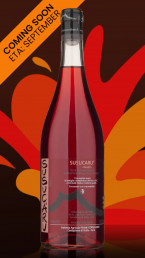
Coming Soon: Susucaru Rosato 2022
ETA: September 2023
Starting with a “pied-de-cuve” using only indigenous yeasts and skin contact for about 10 days.An intense pink tending to raspberry red. Warm aromas of pepper, coriander, cloves, vanilla, tobacco, and leather. A refreshing wine that is fruity and vibrant.
– Tasting Note
“…the wines we tasted were precise and expressive, the Nerello Mascalese, his main red variety, transmitting the origin of the wines without any deviation due to winemaking. He is now set on the course of what he calls ‘high-fidelity’ winemaking.”
Julia Harding MW, for JancisRobinson.com
The Mt. Etna & Nerello Mascalese Enigma
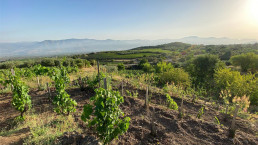
Cornelissen has always been a bit of a mad genius – who else would have embarked on a risky vinous venture in a little-known region with a local grape variety, Nerello Mascalese, that was virtually unknown outside Sicily.
At 1,000 metres up on the north slopes of Europe’s most active volcano, Cornelissen purchased centenarian vines that had originally been planted during the phylloxera crisis. (Phylloxera cannot survive in Etna’s igneous – solidified lava & magma – soils.)
Interestingly, a little known fact was that in the early 20th century, the wines produced here were exported to bolster the stricken harvests of Burgundy, transported down the side of the volcano on a specially constructed train. Once France started grafting vines onto American rootstocks to combat the disease, the old-style ungrafted vines that were planted here were all but abandoned.
Against the dramatic backdrop of the always smouldering volcano, the almost alpine setting has historically been divided up by the local shepherds and landholders into contrade, with each having a different mineral profile determined by the volcanic eruptions and lava flows that formed them. Their inimitable identities and savoury flavour profiles means that there are 133 defined contrade on Etna. Frank Cornelissen’s single vineyard crus strongly align to these contrade creating wines with distinct aromas and personalities.
The searing light of Sicily is flushed by the cooling influence of altitude within the environs of Mt. Etna creating a particularly unique terroir. The altitude refreshes the air and brings the diurnal boost to the flavour profiles and acidity.
Since Cornelissen arrived, he has been followed to this vinous paradise by scores of other ambitious winemakers, Franchetti, Occhipinti, De Grazia, Russo, to name a few. The Etna DOC of Sicily (established in 1968) has since experienced a renaissance and is now perhaps Italy’s most dynamic wine region.
Nerello Mascalese is the undisputed prince of the grape varieties growing on mystical Mt. Etna. Located on the eastern coast of Sicily, the Nerello Mascalese grape at high altitude becomes imbued with extraordinary nuances partly due to the soil, rich in ashes, mineral salts, and sand creating a wine of intense flavour and opulent shades that make it truly exceptional. Nerello mascalese is often said to provide some of the excitement and style of Barolo’s Nebbiolo, while the vine is both drought and heat tolerant.
The flavour profile of Nerello mascalese is characterised by red berry fruits, wild strawberries, and cherries, often in a wild/sour spectrum, along with woodsy herbs, dried florals, and minerals. The grape is often blended with a little nerello cappuccio, which tends to add a little colour, alcohol, and some riper fruit notes. Wines made from nerello mascalese are usually quite structured, with high acid and fairly grippy tannins a feature.
While nerello mascalese crops up in 24 DOCs and IGPs in Italy, it is certainly on Etna that it reaches its peak expression, making wines that are often compared in stature to the great wines of Piedmont: Barolo and Barbaresco. Truth is that the wines of Etna are very much distinctive and individual expressions.
Cornelissen freely admits now that his first wines were angry wines. He said he always wanted to make “liquid rock” wines, which he’s cleverly achieved whilst determinedly filtering out the excessive parts.
Here are Frank Cornelissen’s latest NZ releases which are truly born of soils formed by prehistoric lava flows, carrying the seriousness of many of the world’s greatest wines while simultaneously tasting like nothing you’ve ever had. When wine geeks speak of Frank Cornelissen, they get reverential, almost mystical, in tone. One sip of this stuff and you’ll see why; it’s bottled volcanic energy, ready to WOW right now and reward years in your cellar. Load up fast! Stock is limited!

Focus On: Fact, Fiction or Fantasy?
Dhall & Nash’s Focus On:
Fact, Fiction or Fantasy
Vinous MythBusters: Debunking Common Wine Myths
Happily for us at Dhall & Nash, wine is everywhere these days, but so too are misconceptions about our favourite fermented friend.
There is absolutely nothing wrong with having favourite grapes, producers, or wine regions. But limiting yourself to only those wines you know you like closes the door on the vast, unexplored territory occupied by all the wines you’ve learned little to nothing about. Unwittingly, your hidden wine prejudices may be fencing you in!
Certain common misconceptions about wine can become unquestioned truths. And once they harden into beliefs, they inevitably put-up barriers around anyone’s ability to expand their wine knowledge and enter the playful and immensely pleasurable realm of tasting new wines.
We want to Focus On debunking a few widespread wine myths so that you can impress your friends, fend off irritating wine snobs, and most importantly open your mind and palate to some fabulicious fun wines.
This can apply to even a seasoned enthusiast or if you’re just getting into this whole wine thing, there are quite a few myths nearly every wine drinker mistakenly believes (Oops! Guilty as charged).
Here are a few myths we’ve busted to help dispel some misconceptions we’ve all come across at one point or another in our wine adventures:
All Chardonnays Are Too Oaky
This old chestnut – the ABC Club – Anything But Chardonnay club. Really darling? Really? All we can say is – never let fashion dictate what you enjoy. Be a tastemaker, not a slave to fashion.
Anything But Chardonnay was a movement that stemmed from the dominance of this style in the Californian market back in the 1980s, and in NZ we followed suit – throw more expensive oak at it meant a more expensive chardy but not necessarily a finer crafted chardy. Just like over-salting your food, this was all wrong. But times and winemaking styles have well and truly changed yet a lot of people still believe, mistakenly, that all chardonnay is big and over-oaked.
Oak is really, really amazing and when used judiciously, adds beautiful texture and complex, enticing character to wine, though it’s easy to overdo. Thankfully it’s all about the pursuit of balance in wines nowadays. Winemakers know it. And the wine buying public needs to know it by now. Embrace a tantalisingly brilliantly balanced Chardy like Easthope Family Winegrowers Skeetfield Chardonnay or Domaine Testut Chablis.
All Rieslings Are Sweet
False. In fact, nothing could be further from the truth. Riesling, amazingly, is one heck of a versatile grape variety. It can be made into ice wine from frozen grapes on the vine, it can be made late harvest if the conditions are just right, AND in more cases than not, it can be made bone dry!
If you’re a fan of tart, crisp wines and Riesling hasn’t been rotated into your repertoire, you are missing out. Dry Rieslings have a lip-smacking acidity that is mouth-watering and totally moreish.
Rieslings are scintillating, pure, powerful, haunting, dry, and some of the most ethereal wines ever made. Period. No need to say more – time for you to try: Schloss Lieser Niederberg Helden Riesling Trocken GG (375mls Half bottles also available)

Sulphites Are the Cause of All Wine Headaches
Nope, not even close to true. An entire bottle of wine contains less sulphite than a couple of dried apricots; and believe it or not, white wine typically has more sulphite than red.
We may need to do a deep dive on this myth – here goes: Sulphites are sulphur compounds that occur naturally in the grapes and hops used to make wine and beer. They prevent the growth of the bacteria that make the drink go cloudy, literally turning the alcohol into vinegar. Most wines and beers have extra sulphites added as a preservative and some people claim that this can cause headaches. Drinking sulphite-free wine for the sake of not having a headache is totally an urban wine myth.
There are several things that are more likely to contribute to wine headaches that are unique to each person: alcohol level, sugar content, not drinking enough water and other chemicals/additives can all cause headaches (see more below).
Next time you pour a second or third glass of wine for the evening, check the wine bottle label first, you may be surprised to see that your Barossa Shiraz is 16% alcohol!
There Are More Sulphites in Red Wine
Some people say they can drink white wine with no ill effects but not red.
While it’s true reds possess more natural sulphites, white wines require the addition of considerably higher levels of sulphur dioxide in order to maintain freshness. For the record, white wines, particularly sweet whites, contain up to 10 times the level of sulphites as reds.
So, what is it about red wines that cause so many allergic reactions/headaches? There are actually several factors that have been studied.
The first and most common are histamines. Histamines are found in nature in many forms including plant matter, i.e., grapes, and cause those susceptible to suffer from sinus issues. Since pollen and other goodies are trapped on the surface of the grape skins — and only red wines come in contact with the skins, it stands that those who are sensitive to histamines will be affected when they drink red wine.
Histamines can be up to 200 percent higher in reds than in whites. There is a home remedy or old wives’ tale that recommends drinking a cup of black tea before consuming red wine. The compound quercetin found in black tea has been thought to inhibit the flushing effects of histamines, but this has not been studied extensively. Probably a more effective method is to take an over-the-counter antihistamine. But make sure you choose the non-drowsy variety, or you may fall asleep in the middle of your toast to good red wine.
The second factor is tannin. Tannins in red wine can cause small levels of serotonin release in the brain, affecting those prone to migraines. But several Harvard studies have shown that those not prone to migraines did not get headaches from increased levels of tannin.
Prostaglandins are the third factor studied. Prostaglandins are substances that cause pain and swelling. When combined with the dehydrating properties of alcohol, they’ve been thoerised to increase the likelihood of headaches when drinking red wine. The biochemistry behind this one is quite a bit more detailed, so we won’t bore you with the details, but prostaglandins are everywhere. If you are particularly sensitive, then taking Ibuprofen, which is a prostaglandin inhibitor, may be helpful.
The fourth factor has not been studied, at least in any respectable research setting, but it is a theory amongst us in the trade… Cheap “Industrial Level” Wine! We are convinced that poorly-made wine contains more unbalanced bacteria, junk, stems, detritus, bugs and who-only-knows-what. It’s no wonder people get headaches from it. In order to make quality wine, a winemaker has to invest in quality production from the grape to your glass. There’s no way that a $8 bottle of wine can be made “well”.
Just sayin’!
All Wines Get Better With Age
While the majority of us would love nothing more than to enjoy a bottle of 1996 Château Margaux, the truth is that not all wines are meant to be enjoyed at a later date. In fact, about 90% of wines are made to be consumed within the first 3-5 years of their life. So, unless you’re buying special bottles for your cellar, go ahead and crack open that bottle of wine sitting in your closet, it’s probably really ready to drink!
Wine "Legs" Are Evidence of Wine Quality
Wrong! Legs are the streaks down the side of a wine glass. They largely are a product of the alcohol level. Thicker, slower legs merely indicate a higher alcohol level, but that is separate and quite apart from quality.
“Never judge a book by its cover” – this could be just as aptly applied to rose’ – “Never judge a rose’ by its colour”
– Dhall & Nash’s Blogger Mama Sonja

The Darker the Rosé the Sweeter it Will Be
Codswallop! Admittedly there is a big issue that wine drinkers everywhere confront: decoding rosé’s colour, which can range from the palest blush, to full-bloom azalea. The first question most people have upon seeing a darker rosé is: Will this wine be too sweet? In short, the answer is most likely no.
The reality is that a quality rosé, even if it is dark, will contain neither added nor residual sugar. A rosé’s colour can, however, give you some important information on how it was made, and how it will taste; in general, lighter rosés are bright and crisp, darker rosés have more fruit, texture, and body. It all depends on skin and time.
One of the main factors in a wine’s colour is skin contact. This refers to the amount of time that winemakers allow the juice to remain on the red skins before removing them—it can be as little as a few hours, or as much as several days, depending on the producer and regional style.
Perhaps the best example of the differences between lighter and darker rosés can be found in Southern France, where pale pink Provençal rosé and deep ruby Tavel wines from the Rhône Valley are produced with special care and pride. These regions are known for their rosé wines, where they even plant grapes specifically for rosé, which is not the case everywhere.
In a lot of places, people make rosé as a by-product of their red wine production – referring to the saignée technique in which winemakers briefly macerate red grapes with the skins, “bleed” some juice off for rosé, and then use the more concentrated juice to make a red wine.
Because of Tavel and Provence’s focus on turning out top-quality rosé, they’re harvesting the grape when it’s at the perfect balance of fruit, acidity and ripeness to make a beautiful, balanced rosé, with just enough richness and acidity to satisfy the thirst that a great meal generates.
In Bandol, a sub-appellation of Provence renowned for top notch rosé, they make their rosé with a heavy dose of the grape Mourvèdre, which lends a slightly darker hue to the wine. By law Bandol rosé must be made with between 20 to 95 percent Mourvèdre. Mourvèdre makes a rich, dark, super tannic red wine. In rosé, Mourvèdre provides a rich texture, but also a razor-like acidity which can make for a bright, crisp, refreshing rosé.
Climate also plays into such varietal characteristics; grapes growing in warmer climates tend to have thicker skins, so the rosés will be darker like in Hawkes Bay. Because of the high proportion of Mourvèdre in Bandol rosé, it can be slightly darker than the broader Côtes de Provence rosé, which can include a wider variety of grapes from all over the appellation.
All of these factors affect a rosé’s colour, but it comes down to a winemaker exercising his or her judiciousness—and expressing a regional style—it’s about determining the amount of time that grapes sit on their skins. In Tavel, winemakers typically let the juice sit on the skins for more time, up to 48 hours, which gives the wine more tannin and structure, as well as a more intense fruit profile. This style of rosé, known as rosé d’assiette—meaning “rosé for the plate” (as in for a meal)—displays a more savoury quality and concentrated fruit.
Pale Provençal rosé, meanwhile, has a flavour profile somewhat closer to white wine. It’s more floral, with gardenia and white blossoms, bright high-toned fruit, and often more delicate flavours. The juice is frequently removed from the skins within the first 12 hours during maceration.
Ultimately, why not forget about the sweetness or colour question, and instead get excited about the range of rosé wines out there – ask your sommelier, wine shop assistant or us here at D&N what different styles are available to suit the occasion – richer, fuller rosé, or something bright, light, and easy drinking.
“We’ve all been conditioned to think that the best rosés come from the most recent vintage possible. Not so!”
– Ian Cauble, Master Sommelier

You Should Only Drink the Latest Vintage of Rosé
Why is this soooo not true? Because you can enjoy other vintages too, and not just the latest.
It’s true that over time, the colour drifts from bright pink to more of a salmon-pink tinge and aromatic expression gradually displays spicy, toasty, floral or ripe fruit notes in addition to the yellow or white fruit aromas, citrus, and tropical fruits. But the wines are not fading, they are broadening their spectrum. The slightly older vintage of a rosé wine is still gratifying and continues to display its iconic style but will appeal to inquisitive consumers who keep an open mind when it comes to new profiles.
Rosé is for Summer Drinking Only
Admittedly, rosé consumption is higher when the sun shines, but there are so many styles of rosé that are suitable for all-year round drinking, it’s just a matter of open-mindedly choosing a weighty ‘winter’ rosé that pairs perfectly with the right food or moment.
Rosé wine’s versatility is an advantage when it comes to the dinner table. They stand up flawlessly to all types of cuisine from Mediterranean, to Indian and to Asian dishes. For foods with stronger flavours—like grilled or smoked seafood—we’d recommend a bottle of the more complex weightier Château Gassier Cuveé 946. Whereas for something lighter, like sushi or poached salmon, we’d lean towards the lighter style of pinot noir rosé, like the Folium. A classic Provençal style rosé like Château Gassier Esprit is also great for drinking on its own, as an aperitif.

Everybody's Tired of Drinking the Same Old Thing
People are ready to see that there's different stuff out there. Welcome to the world of Natural Wines and, of course, its myths.
Think natural wine is nothing more than a trendy hipster magnet? Think again. A minimalist approach to winemaking is moving into the mainstream—though not without its misconceptions, naturally. We want to crush the myths and embrace bottles that aren’t made from grapes doused with chemicals or otherwise overly manufactured and manipulated. Less really can be more. Here are some myths of the natural wine movement, along with some D&N bottles to make you a believer.
Natural Wine Is Just a Fad
Though it’s a buzzy category of late, natural wine has actually been around for thousands of years, since the first thirsty people decided to throw crushed grapes into a vat and see what happened. “The Romans weren’t spraying Roundup on their vines, and the Cistercian monks of Burgundy weren’t buying yeast to inoculate their fermentation,” says Danny Kuehner, the Head Sommelier at Madison in San Diego. “This grassroots movement among wine enthusiasts will only continue to grow.” Just as organic produce, free-range poultry and whole foods have become part of our permanent culinary lexicon, natural wine is here to stay.
Natural Wines Don’t Age Well
News flash: The vast majority of all wines produced in the world are meant to be consumed within a few years. And let’s face it—most wines rarely make it longer than the trip from the grocery store to our glasses. Age-worthy wines, no matter how they’re made, generally have high acidity and/or tannins, both of which act as preservatives. Making a blanket statement about how long natural wines are going to hold up is silly, says Sommelier Sebastian Zutant. “Ask the folks at La Stoppa why their current release of their high-end Barbera is 2011; it’s singing and could use some more time,” he says. “Anyone making this point simply hasn’t tried older natural wines. They age.” D&N bottle to try: La Stoppa Riostoppa 2014
Natural Wines Taste Funky
OK, this myth actually has some legitimacy. But is funkiness in wine a bad thing? We say no. A tiny level of brettanomyces—that is, the strain of yeast that gives some wines a whiff of barnyard or saddle leather—or the doughy notes gleaned from leaving dead yeast cells in the bottle rather than filtering them out can elevate a wine. Add another layer of complexity. Natural wines have a broader range of acceptable flavours. But within that broad swath are also all of the same flavours of commercial wines. Just like some sour beers might not be your jam, others may be the mouth-watering, tart, and tangy brews you’re craving. The right natural wine to pique your palate is out there waiting to be uncorked. D&N bottle to try: De Martino Viejas Tinajas Muscat 2018 Or De Martino Cinsault – fermented in traditional underground clay pots
Dr Jo Brysnska, Wine Writer expounds that it is a “…great time to enjoy that newly popular style that sits on its own sensory threshold, the chilled red.”
Red Wines Should NEVER Be Chilled
While it is true that most reds should be served at room temperature (more on this later) there are a few exceptions.
Traditionally there is one style that is always chilled: Beaujolais Nouveau. This wine is made from the very first grapes harvested every year in Beaujolais France and goes through carbonic maceration – giving it a tutti-fruity flavour. Now, thanks in part to the Natural Wine movement, there are decidedly many lighter and more juicy-licious red wine styles made in such a way that they drink much better with a bit of a chill on them.
With heavier reds generally, it is a bit trickier, depending on the age and texture of the wine. Ideally, a bottle should be slightly cool to the touch. Modern room temperature can often leave a good red seeming flabby or fatiguing. A slight chill is bracing to the wine. Tannic wines served too cold can seem tough and unpleasant. If a bottle seems too warm, 15 minutes in the fridge — or, at a restaurant, 10 minutes in an ice bucket — can work wonders. Give it a go. D & N Bottle to chill – Nat Cool Drink Me Vermelho OR Easthope Family Winegrowers Gamay Noir.
But remember – serving some white wines too cold will strip them of all flavour and conversely, mediocre whites ought to be served ice-cold, the temperature masks any flaws.
Here’s our suggested temperature guide to serving different wine types:
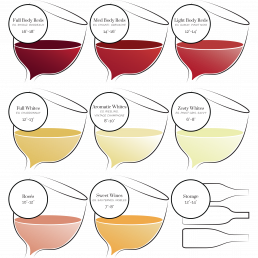
Full Reds (Shiraz, Bordeaux, etc.) – 16°-18°C
Medium Reds (Pinot Noir, Chianti) – 14°-16°C
Light Reds (Beaujolais, some gamay noir) – 12°-14°C
Full Whites (Grand-Cru Burgundy, Chardonnay, Roussanne) – 12°-13°C
Rosé Wine – 10°-12°C
Complex Aromatic Whites (Riesling, Gewürztraminer, Vintage Champagne) – 8°-10°C
Sweet Wines – 7°-8°C
Aromatic zesty wines (Sauvignon Blanc, Pinot Gris/Grigio, NV Champagne) – 6°-8°C
The ideal temperature to store wine – so-called ‘cellar temperature’ is between 12°-14°C and the most important thing is that the temperature is steady with no big fluctuations.
The magic of wine is that it is complex, beguiling, exciting and interesting. It also tastes pretty darn good too, which we’d argue is the most important thing of all! There’s plenty of myths to trip up the unwary though, and many ‘facts’ taken as truth that are easy to avoid. We hope this blog has shed a smidgeon of light on these vinous myths and opened the doors to try something deliciously drool-worthy and new too. Enjoy! ☺
You Should Always Decant an Old Wine
Actually, in some cases you really shouldn’t – this is not a hard and fast rule. Yes, sometimes there may be sediment in the bottle to avoid, but some very old wines are also very fragile and might be magnificent for the first 15 minutes after decanting, and then rather tired after 30 minutes. If in doubt, pour a small tasting sample, taste it, and taste it again in half an hour or so. Make your choice then. If still in doubt check online wine reviews first. ☺

“Bottle Shock” is Just a Wine Snob’s Term When Their Expensive Wine Doesn’t “Measure Up”
This has validity. Wine is a living thing, and when it gets jostled and disturbed by travel — be it in a container ship or truck or car trunk — it can respond negatively, much the way you feel with jet lag. The result can be a loss of aroma and flavour, which is what happened to the legendary white wine from California in the Judgment of Paris.
Fortunately, wine heals with a little R&R — and that healing allowed the Château Montelena Chardonnay to win the 1976 Judgment of Paris and put American wines on the world stage. It is why the movie about this event is titled “Bottle Shock”.
Next is an oldie, but a goodie…
A Teaspoon in the Neck of Your Opened Bottle of Champagne, Prosecco or Beer Keeps Them Fizzy for Longer
Let’s start with the supposed science. The teaspoon is said to act as a temperature regulator, as it absorbs the warm air from the neck of the bottle. The air around the teaspoon now gets colder and as cold air is denser than warmer air, the teaspoon creates a kind of air stopper, preventing the gas from escaping. The bottle with no teaspoon has no ‘air plug’ so the gas has an open route to escape. So, the cold temperature retains more carbon dioxide, and a teaspoon holds some metallic merit, at least overnight.
Here’s the actual testing. In 1994, the spoon trick was put to the test by Prof Richard Zare, a chemistry professor at Stanford University, California. He asked a panel of eight amateur tasters to judge the fizziness of champagne poured from 10 bottles. Some had just been opened, while others had been left for 26 hours with either nothing, or a spoon made of either silver or stainless steel in their necks. The judges weren’t told how each bottle had been treated. The conclusion: none of the spoons had any real impact on the fizziness – a finding later confirmed by the professional association of champagne producers in France.
So, what’s the best thing to do? Get yourself a stopper and keep the drink in the fridge. Carbon dioxide gas, which gives champagne its fizz, is more soluble in colder liquid, so the bubbly will better retain its sparkle. Or better yet – buy D&N’s CORAVIN Sparkling Wine Preservation System.
The magic of wine is that it is complex, beguiling, exciting and interesting. It also tastes pretty darn good too, which we’d argue is the most important thing of all!
There’s plenty of myths to trip up the unwary though, and many ‘facts’ taken as truth that are easy to avoid. We hope this blog has shed a smidgeon of light on these vinous myths and opened the doors to try something deliciously drool-worthy and new too.
Enjoy! ☺
2020 Easthope Family Winegrowers Skeetfield Vineyard Chardonnay, Hawke’s Bay, New Zealand
“The unique site that is the Skeetfield vineyard in Hawke’s Bay captures a sense of place and time in its chardonnay fruit showcasing scents of new season peach then quince, ripe grapefruit, there’s no mistaking the mineral layer enhanced with a wild white flowers suggestion. Delicious, weighty, vibrant and fresh on the palate with flavours that mirror the bouquet, there’s a youthful and refreshing acid line with a touch of salinity to it, fine tannins and balanced reserved use of oak. An excellent example, well made, lengthy and delicious! Best drinking from 2021 through 2029.”
95 points – Cameron Douglas
2020 Château Gassier Esprit Gassier IGP Méditerraneé Rosé, Provence, France
Shades of pale peach. A delicate nose with white and yellow fruit aromas. On the palate, a mineral wine with a beautiful freshness and a touch of acidity on the finish. A sumptuous and elegant rosé that will transport you to a magical corner of the Mediterranean sea. Majority Grenache, Syrah, Cinsault.
2018 De Martino Viejas Tinajas Muscat, Itata Valley, Chile
“Like many of the wines, this is the finest bottling for this cuvée in an almost-perfect vintage. This has moderate alcohol (12.8%) and very high acidity, something quite unusual for the variety, and it gives a lively character to the palate with citrus freshness. It has varietal notes, but more than that, it is very clean, complex and floral, with notes of orange peel. It’s a lot cleaner than the initial vintages, without any rusticity, and is focused and bone dry.”
93 points – Robert Parker’s Wine Advocate
2018 De Martino Viejas Tinajas Cinsault, Itata Valley, Chile
“This is precise, expressive and fresh, with a wild character, very different from the other Cinsaults. It has a brothy, meaty touch on the palate that makes it very tasty. Clean and precise, with very good grip, 2018 has to be the finest vintage to date for this wine.”
94 points – Robert Parker’s Wine Advocate

Frank Cornelissen: Natural Wine That's Too HOT to Handle
Frank Cornelissen: Natural Wine That's Too HOT to Handle
From the volcanic faces of Mount Etna in Sicily comes a truly luminary addition to the Dhall & Nash portfolio. The wines of Azienda Agricola Frank Cornelissen, as the name suggests, are from a farm not an estate. They represent pure passion rather than product generation, more a vivid idea than intellectual endeavour. As some of the first inspiring words we read from Frank before reaching out looking for an allocation admit,
“Our farming philosophy is based on our acceptance of the fact that man will never be able to understand nature’s full complexity and interactions. We therefore choose to concentrate on observing and learning the movements of Mother Earth [before] deciding and imposing ourselves.”
New Zealanders simply have to experience this Wondermaker…
Originally working as a merchant in the Belgian wine trade, Frank Cornelissen instantly saw the potential of Etna’s wine when sharing a bottle over a lunch in Sicily. He quickly hightailed it up to the island’s prominent volcano to further explore the timeworn terrain and wines of the area, before shortly concluding that, if wine is indeed sunlight held together by water as described by Galileo, then Etna is the place to come grow and bottle poetry.
The label was officially established right after this transcendent introduction in 2001, when Frank purchased a vineyard in the northern valleys of Mount Etna. The northern valley is considered Etna’s top area for single-vineyard (contrada) red wines, much like the Côtes-de-Nuits in Burgundy or Barolo in Piemonte, and is where the first vintages of the infamous ‘Magma’ came to be. At elevations of over 830m and from ungrafted Nerello Mascalese vines, many over a century old, this was some seriously unique terroir to start on the path of cultivating some equally unique wines from.
The Winemaking
Imagine everything and anything it might take to make wine in a natural way, and guaranteed that approach has been put into practice by the team at Frank Cornelissen, and then some. Frank is described as being unrelenting and extreme when it comes to his hands-off attitude to tending both vines and wines. This goes so far as avoiding all intervention, even those that are organic, biodynamic and homeopathic. “WHAT?!” we asked ourselves… before recalling his belief that “accepting and following nature is our guideline”. Maybe something we could learn to accept and follow a bit more, too…
Nevertheless, Frank doesn’t shy away from the possibility of bad vintages, opting instead for a complete embrace of transparency and acceptance of this inevitability. He recently surprised writers for The New York Times when they approached requesting samples to review, and in response received examples of ‘failed’ earlier vintages from the farm, explaining that they would be ‘instructive’. This admission of evolution, learning and improving along the way can be rare amongst winemakers, when projecting absolute knowledge might sell you more bottles.
On his various vineyards, Frank notes,
“In order to obtain profound, territorial wines, our grape yields are low, around 300 to 600g per vine for the top vineyards and wines, achieved by pruning very short in the dormant season.”
And this is just the beginning of the natural cycle of life for the farm’s fruit. In contact with skins, grapes are fermented in small neutral tubs as a way to better control the temperatures. After alcoholic fermentation has finished, they are transferred to neutral vessels so as to not absorb any external flavours. Wines intended for early bottling go into larger epoxy decanting tanks to come together over whatever time is deemed necessary before release to market. Wines destined for longer ageing due to greater tannin and structure in comparison, age in smaller epoxy tanks, or in epoxy coated terracotta amphorae buried to the neck into the volcanic bedrock beneath the cellar. And that’s it! Given the health of the fruit harvested, no unnecessary additions are needed, little to no sulphur depending on the wine and vintage, no fining (therefore vegetarian/vegan) or filtration to retain maximum flavour and site expression.
Finally, every bottle of Azienda Agricola Frank Cornelissen can be individually authenticated via a radio frequency identification chip installed, so buyers can be assured of the wine’s providence (see here for an explainer on this tech).
High Acclaim
Naturally (so to speak), the Cornelissen farm and wines have attracted the attention of critics and enthusiasts the world over. Jamie Goode’s The Wine Anorak describes it as “one of the most unique and unusual projects I’ve yet encountered in the world of wine”. In Rob Haskell’s article for Vogue, ‘Why Wild, Chemical-Free, “Natural” Wines Are Taking the Industry by Storm’ Frank is described as “a Belgian fanatic at work on the high slopes of Mount Etna whose wines taste like the aftermath of a volcanic eruption.” (The ultimate compliment to a man who has always aimed to produce ‘liquid rock’ – wines of real seismic energy).
Viceland has recently released a show titled “F*ck That’s Delicious” where the highly personable chef-turned-rapper presenter Action Bronson was introduced to the wines and has not stopped talking about them since. He followed up in their “Munchies” series and raved about Frank’s natural wines, particularly the Susucaru Wine. “Mr Frank Cornelissen, the orchestrator of some of the most incredible natural beverages that one could ever imagine…” Action Bronson states, “I was privileged to taste the wine – Susucaru… bottom line is I taste this natural stuff and my eyes just lit up, some lightbulb went off and I feel like this is where the journey of life has taken me, and where I need to continue to explore.”
With a reputation that truly precedes him, Frank Cornelissen firmly embodies the philosophy of the need for the work to be greater than the worker – the fact our 2020 allocation of his wines sold out before landing attests to this. We highly recommend that if you’re interested in securing a few bottles of any wines from the range from next year’s shipment, drop us a line now! (email info@dnfinewine.com)
Budburst Natural Wine Festival 2018

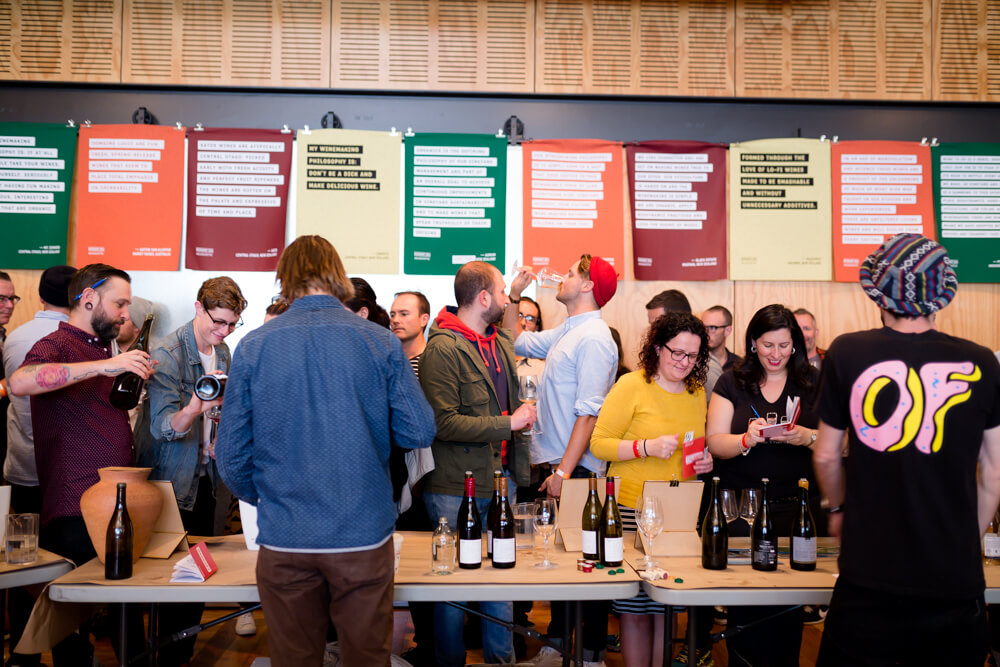
On Sunday 11th November Wellington will again be home to the country’s only natural wine festival. Housed across the Boatshed and Rowing Club on the Wellington waterfront, the Budburst teams will be welcoming natural wine producers from New Zealand and around the world for Budburst 2018.
The Budburst Natural Wine Festival is based on five main principles:
Wine starts in the vineyard. We believe that natural wine cannot be made from conventionally farmed fruit so we ask all our producers to verify that they grow their grapes organically or biodynamically.
Let the time & place shine through. In the winery we ask for minimal intervention. Let the quality of the fruit, site and season speak for themselves.
Naturally delicious. We love delicious, well-made wines. Weird for weird's sake is not our bag, the wine also has to be good. Natural is the philosophy, quality is the aim.
Always learning, always curious. Education is at the heart of everything we do. The festival is designed to pique your curiosity and stir up debate, we're not here to preach or convert.
It's all for the love of wine. Budburst is a not-for-profit festival run by a passionate group of volunteers. The producers we pull together and the wines they show light us up and we want to share them with the world.
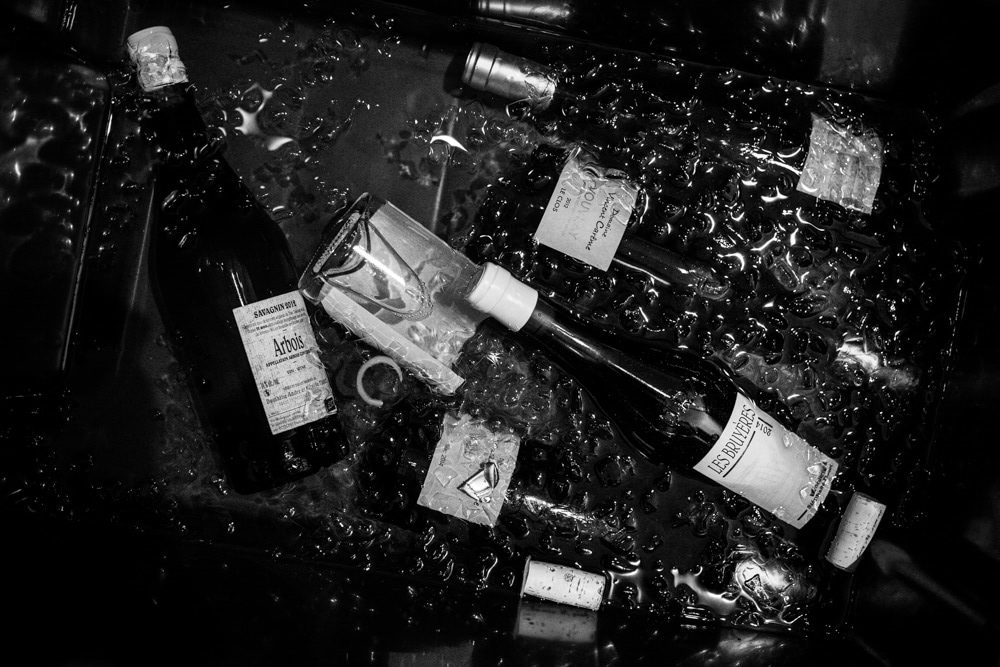
Dhall & Nash are excited for our suppliers who will be on show at the festival. The collection of wines one will find at this event is exceptional, rare and deliciously unique. We can’t wait to celebrate their success with you all here at the festival. Here is a little heads up on the wines to look out for and some details about these phenomenal wine growers from the Dhall & Nash portfolio:
Domaine Vincent Carême:
A young and dynamic Vouvray wine grower who set up his domaine in 1999. The estate makes the full range of Chenin Blanc styles; sparkling, sec, demi-sec and moelleux and he uses organic and biodynamic methods across his vines, with the 14 hectares estate being certified.
2016 Domaine Vincent Careme Sec
2016 Domaine Vincent Careme Le Clos
2015 Domaine Vincent Careme L'Ancestrale
Domaine Des Pothiers:
Romain Paire is a fantastic wine grower. He exalts the family estate, old of several centuries and spreading on 17.5 hectares of vines planted on beautiful slopes situated at 400 and 500 meters of altitude. The vineyard is entirely certified organic and biodynamic (label Biodyvin). The delicious red wines are made of Gamay Saint-Romain grown on complex granitic soils. It delivers perfectly balanced full-flavored wines.

2017 Domaine des Pothiers Eclipse Method
2017 Domaine des Pothiers Référence
2016 Domaine des Pothiers La Chapelle
De Martino:
The De Martino winery was founded in 1934 by Pietro De Martino, who arrived in Chile in search of a place to satisfy his passion for winemaking. Today, more than 80 years after it began, the fourth generation of De Martino still work the winery every day. Their Amphora wines from the Viejas Tinajas range are super rare and ultra-delicious and landed just in time.
2016 De Martino Viejas Tinajas Muscat
2016 De Martino Viejas Tinajas Cinsault
2011 De Martino Old Vines Limavida Malbec
Aurum Wines:
A family run estate based in the Lowburn sub region of Central Otago. The vineyard and winery are managed using certified organic practices and thrive to produce wines that speak truthfully of their origins. Organics is the defining philosophy of the vineyard management and part of an overall goal to achieve continuous improvements in vineyard sustainability and to make better wines. Keep an eye out for Aurum running their own stand at the Budburst festival.
2017 Aurum Amber Wine Pinot Gris
2017 Aurum Chardonnay
2017 Aurum Libera Pinot Noir
This is going to be a fantastic event. Can't wait to see you there.
- Brandon