Coyotero Mezcal - Truly Ancestral Spirits
“Para todo mal, mezcal, y para todo bien, también”
“For everything bad, mezcal, and for everything good, too”

For those in Mexico’s Oaxaca region, Mezcal is far more than just a spirit. It’s the lifeblood of the land, of the people and of traditions, clutched in hands that tell as many tales as the drop itself around the fireside at the end of the day for centuries past.
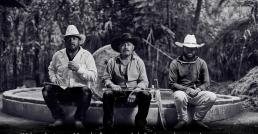
At Dhall & Nash we’ve been slowly building our craft spirits offerings over the past few years. It’s a slow and extremely deliberate process, as we don’t want to hitch our wagon to any distillery. What we’ve come to realise in our spirits research, was that the ‘new’ spirits boom has seen consumers moving away from commercial, high-production labels and towards small batch and producers.
This has been partly driven by the “craft” movement, which saw the rise of coffee roasteries, craft beer breweries, natural wines, and farmers’ markets. The focus now being on artisanal products, with people valuing authentically produced products, where they can see and get to know the individuals making these products.
Enter, Coyotero from the Ancestral Company…
Coyotero by Ancestral
“Once upon a time, a group of travelers wanting to cross the border met a master in the North of Mexico, gathered around a fire, a place where they shared their dreams.
Without realizing it, these dreams became interwoven like fine threads, subtly uniting their destinies, as if woven by their own ancestors.
The celebration was so intense that the spirit of the “coyote” enveloped them, inviting them to howl for three nights. This ritual transformed them into invincible guardians, defenders of their own dreams.”
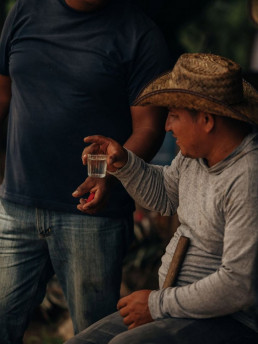
Ancestral is a small but mighty company that emerges from the desire to share the culture of Mezcal. They are certified for three stages of the Mezcal production chain: Production, Bottling, and Distribution, ensuring compliance with current regulations to guarantee the quality of their products and services, including Coyotero.
“Mezcal is not just a beverage in Oaxaca; it represents an Ancestral legacy.”
The Dhall & Nash team sat down with Roberto Worbis and Daniel Becerril de la O just last week, who spearhead the Ancestral company so we could understand the ins and outs of this exciting new addition.
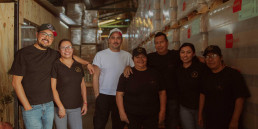
They started by telling us where Coyotero came from, “We wanted a name that sounds Mexican… People that live in Mexico or Latin America go to the USA and Canada and normally they use ‘Coyoteros’ if you go illegal. It’s like slang, “who takes me? That Coyotero”, it’s a guy that crosses you. We wanted for our people, anywhere, to identify with the brand.” Roberto told us.
Daniel agreed, but added “There is the Coyotero and the legend but for me, it was more important… the people. Their goals… It’s like a warrior, you know. It has a lot of meanings.”
The Ancestral company uses a slogan on all their bottlings – “Fury, Pain and Sorrow.”
“It’s part of the brand that goes with everybody…” Roberto explains, “Fury, pain or sorrow and well… I like this idea and I think a lot of people have some fury, pain or sorrow. And it’s easy for a lot of people and other countries to say Coyotero and they identify it with Mexico.”
They’re also particularly proud of their location. “There’s six or seven states in Mexico that can do Mezcal, but the most famous state is Oaxaca and from Oaxaca, the most famous area or part or region is Ejutla, so we’re in the best region.”
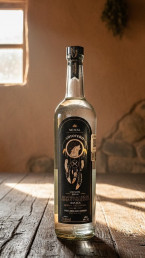
Coyotero Espadín Joven Mezcal
- 36% or 40% ABV
- Agave: Angustifolia Espadin
- Still: Double Plated Copper
- Crush: Stone Tahona
- Fermentation: 5 Days
- Maturation: 6 Years
- Maestro: Sergio Jimenez Juarez
So Mezcal, what is it?
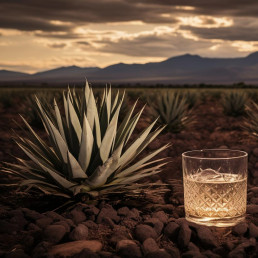
Mezcal is a mexican Agave spirit, made from the ‘pineapples’ or ‘piña’ of the Agave plant.
Once the Agave plant reaches maturity, it’s harvested and cooked in a stone oven underground. This imparts a very unique and distinctive smoky flavour. The name ‘Mezcal’ actually comes from the Nahuatl word “mexcalli,” meaning “oven-cooked agave.”
The cooked agave is then ground, and the resulting juice or ‘honey’ is fermented in wooden vats before being distilled.
Making Mezcal
We asked Roberto & Daniel about Mezcal and their methods. Daniel rushes off camera briefly. He returns with a jar of Agave syrup which he calls the honey, as he opens it close to the camera and drizzles it from a spoon.
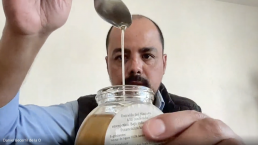
“It has a different colour and flavour…” Daniel explains. Roberto helps him out, “It’s different from bee honey.”
“It’s more liquid. This honey, I’ve had maybe 6 months. It doesn’t get hard, you know some other honey it gets like, at the bottom it gets a little bit hard like sugar. This, it’s like super natural.”
“They cook it seven days under the ground, it comes out, they crush it and you can bite it, actually. You can bite the agave and really it’s like honey. It’s like a dessert.
“In premium Mixology, you can use the agave and not use the sugar syrup.”
This is the ingredient that they ferment to make the Mezcal, and it’s fascinating to see that they’re obviously using it in their own home as an ingredient in their cooking and mixing.
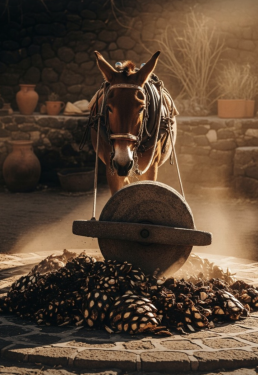
We asked them to clarify how they crush the plants to get the syrup, “Tahona. Donkey or horse, whatever we have over there,” Roberto laughs, “But usually we have a donkey.”
A Tahona is a large heavy stone wheel. It’s incredibly labor intensive and slow, so it’s often done with help from four legged friends who turn it to crush the cooked agave pineapples.
Agave plants have a long growth period, so some say that mezcal represents “drops of time”.
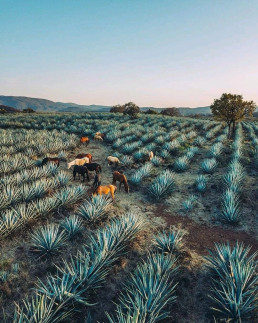
“We use Espadin agave, because it’s [ready at] six to eight years,” Daniel explains. Roberto elaborates (theirs is an evidently practiced and efficient dynamic…) “Cognac and Brandy you put in a barrel for 20 years or five years or 10 years… For Mezcal it’s the other way. [The maturation] comes from time in the ground, in the land. It has to be a minimum of six years to seven or eight… Other agaves can be 12 to 15 years in land. To be mature so you can process it.”
Tequila and Mezcal - Not The Same
“Tequila is to wake the living, and mezcal is to wake the dead.”
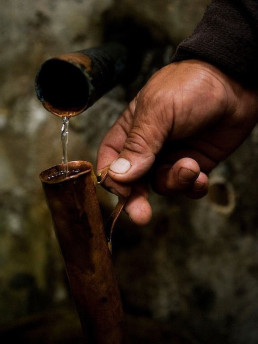
To the uninitiated, Mezcal and Tequila can seem similar – they’re both agave spirits – but expressing this to a mezcal person is akin to telling us a kiwi accent sounds the same as an aussie one. You will get schooled very quickly.
“It’s not tequila, you know? It’s completely different,” Roberto tells us. “Tequila’s a shot, people want to get drunk, feel the effect in 10 minutes. Mezcal – I always say it’s like a woman, you have to give little kisses all the time, you treat a woman with little kisses, same with mezcal. Little by little. And it’s an incredible flavour.”
Roberto and Daniel bounce off each other, explaining the differences in how you drink Mezcal as opposed to Tequila. It’s wonderful to watch them both talk and pick up where one another doesn’t quite have the English word, and you can see they’re both on the same page.
“Mezcal, really it’s another deal. It’s not tequila – that’s like for beginners. I’ll tell you the truth. Mezcal has some status.” Roberto muses.
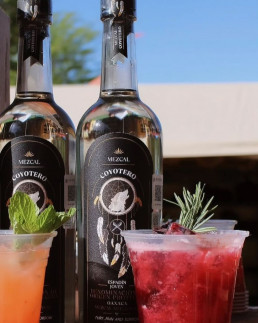
Daniel intercedes, “It’s… how do you say… like the flavors of what you mix, if you put some… cucumber with some lemon or something, it explodes the flavors! You know? And then… tequila, it’s like tequila flavor. Everything you mix it with. With tequila you can… how do you say… you want to not show the bad flavor of the tequila. That’s why I said the mixology for the Mezcal is so different because it explodes the flavours.”
Putting musings and taste preferences aside, there are actual technical differences between mezcal and tequila.
‘Mezcal’ is the term for agave spirits and allows a broader range of production differences than ‘Tequila’ which has stricter regional and inclusionary rules. This is in contrast to some other categories, in that broader doesn’t necessarily mean worse. Often rules and restrictions are put in place to protect the quality and reputation of a product, but mezcal is an ancestral product and the differences in production are its secret weapon, not its weakness.
Tequila is technically a mezcal since it’s a Mexican agave spirit, but is a very controlled one.
| Tequila | Mezcal | |
| Raw Materials | Only made from blue agave. | Can be made from over 30 types of agave. |
| Region | Majoritively (98%) from the Jalisco region. | Can be legally produced in nine different states across Mexico. |
| Production | Generally uses modern methods like steam cooking in industrial autoclaves. | Often uses traditional methods including underground pit roasting & crushing. |
| Flavour & Drinking | A more straightforward flavour profile with clean sweetness and alcohol. Often used for mixed drinks. | More nuanced and layered, with complexities, smokiness and flavours. Often enjoyed on its own but used in mixology too. |
Mezcal in Mexican Culture
“Tequila is to wake the living, and mezcal is to wake the dead.”

Native fermented drinks from agave plants, such as ‘pulque’, existed before the arrival of the Spanish, but the origin of mezcal is officially thought to have started around the late 1500’s when Filipino migrants brought stills to “New Spain” to make ‘vino de coco’, but they were quickly taken up by the indigenous population who adapted them for use in making agave spirits and it quickly ingrained itself into their cultural mesh.

“Tequila is to wake the living, and mezcal is to wake the dead” is often said around Día de los Muertos, the Mexican celebration that honours those who have died.
“Día de Muertos is an extremely social holiday and a celebration of life and death where communities come together to celebrate the loved ones who have passed onto the afterlife.” explains Mezcal producer Xaman, “The dead are still considered the members of the community, and are kept alive in memory and spirit. During Día de los Muertos, they temporarily return to the land of the living.”
“The best place to truly experience Día de los Muertos celebration is Oaxaca, also the home of mezcal. It’s not surprising then, that the communities offer and celebrate with mezcal to make the spirits feel welcome for their journey home.”
It’s common to see little mezcal bottles placed among the arrangements on memorial-like altars in cemeteries.
Mezcal is specially reserved for Oaxacan milestones, rituals and holidays, including the Day of the Dead. The spirit is so ingrained in Mexican culture that locals believe it’s even consumed after death.”
Enjoying Mezcal
“If you drink too much mezcal, they don’t say you are drunk; they say you are “closer to god”.”

Mezcal is most often enjoyed on its own in Mexico, sipped slowly and savoured, but it can certainly be used in mixology and as a part of a gastronomic experience.
“Mixology is super important,” Roberto & Daniel tell us emphatically, “In mixology with Mezcal, really it’s another deal… if you put some, I don’t know if some cucumber with some lemon or something explodes the flavours! You know?”
“The mixology for the Mezcal is so different because the flavours explode if you mix a Negroni, you put the liquor of the Negroni and the Mezcal – you explode more of the flavours of the Negroni and the mezcal. Or maybe like a margarita, margarita explodes the citrus flavours…”

“You can put whatever you want in the ingredients and the Mezcal – it explodes every flavour.”
The enhancement doesn’t stop with just drinks though.
“When you mix Mezcal with the foods, like with fish or maybe like a salad… It’s the same. You have to taste a little bit of the Mezcal, and the meat, it explodes the flavours of the meat. Or maybe you have more fat. When you put this meat with the fat in your mouth then when you taste the mezcal, it explodes more the flavours of the meat and the mezcal. That’s why it’s so good to make dinner special with a Mezcal.”
“The gastronomic experience, it’s so different. Maybe, like, Serrano Ham. You have some different flavours when you mix strong Mezcal – Coyotero – and you taste the Serrano ham, it explodes the flavours of the mezcal. Really, it’s so good. With fish, salads, or special desserts, maybe with chocolate…”
“You know what happens? It blends,” clarifies Roberto. “It blends with everything really good and together makes it better. Really, it’s incredible.”
“It’s really tasty. It makes better the food, it makes better the mixology.”
Mezcal in the Market

Mezcal has been steadily growing in the international market. Our wine-brains liken its story to Gamay in some ways, wherein it was once considered an ‘inferior’ product but is now carving out its own niche. (We love an underdog tale around here.)
For the dataheads, we’ve got some numbers. Fortune Business Insights states “The global mezcal market size was valued at USD 1,121.73 million in 2024. The market is projected to grow from USD 1,238.95 million in 2025 to USD 2,546.17 million by 2032, exhibiting a CAGR of 10.84% during the forecast period.”
While North America dominated the international Mezcal market at just over 75%, the trend has been working its way around the globe internationally.
“Mezcal has become, in no uncertain terms, a phenomenon, growing quickly from cultishly popular tipple among industry insiders to mainstream darling.”
Liza Weisstuch for Club Oenologique states in her article, ‘The Unstoppable Growth of Mezcal’. She goes on to explain how it was in 1995 that the first international mezcal attention started when one Ron Cooper started to sell to the USA under his Del Maguey label, highlighting the human element and the personalities that give each expression its character and turning the heads of people seeking more artisanal products.
It took a while for the trend to reach us in New Zealand, as is often the case in our wee corner of the world. A lot of people in Auckland were introduced to Mezcal – or at least, had their Mezcal horizons broadened – by La Fuente by Edmundo Farrera, an Auckland-based restaurateur and sommelier who grew up in Oaxaca.
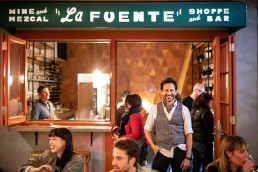
“Mezcal trend reaches New Zealand!” was the bold title of Restaurant & Cafe’s 2018 article upon La Fuente’s opening, marking the ‘start’ of the kiwi mezcal wave. In 2020, Denizen stated “Ghost Donkey is the new mezcal and tequila bar you need to visit!” proving that other establishments were also picking up on consumer interest.
In 2023, The Press profiled Aucklander Hayden Bigelow and his partner from Mexico as they embarked on a mezcal project, noting “we see in the next five years that mezcal and premium agave spirits will be a big category.” (By our calculations, that means it’s happening now!)
The Shout NZ also whispered about the growing interest in mezcal that same year.

“There’s only one story to tell about agave spirits right now and it’s all about growth.”
“Not only is tequila dominating growth in the spirits category but the agave spirit category is soaring to new heights with consumer knowledge, curiosity and understanding opening doors for new opportunities, brands and general interest.”
La Fuente has since closed in 2024 after a successful 6 years so Edmundo can focus on its sister business venture – Taco Teca – but in its wake it left a whole slew of new mezcal fans looking for a way to quench their thirst!
In 2024, DrinksBiz – a NZ based hospitality publication – profiled the Mezcal market in the UK through their UK correspondent Sarah Miller, perhaps to give us the heads up that the wave is growing bigger. “According to CLASS magazine’s 2024 report, tequila is the second-highest-selling spirit in the UK’s best bars, while mezcal (a category that barely existed here 15 years ago) comes in at an impressive sixth… With such a significant increase in visibility and availability, as well as a wide variety of styles and a rich and authentic history to entice and engross consumers, the stage certainly appears set for agave spirits to soar.”
The Mezcal Drinker
When one considers who the market is for Mezcal, Club Oenologique has answers, “‘It’s actually whisky drinkers – and to a smaller degree, rum drinkers – rather than Tequila drinkers who are moving into mezcal,’ says Justin Lane Briggs, an agave spirit expert and consultant… ‘People who are into funky Jamaican and Haitian rums make the jump pretty easily. It’s also whisky drinkers looking for the next thing, rather than Scotch drinkers looking to exchange smoke for smoke. It’s bourbon drinkers coming at it from an understanding of small-batch exclusivity.’”
But that’s for those who want to imbibe more thoughtfully. While tequila is more the ‘throw it down’ type of spirit, as Roberto & Daniel explained above, there’s no reason to discount mezcal if you don’t class yourself as the refined-sipper type. Cocktails – especially well-made cocktails by mixologists and creative bartenders – can really shine with mezcal as they can lean into the earthy, smoky flavours and create something quite special. No chasers needed.
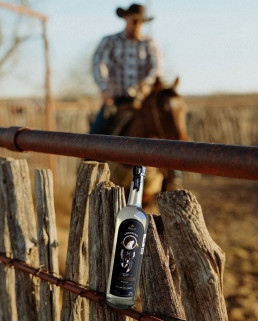
For example, “The Oaxaca Old-Fashioned, a smoky twist on the standard, was created in 2007 by New York bartender Phil Ward, who worked at acclaimed cocktail bar Death & Co before opening Mayahuel, his own agave bar. Now it’s a modern standard, known in any watering hole worth its weight in bitters and artisanal ice. As all this has happened, bar managers at many high-end establishments, often destinations for whisky drinkers, have bulked up their inventory with mezcals.
Meanwhile, a young generation of chefs is working with bar staff to develop recipes that pair well with different mezcal expressions. At De Mole, a Mexican restaurant in Brooklyn, beverage director Daniel Flores, whose family owns the spot, has created imaginative cocktails involving things like chamomile- and saffron-infused mezcals. But ask him about the spirit, and he speaks enthusiastically about the mezcal-infused smoked salmon.”