“Rich, vinous and full of energy, the Laval Champagnes are some of the most original, deeply personal wines readers will come across.”
– Antonio Galloni
Longtime Dhall & Nash customers will remember years ago, when our portfolio held a champagne with a small hedgehog on the label…
This gem was Champagne Georges Laval – an organic grower Maison on the banks of the Marne River cultivating just a couple of hectares of vines on the south-facing, amphitheater-shaped slopes.
We haven’t brought Champagne Laval in for a few years – producing less than 30,000 bottles of champagne per year means it can be challenging to secure stock.
The Laval name may not be one of the Glitzy Grande Marques, but those who know it and appreciate its boutique nature ask for it by name… even here in NZ, years on since its been in stock.
“This tiny, impeccably-run estate in Cumières is known only to a select few connoisseurs of champagne.”
– Peter Liem, ChampagneGuide.net
To those that haven’t forgotten and have asked over the years, and to those who want in on the Laval bandwagon, we have some excellent news for you.
We are bringing in not just the one cuvée, but six different wines from Georges Laval, arriving late July, including two new releases from recently acquired historical family plots, one of which is producing Coteaux Champenois – a still red wine!
The Grower Revolution
Champagne as a region has evolved into three distinct types of producer;
- The négociant houses, (24 of which are Grand Marques or ‘Great Brands’),
- The co-operatives,
- The grower producers – known as Récoltant Manipulant (RM on any Grower Champagne Label)
The 24 Grade Marques are names you’ll likely know: Ayala, Billecart-Salmon, Bollinger, Canard-Duchêne, Deutz, Gosset, Charles Heidsieck, Heidsieck & Co Monopole, Krug, Lanson, Laurent-Perrier, Mercier, Moët & Chandon, GH Mumm, Joseph Perrier, Perrier-Jouët, Piper-Heidsieck, Pol Roger, Pommery, Louis Roederer, Ruinart, Salon, Taittinger and Veuve Clicquot.
The growers have been around for as long as the Maisons. Their families have owned the land for centuries, and in many cases they have supplied the same Maisons with a large proportion of their grapes for just as long.
No Maison owns all the land outright from which they produce, and so the Growers have enjoyed a harmonious, prosperous and long-lived relationship in return. They grow the grapes, and they sell them to the négociants and co-operatives.
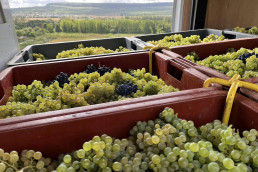
This system has evolved through the generations as estates have been divided amongst family members through succession and inheritance and now the average Champagne grower now owns approx. 0.7 hectares.
More recently, though, some growers have begun to hold back select parcels for themselves…
Whilst still selling grapes to their respective Maisons, they are now producing their own Champagnes and labels. Honestly, it isn’t the beginning of a lot of these guys’ winemaking experience as many would often make a few cases each vintage to enjoy themselves or with family and friends, but as the market evolves, many have seen (and grasped), an opportunity.
“I did not know the wines of this very small-scale producer until recently, when the wine above came out as my preferred Champagne in an extensive blind tasting (the bottles were all masked) that included 91 others, many of which were extremely famous.”
David Cobbold
This has really arisen from a more open consumer mindset. They’re more willing to experience a diverse range of styles and terroir as ‘big names’ become more easily accessible and lose a little bit of the star-power they’ve enjoyed for so long. People are dipping their toes into other pools, so to speak.
While Maisons and large brands offer familiarity and accessibility afforded by careful quality management and broad international recognition, it’s the human condition to seek expression and individuality, even within our drinks choices.
To say that ‘small is beautiful’ and ‘big is bad’ – is not a fair comment for the rise of the grower in Champagne. Large Négociants/Maisons can and do produce exceptional Cuvées – however this is no longer exclusively their domain.There are some valiant Davids amongst these vinous Goliaths.
“Tucked away off a narrow side street in Cumières, Laval is one of the most fascinating small domaines in Champagne. The wines are unique and at times a bit eccentric, yet also compelling. They also have a very devout following, judging by how quickly the bottles disappear from the market.”
Antonio Galloni
The ability to sample and explore offerings from what is actually one of the most diverse wine regions on the planet (due to the tensions created between the Oceanic and Continental weather systems proverbially ‘fighting it out’ over the sloping hills of Champagne,) means that there is room for these grower producers to start to shine.
The Growers’ Secret
The secret of the growers is their intimate knowledge of their best parcels, and that these parcels show such unique sensory aspects from their land.
They truly add landscape and colour to the tapestry of Champagne. For sure, many Négociants wish that they were receiving these parcels for themselves as they have in the past – but there is a growing acceptance that this diversity is adding value for all Champagnes in the region. The producers and growers have always been a very tight community – you will often find Chef de Caves from various Maisons dining, drinking and sharing time with their grower friends.
The parcels selected by the growers for their own labels are often organic or biodynamic. They search for the deepest and healthiest root systems to produce the best Champagnes. After all, it is generally agreed that the greatest wines come from great vineyards, and who better to know the greatest vineyards than the hands that tend?
“The Champagnes I tasted were all compelling and also terrific examples of a house style that emphasizes sustainable farming, low yields and minimal intervention in the cellar. Rich, vinous and full of energy, the Laval Champagnes are some of the most original, deeply personal wines readers will come across.”
Antonio Galloni
Champagne Laval
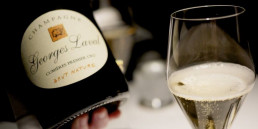
The Laval family has been established in the Cumières subregion of Champagne since 1694, and one of their proudest points of difference is their dedication to organic viticulture.
“My ancestors have always cultivated vines without herbicides, chemical fertilizers, or synthetic pesticides.”
It was in 1971 that proprietor Georges Laval officially adopted “organic” farming methods, using natural and artisanal techniques that had been passed down and implemented but not given a certified label until this time. Today, the independent inspection body Ecocert (FR-BIO-01) certifies their organic production methods.
“Organic farming respects nature, our living environment, and the social fabric, preserving the original aromas and flavors of our terroir and allowing us to produce naturally balanced, great Champagnes.”
Tyson Stelzer, author of numerous Champagne guides and 2025 International Wine & Spirit Communicator of the Year visited the estate and saw for himself the results of their work i n the vineyards.
“A dramatic display on their cellar wall bears stark testimony to this: two vines, one with deep, strong roots plunging vertically downward; the other with just a thin web of surface roots. The first was planted by Vincent’s grandfather in an organic vineyard, and the second at a similar time on the same soils in a neighbour’s vineyard, managed using traditional viticulture. When the family purchased the neighbour’s vineyard, they ripped it up and replanted. “We are lucky to be on chalk, and we must taste the chalk in our wines,’ Laval declares.”
The Modern Laval
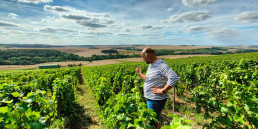
In 1996, as heir to this precious family expertise, Vincent Laval took over the reins of the estate. He’s extremely dedicated to preserving the organic heritage and expanding their holdings. As is tradition, the champagne he bottles bear his fathers name – Georges Laval.
“Since 2020, we have been acquiring new vineyard plots in the Premier Cru terroir of Cumières,” and have expanded their holdings from around 2.7ha to 4ha today.
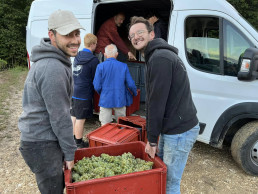
There are six full-time workers at the vineyard helping Vincent – Dylan, Raphaël, Manon, Lucas, and Mathilde. These twelve hands are the ones who have made every wine the estate puts forward. Across the parcels they own, the average vine age is over 30 years, with the oldest vines of the estate over 80 years of age.
“I have a Burgundy vision of champagne,’ declares Vincent Laval. ‘I want to taste grapes in the glass. First I make wine, then I make champagne.”
Tyson Stelzer’s 2016-17 Champagne Guide
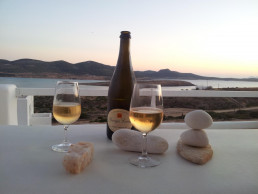
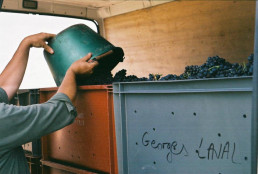
The winemaking at the estate mirrors the viticulture’s ancestral sympathies. Seeing as Laval is so parcel driven, they like to maintain as much control as possible over the first handling. After harvest, the grapes are pressed in traditional Coquard vertical presses. They hold 2,000 kg (the minimum size allowed in Champagne) and 3,200 kg. They utilise indigenous yeasts and ferment in oak barrels without chaptalization. The use of sulphur is avoided, and is very restrained when implemented. There is no fining or filtration.
“The domaine has built its reputation on its excellent lieu-dit bottlings—Les Chênes, Les Hautes Chèvres and Les Longues Violes—but also releases compelling non-vintage Champagnes, particularly the village-level Cumières.”
Kristaps Karklins for The Wine Advocate
The Cuvées
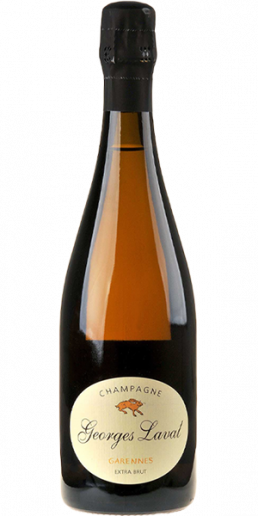
Georges Laval Garennes Extra Brut NV
- Meunier, Pinot Noir, and Chardonnay from vintages 2013 – 2023
- From Chambrecy, Damery, Cumières, and Hautvillers
- Aged for ten months in oak barrels.
- 1g/L dosage using organic grape sugar
- 9,340 bottles disgorged late November 2025.
“The harmony between substance, structure, freshness, and lusciousness is the signature of our Garennes cuvée.”
93 Points, Decantolo: “Georges Laval Garennes Extra Brut is an elegant and complex champagne that reveals floral aromas and fruity sensations, with citrus fruits standing out. On the palate it is balanced, juicy and enveloping, filling the mouth with freshness.”
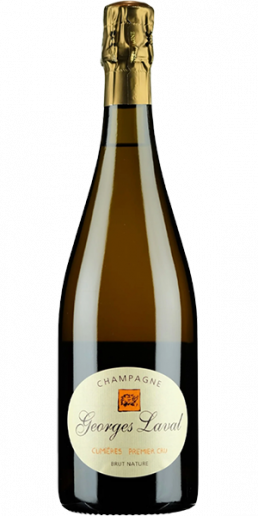
Georges Laval Brut Nature Cumieres 1er Cru NV
- 100% Premier Cru Cumières
- Fermented and matured in oak for 10 months
- No dosage (Brut Nature)
- 100 jeroboams and 980 magnums disgorged March 2025. 10,420 bottles disgorged late November 2025.
“The Cumières Premier Cru cuvée is a perfect reflection of the magnificent terroir of Cumières, Premier Cru.”
91 Points, The Wine Advocate: “It opens from the glass with aromas of early-blooming white blossoms, pear and spices. On the palate, it is medium- to full-bodied, vinous and fleshy, delivering an expansive entry and a generous core of ripe fruit. The acidity is both ripe but vibrant, while the mousse is pillowy, lending a refined texture. Beneath its ripeness lies a firm backbone of tension, culminating in a long, intensely saline finish.”
91 Points, Vinous: “The NV Brut Nature Cumières makes me feel like I am in the cellar, tasting with Vincent Laval. A Champagne of tremendous purity and nuance, the NV captures all of the flavor intensity, drive and nuance that make the wines of Cumières so alluring. This release… sizzles with nervy energy. Time in the glass brings out layers of perfume and a whole range of red-toned fruits. In a word: terrific.”
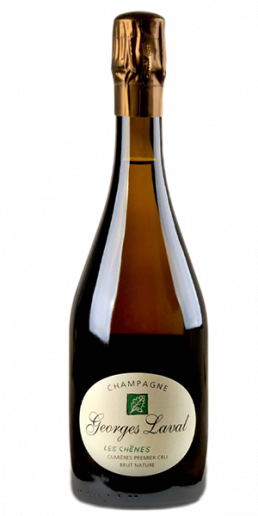
2022 Georges Laval Brut Nature Les Chênes 1er Cru
- 100% Chardonnay (Blanc de Blacs)
- From the Les Chênes Premier Cru parcel. Les Chênes is located on the eastern side of the village of Cumières, between the roads to Ay and Hautvillers, below the famous abbey. The Laval plot benefits from optimal conditions: a south-facing, mid-slope location, chalk subsoil under a thin layer of clay-loam, and organic farming for many years.
- Six months of oak barrel aging
- No dosage (brut nature)
- 3,644 bottles produced
“The Les Chênes cuvée is characterized by extraordinary concentration, its finesse, its complex structure, and its persistent mineral and saline notes.”
(2021 Vintage) 95 Points, The Wine Advocate: “The standout in Laval’s cellar this year, the 2021 Brut Nature Blanc de Blancs Les Chênes, disgorged à la volée for a tasting in April 2025, is showing brilliantly. It is unfurling in the glass, offering up a bouquet of flint, rooibos tea, grapefruit zest and laurel leaves, framed by a subtle hint of youthful reduction from its recent disgorgement. On the palate, it is medium-bodied, taut yet concentrated, with a core of crisp fruit, energized by racy acidity and culminating in a chalky finish of remarkable persistence. While many wines from this vintage show signs of the season’s challenges, this soulful cuvée stands apart. Only 550 magnums were bottled, and securing one will be no small feat; but for those who do, great pleasure awaits. That said, given its structure, I’d be inclined to enjoy it on the younger side.”

2022 Georges Laval Brut Nature Les Chênes 1er Cru
- 100% Chardonnay (Blanc de Blacs)
- From the Les Chênes Premier Cru parcel. Les Chênes is located on the eastern side of the village of Cumières, between the roads to Ay and Hautvillers, below the famous abbey. The Laval plot benefits from optimal conditions: a south-facing, mid-slope location, chalk subsoil under a thin layer of clay-loam, and organic farming for many years.
- Six months of oak barrel aging
- No dosage (brut nature)
- 3,644 bottles produced
“The Les Chênes cuvée is characterized by extraordinary concentration, its finesse, its complex structure, and its persistent mineral and saline notes.”
(2021 Vintage) 95 Points, The Wine Advocate: “The standout in Laval’s cellar this year, the 2021 Brut Nature Blanc de Blancs Les Chênes, disgorged à la volée for a tasting in April 2025, is showing brilliantly. It is unfurling in the glass, offering up a bouquet of flint, rooibos tea, grapefruit zest and laurel leaves, framed by a subtle hint of youthful reduction from its recent disgorgement. On the palate, it is medium-bodied, taut yet concentrated, with a core of crisp fruit, energized by racy acidity and culminating in a chalky finish of remarkable persistence. While many wines from this vintage show signs of the season’s challenges, this soulful cuvée stands apart. Only 550 magnums were bottled, and securing one will be no small feat; but for those who do, great pleasure awaits. That said, given its structure, I’d be inclined to enjoy it on the younger side.”
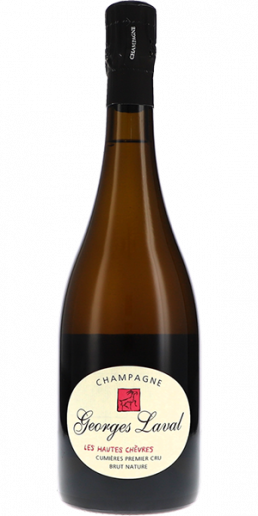
2021 Georges Laval Brut Nature Les Hautes Chèvres 1er Cru
- Pinot Meunier, Pinot Noir and Chardonnay
- From Les Hautes Chèvres Premier Cru (clay-limestone soil)
- 1,776 bottles disgorged in March 2025.
“The low yield, 2,000 kg/ha, results in extraordinary density and aromatic complexity.”
92 Points, The Wine Advocate: “From an exceptionally small harvest—just 2,000 kilograms from over a one-hectare surface—Laval’s 2021 Brut Nature Les Hautes Chèvres, disgorged in March 2025, marks the first edition of this cuvée to incorporate all three grape varieties (Pinot Noir, Pinot Meunier and Chardonnay). Sourced from a mid- to upper-slope parcel above the village of Cumières, rooted in clay-limestone soils, it delivers delicately high-toned aromas of apple, ripe pear, toasted nuts and honeysuckle, mingling with exotic nuances—a signature of the mildew-challenged vintage. On the palate, it is medium-bodied, deep and racy, with a strikingly expressive and extroverted character, concluding with a long, intensely saline finish. This is a rendition I would be inclined to enjoy in its youth.”
94 Points, Vinous:
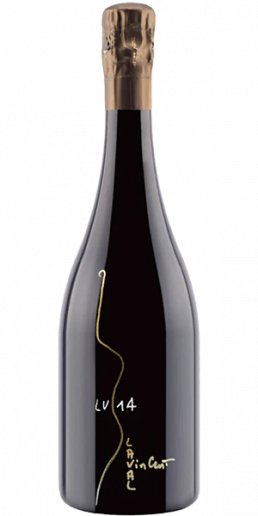
2014 Georges Laval Brut Nature Les Longues Violes 1er Cru
- 90% Pinot Noir, 10% Pinot Meunier
- The legendary Longues Violes plot has belonged to the Laval family for several generations. Its soil is untouched by any synthetic pesticides, herbicides, or chemical fertilizers. From 2003 to 2020, no fertilizers were applied, even organic.
- The Meunier selections were planted in 1947, the Pinot Noir selections in 1964 and 1984.
- 1,020 bottles of Longues Violes 2014 were disgorged on March 4, 2024, after 9 years on lees
- Hand drawn labels
“Les Longues Violes” evokes the “Long Path” of passion forged by generations of wise, respectful, attentive, thoughtful, and sensitive winemakers.
Vinous, 96 Points:
The next cuvées are special. As is traditional, the bottles produced by family estates are often adorned with their father’s or predecessor’s name – hence ‘Georges Laval’. These next bottlings are new releases and bear Vincent’s name
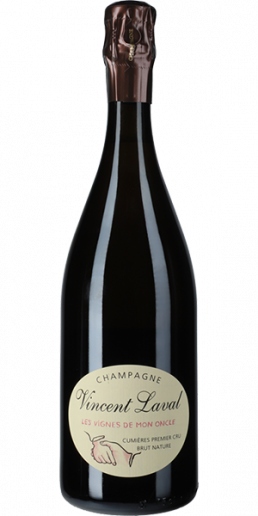
NV Vincent Laval Brut Nature Les Vignes de Mon Oncle 1er Cru
- Pinot Noir (60%), Chardonnay (30%), and Meunier (10%).
- A homage to his uncle, “Les Vignes de Mon Oncle” translates to “My Uncle’s Vines”
- This plot was acquired after 2020 when Vincent Laval set out to purchase land historically farmed by his family;
- A blend of 2021 and 2022 vintages – ‘Upon tasting the still wines of 2021 and 2022, it seemed obvious to me to blend the two vintages and the three grape varieties.”
- The 2021 harvest: “With a low yield of 15 hl/ha, boasts a very dense and complex aromatic profile. It was vinified and aged for 17 months in oak barrels.”
- The 2022 harvest: “With its sunny, floral, and fruity character, was vinified for 6 months in oak barrels.”
- On Valentines Day of 2023, 11,200 bottles were created and the bottles disgorged in December 2025, after 34 months of aging on its lees.
- 0 g/L dosage (Brut Nature)
“These vines were once cultivated by my uncle François, my father Georges’ brother. The oldest vines were planted by my grandparents between 1946 and 1965. The natural ground cover forces the vines to root more deeply, significantly limiting yields to produce concentrated, complex wines.”
93 Points, Vinous:
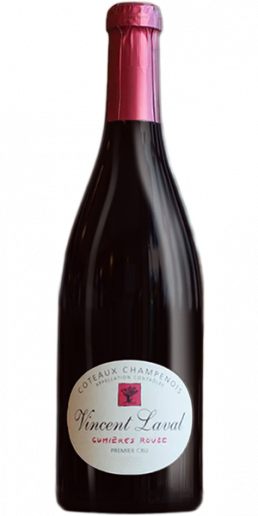
2022 Vincent Laval Coteaux Campenois Cumiéres Rouge
- 100% Pinot Noir
- Grapes from old, low-yielding vines are crushed whole by foot.
- Maceration lasts 14 days. Approximately ten short pump-overs are performed during this period.
- Free-run and press wines are blended, then vinified for 14 months in barrels. The wines are then transferred to tanks in November 2023 to “relax” for about fifteen months until bottling in February, 2025.
- 1,089 bottles of Cumières Rouge 2022 Vincent Laval were produced.
Plus de Bull Reims: “The robe is a deep and brilliant ruby, testifying to the beautiful extraction by crushing and the maturity of the vintage. The nose is intense and complex. It exudes aromas of morello cherry, wild raspberry and sweet spices, supported by slightly woody and noble earthy notes, typical of the Laval “touch”. On the palate, the attack is silky. The wine offers a dense yet light texture, with fine and elegant tannins. The chalky minerality of Cumières is present, bringing freshness to the finish.”
The Modern Laval
“The domaine has built its reputation on its excellent lieu-dit bottlings—Les Chênes, Les Hautes Chèvres and Les Longues Violes—but also releases compelling non-vintage Champagnes, particularly the village-level Cumières.”
Kristaps Karklins for The Wine Advocate
The Dhall & Nash Growers
We represent a number of growers in addition to Champagne Laval, explore more here: