Marpaout - Witness The Birth of a Star
[ Maʁ - po ]
Imagine having been there for the early years of Pétrus…
“Marpaout: Médoc’s Answer to Pomerol?”
Niels Aarts
Niels Aarts poses a serious question right out the gate, and one that alludes to what many on the scene are thinking about this newcomer.
In early 2025, we introduced Château Branas Grand Poujeaux to the Dhall & Nash stable – an up and coming estate from Moulis-en-Médoc under the stewardship of Justin Onclin and Arjen Pen that’s being called “a whole new benchmark for Moulis.” (Lisa Perrotti-Brown).
This year, we’ve been offered the exceptional opportunity to bring in a very limited allocation of their new premium release’s first vintage – Marpaout 2022. Only 900 bottles of this wine have been made.
Marpaout In New Zealand
Be one of the first to try it...
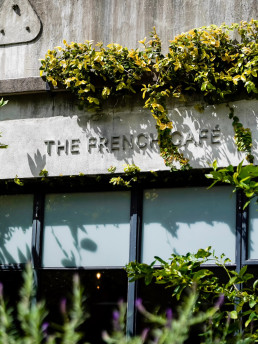
MAGNUM CLUB at The French CaféFRI, 20 FEB
Want to be among the first in NZ to try Marpaout? We’re opening one bottle of Marpaout at 2026’s first MAGNUM CLUB with Arjen Pen himself at The French Café. View the event details here.
Merlot in the Spotlight
Château Pétrus of Pomerol’s first vintage: 1837
Château LaFleur’s of Pomerol’s first vintage: 1872
Marpaout by Château Branas first vintage: 2022
Imagine having been around for the rise of Pomerol’s greatest Merlot estates. Nabbing yourself bottles that today reach thousands of dollars at auction. We are truly looking through time introducing Marpaout.
Pomerol’s claim to fame is Merlot. From this small and prestigious appellation the Merlot is plush and smooth with silky textures, deep, rich flavours of chocolate and plum that are lifted by a floral edge.
100% Merlots are the Right-Banks specialty with Pétrus and LaFleur being the flagship names, but Marpaout, the little black sheep from the Left-Bank is turning the way we think on its head. For such a long-established and small region where you’d think no vinous secrets could possibly be left to discover, Arjen and the team have done just that.
“With Marpaout, Arjen Pen and Château Branas Grand Poujeaux have created more than just a wine. They have given the Médoc its boldest answer yet to Pomerol, proving that terroir—not tradition—should define Bordeaux.”
Niels Aarts for The Dutch Wine Apprentice
“Crasse de Fer”
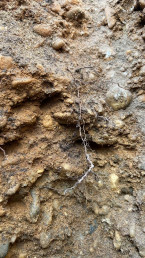
Merlot from Pomerol stands out due to the extremely unique soil profile of the appellation.
Stephen Brooks (Decanter) called it “a tiny appellation with mythical soil.” It’s largely clay, sand and gravel, but most notable is the “Crasse de fer,” (less romantically “iron slag” in English).
Crasse de fer is very particular to Pomerol on the Right Bank. It’s “… more precisely a kind of very firm and stony blend of earth and metal with high content of iron-oxide, which gives the wines a very characteristic flavour of something fat and metallic, which many associate with truffles.” (as explained by greatbordeauxwines.com).
The vineyards of Branas Grand Poujeaux are in Moulis-en-Médoc on the Left Bank, themselves boasting exceptional soil. Garonne gravel from the Gunz period with underlying Saint Estephe calcareous sediments (the same as the First growth terroir in Pauillac and Margaux,) have been planted with 50% Merlot, 45% Cabernet Sauvignon and 5% Petit Verdot.
“This is the most likely candidate for the Médoc’s finest Merlot.”
Colin Hay for The Drinks Business
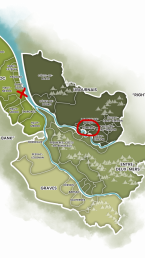
But… the team at Branas identified that the so-called ‘Marpaout’ plot in their vineyards – sitting between Margaux and Saint-Julien – was consistently producing outstanding fruit year upon year. In 2019, when the vines were 19 years old, Arjen and his consultant Hubert de Boüard (of Château Angélus) instigated a more in depth analysis to understand why this 1.7ha plot was so different…
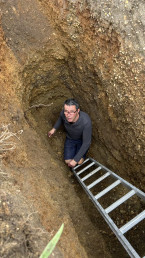
The answer: Crasse de Fer
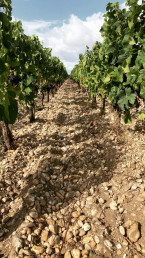
They’d struck red gold. A three metre deep deposit of crasse de fer, right under the Marpaout plot.
“Dome-shaped and perched at 25 metres above sea level, Marpaout is the highest vineyard in Moulis and on Bordeaux’s famed Terrace 3,” explains Aarts for the Dutch Wine Apprentice, “Its soils are a geological mosaic:
- 50 cm of Garonne gravel and humus
- 3 m of deep gravel streaked with ‘crasse de fer’ (oxidized iron, a Pomerol hallmark)
- 50 cm of gravel and grey sand
- 30 cm of iron-rich brown clay
- 50 cm of blue-green clay and limestone
This profile combines excellent drainage in wet vintages with access to water from the clay below during drought. The oxidized iron enhances photosynthesis and tannin quality, producing Merlot with both power and finesse.
“It is no coincidence that the Merlot thrives here,” Arjen explained to Aarts, “This vineyard delivers a complexity and structure usually associated with the Right Bank’s greatest terroirs.”
“A Médoc Merlot that dares to stand alone—and succeeds brilliantly.”
Niels Aarts for The Dutch Wine Apprentice
Marpaout 2022 - The First
After their discovery and the validation that the Merlot from this block actually was something a bit magical, Arjen started to wonder if perhaps they should bottle it separately.
The idea attracted enthusiastic encouragement – first, from Hubert de Boüard who had helped to identify the plot. He told Arjen, “This Merlot is from another planet. Even Angélus would envy such fruit.”
This was followed by Jacques Thienpont, the legendary winemaker of Pomerol’s Le Pin. “This wine must be made,” he told Arjen. Other notable Bordeaux names followed suit, including Thomas Burke, Master Sommelier at Château Margaux, who compared Marpaout favorably to his own wines.
Assured of the quality of the wine but not yet of the bottling strategy for the Marpaout fruit, Arjen undertook the final test…
In Dubai, serious wine collectors gathered for an extremely high-level event. These collectors represented some of the most esteemed and well-heeled aficionados of the world. All were used to nothing but the best of the best. Marpaout was poured alongside well established icons such as Pétrus, Angelus and Masseto… and it was quickly chosen as the Wine of the Night.
Within hours, the entire allocation for the Levant & Asia was gone, and Arjen had locked in that the 2022 Marpaout would mark the inaugural release. The birth of a King.
“This Merlot is from another planet. Even Angélus would envy such fruit.”
Hubert de Boüard of Château Angélus
Marpaout 2022 - The Juice
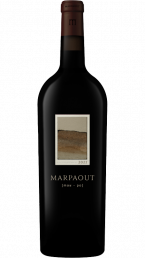
- 100% Merlot from the 1.7ha Marpaout plot
- The inaugural vintage 2022
- pH 3.66; 14.5% alcohol
- Only 900 bottles and 50 magnums made, 6 of which are allocated for NZ
- Tended by hand and pruned to just 3 buds per cane
- Hand-harvested in the early morning of 14 September with a yield of 41 hl/ha
- De-stemmed, optically sorted, then gently crushed and transferred to a 60 hl truncated wooden vat for a cold pre-fermentation maceration of five days.
- Alcoholic fermentation with manual pumping over for eight days followed, with malolactic fermentation in barrel
- 12 months aging in a combination of French oak barrels (from Darnajou, Demptos, Taransaud and Stockinger) with a single racking after 6 months
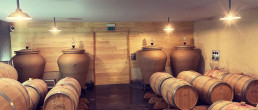
- The four barrels were then combined and the wine transferred to a 750 litre Tava terracotta amphora for a final 12 months of aging
- The wine was bottled on 20 January 2025
“Tasted twice, first from the amphora prior to bottling and then from bottle.
Sourced from the highest Merlot parcel in the appellation and the highest point on Terrace 3, this comes from arguably the best Merlot terroir in the Médoc. Ethereal. Plump. Plush. Curvaceous. And ultra-refined. There is no suggestion of oak, but you’d notice if it weren’t there. It has that gorgeously sumptuous lushness that comes only from top Merlot. Graphite, with the slightest hint of cedar in the aromatics. Damson. Mulberry. Blue fruits. Fruits of the forest. A touch of wild sage. Thyme too and maybe a sprig of moorland heather.
There’s a certain Médocain austerity that I really like about this – it’s much more Le Pin than Petrus in that respect. Sapid and succulent with signature freshness and lift. Gently spicy, with a little nutmeg and cinnamon, but all in moderation and balance.
When decanted for three hours, there is even more freshness and more florality too – blood orange, orange blossom and early spring blooms. I find this very composed and gentle on the entry, but then increasingly sinuous, fluid and dynamic in the mid-palate. Ultra-fine grained tannins bring great precision and great clarity. Delicate yet powerful as the finest Merlot should be. So long too on the aerial, floaty, seemingly eternal and gently tapering finish. Beguilingly fresh and exquisitely balanced.”
“Deep ruby garnet colour, purple reflections, delicate ochre rim. Fine precious wood savouriness, ripe heart cherries, nuances of liquorice, floral notes, a hint of orange blossom. Complex, juicy, ripe fruits, a hint of nougat, fine fruit sweetness, finesse-rich acidity, cherries on the finish, shows great length, mineral and long-lasting, good ageing potential. (900 bottles/50 magnums were produced).”
“The inaugural Marpaout gleams with ruby garnet tones and purple flashes, edged by a delicate ochre rim. Aromas of ripe black cherry, damson, liquorice, and cocoa bean mingle with floral highlights of orange blossom and wild herbs, framed by subtle cedar and finely judged oak.
The palate is succulent and layered, with deep fruit expression—black cherries, pomegranate, and mulberry—lifted by fennel, mint, and rosemary spice. There is both weight and elegance: silky, ultra-fine tannins carry precision, while a vibrant acidity keeps the wine fresh and long.
The finish is mineral, poised, and persistent, leaving a lasting impression of fruit purity and terroir character. It is both understated and powerful, Médoc in structure yet plush with Merlot’s sensuality.
This truly is a rare and remarkable Left Bank creation, promising long ageing.
With Marpaout, Arjen Pen and Château Branas Grand Poujeaux have created more than just a wine. They have given the Médoc its boldest answer yet to Pomerol, proving that terroir—not tradition—should define Bordeaux. A Médoc Merlot that dares to stand alone—and succeeds brilliantly.”
Marpaout 2022 - The Presentation
First, we drink with our eyes. Arjen and the team knew that this wine was special from the get-go so it was imperative that it was presented as such.
The Materials
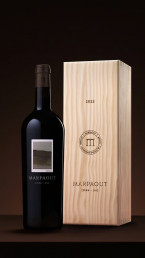
The paper of both the label and the brochure inside the box is made from recycled yeast residue from the winemaking process.
The bottle is made from a lightweight glass to reduce weight and therefore environmental impact (shipping heavier bottles requires more resources).
The box is custom-made from locally sourced pine, and crafted by the same artisan who supplies Pétrus.
“We wanted to showcase the terroir in every detail,” Arjen told Aarts, “while keeping the packaging honest and sustainable.”
The Design
Each bottle is individually numbered and the label features an artistic impression of the Marpaout terroir. It’s also etched with coordinates linking directly to the vineyard site. Everything about this wine is an homage to the site that gives life to these vines.
Marpaout - The Future
Marpaout’s 2022 vintage is the inaugural release of this single-plot wine and is the only current release. The 2023 and 2024 vintages were not vinified separately due to mildew losses, and the 2025 is still very young having only been harvested less than 6 months ago at the time of writing. Given that the 2022 Marpaout was not bottled for release until 2025, we shouldn’t expect to see another vintage release until at least 2028.
That means that the 6 bottles that Dhall & Nash is allocated this year will be the only Marpaout available in the country for a minimum of 2 years, likely more.
Being the inaugural vintage, we expect the 2022 Marpaout to be a standout collectors item and a real point of interest for devout collectors. Imagine having secured a bottle of the first vintage of Pétrus?
Not just that, but indications are this wine will cellar beautifully and have a long life ahead of it.