Enzo Bartoli - Piemonte Couture
Where Minimalist Design Meets Maximalist Quality
The right vineyards. The right hands. The right balance.
At Dhall & Nash, one of our core values is that we respect those who create wonders by patiently loving, toiling and knowing their small piece of earth through the generations. So when we were researching a new wine that had come across our desks and we saw their ethos, our interest was definitely piqued…
“Piedmont’s vineyard landscape retains a strong historical continuity: families have cultivated the same hillsides for generations, passing on knowledge as a legacy.”
And thus, we are proud to introduce to our portfolio Enzo Bartoli.
Who is Enzo Bartoli?
Or rather, what is Enzo Bartoli? Because Enzo Bartoli is not a person.
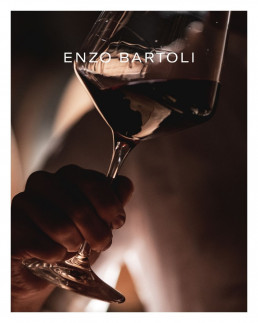
“Enzo Bartoli offers a cross-section of Piemonte’s most significant wine-growing areas.”
Vinifera Mundi
In their own words, Enzo Bartoli is an identity that encapsulates the idea of style.
It is the signature that seals a collection of wines capable of telling, with minimalistic elegance, the sartorial soul of Piedmont.
What does this mean?
Essentially, Enzo Bartoli is a brand rather than an individual winery. It’s an overarching operation that works with a number of selected – often smaller – growers and producers across Piedmont to present a thoughtfully curated collection that best represents the region. It’s a similar operation to a cooperative.
“Not a winery, but a curator. Not a single voice, but a chorus of Piedmont’s most eloquent wines.”
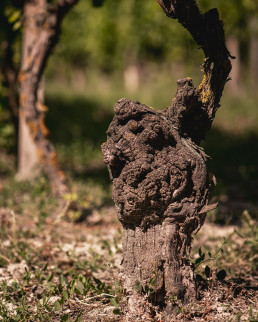
It’s this broad but careful sourcing that allows them to offer authentic Piedmontese wines at accessible price points. They use their market appeal and sizable brand positioning as the vehicle to allow these smaller operations to have their wines enjoyed across the world at a scale that they probably would have not experienced otherwise. They use their ‘Goliath’ to amplify the ‘Davids’ across the region.
“Rather than a traditional winery, Enzo Bartoli acts as a curator of terroirs and Piedmontese savoir-faire, shaping each wine to reflect the region’s true character with precision, recognizability, and natural gastronomic appeal.”
Vinifera Mundi
Piemonte Couture

Enzo Bartoli uses the concept of ‘Piemonte Couture’ as the overarching vehicle to present their curated selections.
“Piemonte Couture is the vision that guides each bottle: an aesthetic of taste where wine is not just a product, but an experience.”
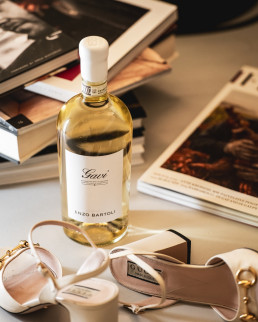
Piemonte Couture blurs the line between wine and lifestyle. They are already intertwined concepts but Enzo Bartoli brings them a step closer. By implementing a minimalistic, refined and clean presentation it creates a signature look that doesn’t overstep and lets the wine itself shine.
Enzo Bartoli has created a selection that reflects the most authentic identity of the territory, read with stylistic rigor and attention to expressive recognizability.
‘Couture’ (/kʊˈtjʊə/): “Couture refers to the business of designing, creating, and selling custom-made, high-fashion clothing, often featuring handmade, intricate details and personalized fittings. Originating from French for “sewing,” it represents exclusive, high-quality garments, such as Chanel or Dior, distinguished from mass-produced apparel.”
(Miriam Webster)
Enzo Bartoli has borrowed the concept of Couture from the world of high-fashion, seeing a lot of parallels. Handmade, exclusive, and a serious statement, they say that “To drink Enzo Bartoli is to wear Piemonte on your sleeve.”
Piedmont

Piedmont (or Piemonte in Italian), is the north-western-most region in the country, sitting at the foot of the Alps and bordering Switzerland and France. The name quite literally means “foot of the mountain” deriving from “ped montes” or “piè di monte”.
The wines from Piedmont are among the most premium Italian offerings, with famous bottlings of Barolo & Barbaresco (both made from Nebbiolo), being the most renowned from the region. Interestingly, despite being the most famed, they only account for about 3% of the wine.
Italy was historically called ‘Oenotrua’ by the ancient Greeks, meaning “land of the vines”, as the native grape vines that grew there were so prolific, so it’s no surprise that winemaking is such an intrinsic part of the national culture, and Piedmont is no different in this sense.
Bordering France meant that Piedmont developed an interesting blended winemaking identity. It’s got the native Italian grapes and terroir, but the winemaking styles were influenced by French techniques, particularly from Burgundy, as is evidenced by a preference for unblended wines that showcase varietal styles.
The Land
The defining characteristic of Piedmont is its Alpine position. It’s situated to the northwest with a coastline along the Mediterranean Sea and the Alps along its border. It’s a hilly region that traps sea fog in Autumn and is phenomenally picturesque.
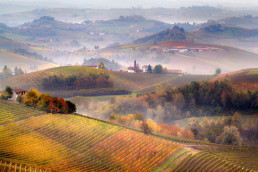
The terrain, due to the mountains and valleys, is somewhat rugged, leaving only around 30% of the region suitable for viticulture. The winemakers in the region are particular about what grapes are planted where, and the hillsides are cultivated with varietals that are the most suited.
Contrary to New Zealand where the northern aspects are the coveted warm, sunny ones, the southern aspects are where it’s at in this hemisphere. Southern facing vineyards are typically planted with Nebbiolo and Barbera while the northern ones are planted with varieties that can tolerate a bit more chill, like Dolcetto or Moscato.

The fog that settles over the rugged valleys and peaks is not just emblematic of the region, but is symbiotic with the native Nebbiolo grapes. The fog aids in its ripening and thus, its original name “Nebieu” comes from the Piedmontese word “nebia” meaning “fog”.
The Wines
Piedmont (or Piemonte in Italian), is the north-western-most region in the country, sitting at the foot of the Alps and bordering Switzerland and France. The name quite literally means “foot of the mountain” deriving from “ped montes” or “piè di monte”.
The wines from Piedmont are among the most premium Italian offerings, with famous bottlings of Barolo & Barbaresco (both made from Nebbiolo), being the most renowned from the region. Interestingly, despite being the most famed, they only account for about 3% of the wine.

Enzo Bartoli Gavi DOCG
- Current Vintage: 2024
- Cortese from 11 municipalities in the province of Alessandria: Bosio, Capriata d’Orba, Carrosio, Castelletto d’Orba, Francavilla Bisio, Gavi, Novi Ligure, Parodi Ligure, San Cristoforo, Serravalle Scrivia
- Calcareous, clayey, and marly soils
- After typical white vinification, temperature-controlled fermentation takes place in stainless steel tanks
- 12% ABV
Straw yellow in color with medium intensity. On the nose it is delicate and refined with its characteristic aromatic profile. On the palate it is dry and harmonious, very pleasant.

Enzo Bartoli Barolo DOCG
- Current Vintage: 2020
- Nebbiolo from Langhe.
- The Langhe soil has sedimentary and marine origin. In the Barolo area it has a limestone-clay conformity that facilitates the production of wines with great structure.
- 38 months of aging
- 13.5% ABV
Ruby-red wine with garnet hues. The nose presents notes of spices, licorice, red fruits and caramel. In the mouth it is full, robust, austere, velvety and harmonious.