Vecchia Cantina di Montepulciano
Elegant Styling, Everyday Pricing

In the world of wine, we spend plenty of time drinking and lusting after celebrated Brunello and Barolo but make no mistake about it, Italy amazingly, still remains the land of hidden gems giving us ultra-affordable and ultra-drinkable wines.
A cheeky well-made Chianti or Montepulciano for example, are loaded with history, endowed with strutting pedigree, and then just plain old delicious that it would be a crime not to have them in our D&N stable – and soon to be in your home!
Proudly, Dhall & Nash brings to you today the ultimate proof of Italy’s often undiscovered treasures – a big Benvenuto (welcome) to: La Cooperativa Vecchia Cantina di Montepulciano or just Vecchia Cantina to their fans.
These vinous jewels offer remarkable elegance at accessible prices. Here’s your new go-to weeknight reds – offering complexity, drinkability, and the excitement of the unexplored in equal measure. We’re onto a couple of real winners here!
If you have been looking for an antidote to the inflationary wine blues, the Vecchia Cantina wines are just what the doctor ordered. They’re super versatile, super juicy-licious but with the complexity and structure to keep your palates partying!
“The important thing to know about Italian wine co-operatives is this: just because they are large, does not mean they compromise on quality”.
– Liz Barrett, Wine Writer
The History of La Cooperativa Vecchia Cantina di Montepulciano
Established in 1937, thanks to the initiative of 14 pioneering producers, Vecchia Cantina is the oldest wine growing and wine producing cooperative in Tuscany. For over 80 years they have been a driving force in the region, whilst almost single-handedly sustaining the DOC (Denominazione di Origine) following the Second World War. Today it remains a cornerstone in the region and widely recognized as being a key promoter of regional wine, culture and tradition.
Vecchia Cantina now has around 400 members, who have chosen to work together with passion and respect for their terroir and with a common goal: to guarantee increasingly high-quality products at an affordable price.
The Cooperative has vineyards throughout Tuscany as well as Perugia in Umbria. The Vecchia Cantina Coop places its extensive experience in the sector at the service of its members, offering new and modern processing techniques, all the while respecting traditional winemaking practices. Their knowledgeable and experienced team of agronomists, viticulturists and oenologists provide support throughout the entire production cycle and ultimately in the promotion of the wines in the marketplace.
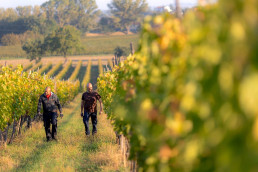
The winery has continuously evolved and renovated over the decades with the acquisition of new fermenting tanks and other technological adaptations as needed. The combined synergies together with the various styles of wine-making, ensure the creation of fine wine quality that is highlighted by the establishment of a process aimed at constant improvement of the production chain.
The result is a wide variety of exciting wines, the most important being Vino Nobile di Montepulciano DOCG, offered in different versions, for which the Cooperative is a leader both locally and worldwide in terms of quantity and quality produced.
I Vigneti - The Vineyards
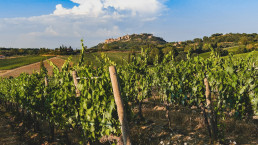
Vecchia Cantina embraces two regions and three provinces: Siena and Arezzo in Tuscany, Perugia in Umbria. Specifically, the vineyards cover the territories of the Tuscan municipalities of Montepulciano, Pienza, Cetona, Torrita di Siena, Sinalunga, Foiano della Chiana, Castiglion Fiorentino, Cortona and Chiusi, as well as the Umbrian municipalities of Città della Pieve and Castiglion del Lago.
The vineyards are cultivated using the espalier system, with spurred cordon vine training, Guyot, double Guyot and G.D.C. The agronomical techniques adopted by the producers can be the same or different from vineyard to vineyard, from producer to producer or from zone to zone: the common aim is the achievement of the vegetative-productive balance of the individual vines, to harmonise the grapes and improve their quality.
Il Territorio - The Terroir
With over 400 member estates means that Cooperativa Vecchia Cantina di Montepulciano boasts around 1000 hectares of vineyard in prime Tuscan and Umbrian real estate.
The Montepulciano area is characterised by a geological substratum consisting mainly of marine sediments from the Pliocene and ancient Pleistocene ages.
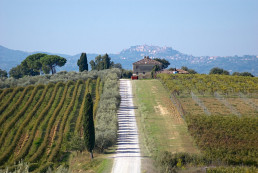
In the higher areas of the territory, the soils are rich in sand, while at lower altitudes they are clayey-silty, medium-textured or loamy and sandy-clayey.
The climate is typically Mediterranean, with little rainfall in the summer months.
The altitude of the Chianti vineyards is between 250 and 550 metres above sea level. They lie mainly on the gently rolling hills that embrace the Val di Chiana, as well as on slightly sloping ground and, to a marginal extent, on the plains.
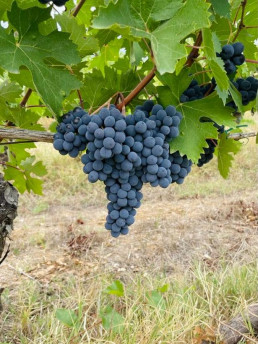
The mainstay grape is the Tuscan powerhouse Sangiovese, known as “Prugnolo Gentile” in Montepulciano. Indigenous local varieties are nurtured and other red grapes such as Merlot, Cabernet Sauvignon, Cabernet Franc, Canaiolo nero and Colorino are also cultivated. White wines and Vin Santo are made from Chardonnay, Grechetto, Trebbiano and Malvasia Bianca grapes.
Sustainability
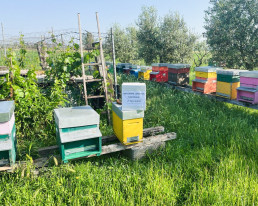
Since its foundation in 1937, the Vecchia Cantina Co-op has been characterized by a single great passion and a single common objective: to guarantee quality products at an accessible price, with respect for local tradition and protecting of the environmental heritage that surrounds them.
The constant commitment to the research of sustainable techniques and methods, both in the vineyard and in the cellar, combined with the supporting values of fairness and equal opportunities has led the Cooperative to obtain certification for the SOPD EQUALITAS sustainability standard in 2021 – Sustainability of the Wine Industry chain: Organisations, Products, Designations of Origin (SOPD).
Starting from this goal, the Cooperative’s activities are examined annually and if necessary, implemented in environmental, economic and social aspects, with special attention to continuous improvement, consistently with the principles of the SOPD EQUALITAS sustainability standard.
Understanding the Italian Cooperativa System
“Looking for the poetry in wine, I’ve tended to overlook the wine co-operative movement which has probably done more to enhance, or even save, the lives of small winegrowers all over the world than any other organizational idea.”
– Harry Eyres, The world of Fine Wine

The wines of La Cooperativa Vecchia Cantina are deeply rooted in a spirit of teamwork and camaraderie – grape growers working together to create beautiful Italian wines for the world to enjoy. Let’s delve a bit into the origins of this distinctive wine production system.
Italy’s oldest cooperative wineries were founded more than a century ago, but this production-financial structure became far more common starting in the 1950s as a response to the devastation left by the Second World War and then to the exodus of farmers to industrializing cities.
Today Italy is home to 484 Cantine cooperative — an older term is Cantine sociali — with 140,700 winegrower members. There is a coexistence of different management models: cooperatives and privately held companies exist side by side.
The cantina cooperative model in Italy accounts for almost 60% of the wines the country produces — 52% at DOP level, 65% at IGP. And this is a bit of an anomaly compared with the rest of the world. What is now a 4.5 billion Euro sector was born from what seemed a disadvantage at the viticultural level: in Italy, the average size of plots of land planted to vineyards is less than 2 hectares per grower (compare with France’s 11 hectares/grower, Australia’s 25 per, the US’s 27), making many winegrowers’ ability to produce wine compatible (incl. bottled and branded) with marketplaces’ demands difficult, especially when it came to selling abroad.
“Co-ops represent a vital part of [Italy’s] national wine industry and, happily for the wine lover, offer myriad wines of fantastic value and quality,”
– Simon Reilly in Decanter
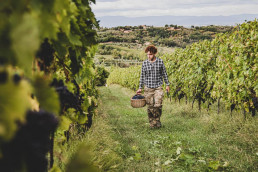
Over the past five years, cooperatives’ exports have grown by 44%, to Italy’s general wine export growth of 27%: eight of the top performing 15 wineries in Italy are co-ops, eight of the top European co-ops are Italian, as reported by Italian newspaper La Repubblica. The wineries provide each member with agronomic, economic, oenological support, helping with vineyard management and with vinifying and blending the many parcels of land.
The pieces of land are very small so to use them coherently, to produce well-made wines, they need to be highly organized. The members receive advances throughout the season, which they settle when they bring their grapes to the cooperatives at the end of the agricultural year, which begins on September 1 and ends on August 31.
In essence, the strength of the cooperative model is that it’s small when it needs to be and large when it needs to be. So, if a member has only 2 hectares of vines, it’s obvious that he’s understands ever crevice and vine of his property. Then working together with other local growers and bottling together, he’s now in the position of reaching the international market with his wines thanks to La cooperativa.
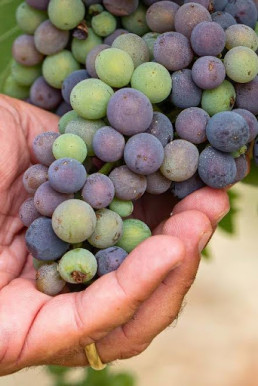
Another benefit has been that the Cantina impressed upon the growers to keep working with their indigenous vines, because they realised that this biodiversity in Italy was disappearing in the vineyard. Local varieties and viticultural habits were preserved in this way due to the awareness in the cooperativa.
Historically many considered that cooperative wines were antiquated, not good, so over time there was a need to make understood that the quality of these wines was at least equal to the quality of private producers. Today cooperative wines win Gambero Rosso praise. Job well done!
If co-ops began, in the late-19th century, with the noblest of intentions and great success, as organizations to protect small growers and communities vulnerable to disastrous vintages, lack of higher education and information, loan sharks and other ills, they could not survive, in today’s world, simply by protecting producer interests with no thought to the consumer. The best of them today, do an admirable job in serving the interests of both small growers without the capital and plant to make and market wine on their own and consumers looking for reliable quality, and beyond.
– Forbes
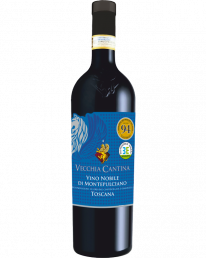
2019 Vecchia Cantina Vino Nobile di Montepulcino DOCG
- Sangiovese and Canaiolo.
- The grapes are picked, selected and fermented for 20 days at a temperature of about 26-28°C.
- After fermentation the wine is aged for 20 months in small oak barrels. After bottling it will rest, at a controlled temperature for 11 months in the winery.
Vivid ruby red with pleasant violet hues. Fresh and wide, persistent in the fruity notes. With age it releases scents of spices. Good freshness and tannin-acid balance, fruity notes of red berry fruits and jam as suggested by the bouquet. Good structure and savouriness.
Pair with any kind of roasted meat including game, and stewed meat. Good with medium-aged cheese.
92 Points: “Compact in its solid matrix showing notes of cherries, black cherries, raspberries and mixed flowers. Full bodied, light tannins and a juicy, shining finale of great smoothness. Drink now or hold.“
Raffaele Vecchione – WinesCritic.com
90 Points: “Fresh red berries, spices and a hint of dark minerals. This is nicely dry and chewy on the palate with a medium body and firm tannins to close. Drink now.”
James Suckling
Vino Nobile di Montepulciano has a long and storied wine history closely associated with Italian nobility (it was only available on their tables as a sign of prestige) and became a controlled designation of origin (DOC) in 1966 and Italy’s first DOCG wine in 1980. These prized Tuscan wines owe their quality not only to the winemaker’s expertise, but also to the geological features of the vineyards (1,300 hectares are registered for Vino Nobile di Montepulciano) situated between 250 and 600 meters above sea level. Vino Nobile wines must be made up of a required minimum 70% Sangiovese (called ‘Prugnolo Gentile’ in Montepulciano) and a maximum of 30% of other varieties authorized for the Tuscany Region. By law both vinification and ageing must take place in the municipal area of Montepulciano and must be aged for two years (three for Riserva) before being sold.
Nobile di Montepulciano DOCG of the historical Winery Vecchia Cantina di Montepulciano is one of the best “Nobile” of Italy
Wine Searcher.com
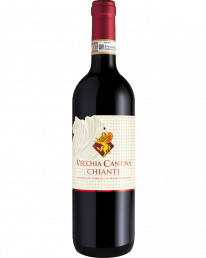
2023 Vecchia Cantina Chianti DOCG
- Sangiovese
- The vines are cultivated on the hilly slopes of the southern Chianti region, grown at an altitude of between 250-450 metres above sea level. The soils are a medium mix in layers: sandy, tuffaceous and clayey.
- Grapes are hand-picked, destemmed then maceration takes place at a controlled temperature lasting between 10-14 days. After being drawn from the vats, the wine undergoes malolactic fermentation in stainless steel tanks.
94 Points: “Covered ruby red with good violet shades. Immediate and direct with pronounced notes of red berry fruits. After ageing in durmast barrels, it develops pleasant vanilla scents. good impact on the palate, it reveals a remarkable body and a very good balance among its components, with a pleasant tannic finish.”
Luca Moroni, Annuario dei Migliori Vini Italiani
88 Points: “A simple, fruity Chianti with dried-cherry and citrus character. Medium body. Fresh finish. Good quality. Drink now.”
James Suckling (on the 2018 Vintage)
“Every so often, the world needs a reminder: for a while now the wines of Italian cooperatives have been more than just a good bet on quality. As sum products of small growers, they’re also reliable translators of place, tradition and culture, wines of territorio”
Forbes.com