The Grooviest of White Wines: Grüner Veltliner and Laurenz V
Pour this now, thank us later
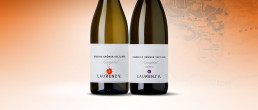
Move over savvy, take a hike riesling, there simply isn’t a better warm weather wine than under-rated, under-appreciated Grüner Veltliner. Yes, the name is a mouthful, but hospo wine geeks have handily shortened it to “groonie” …
It might be new to you, and it could be a IYKYK “if you know you know” kinda vibe for this exciting indigenous Austrian grape variety – Grüner Veltliner pronounced GREW-ner FELT-leaner, also fondly nicknamed Grüner, GV, groonie, and Gru-Vee (groovy), but whichever way you pronounce it, Grüner Veltliner has effected a Cinderella like transformation over recent years, thanks to the likes of GV specialist Laurenz V in the Kamptal region of Austria.
LAURENZ V (pron. Laurenz Five) represents the essence of what Dhall & Nash does best: searching those offbeat appellations to discover truly singular wines from boutique wine estates that defy pigeon-holing and yet surpass all our expectations.
Grüner Veltliner has been a darling of sommeliers and wine geeks for a while now, but these vinous treasures weren’t easy to find – until now!
D & N is excited to welcome LAURENZ V to our stable of exceptional artisans. They are renown for producing elegant, age worthy styles of Grüner Veltliner that have captivated the international market par excellence.
Master of Wine, Jancis Robinson extols ” the quality of all Austrian wines has become so excitingly and consistently high that no fine wine enthusiast can afford to ignore them.”
The Laurenz V Story
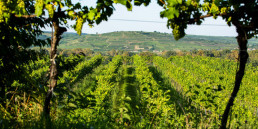
Although 2004 was the official beginning of the estate, founded by Lenz Moser V with two partners, Dieter Hubler and the Schweiger family, it has older roots and a remarkable pedigree to trace by delving into the family history of one of the founding members, Lenz Maria Moser V.
Lenz is the fifth generation of the Austrian Lenz Moser wine dynasty and the 15th in the direct lineage of the Moser family. They have been in the wine business since 1610, with the first mention of the Moser family in their home village of Rohrendorf (Lower Austria) dating back to 1124.
Lenz V pursued a dual university education at Austria’s famous Klosterneuburg in business and oenology. Even with his formal education, Lenz credits his life inspiration and his oenological knowledge to his grandfather, the legendary Professor Dr. Lorenz Moser III. He invented and developed the ubiquitous trellising system called the “Lenz Moser Hocherziehung” (now modern vertical trellising), which revolutionized vineyard cultivation around the world. Through this system, he ultimately developed GV into the ideal white wine variety to cultivate in Austria and over time definitively popularised the variety, becoming known as Grandpa Grüner. Today, a third of the total Austrian viticultural areas are planted with Grüner Veltliner, making it the most popular variety and an international signature wine for Austria.
Those were big shoes to fill for Lenz V who didn’t shy far. The younger Lenz’s impressive career in wine began at the family’s Lenz Moser Winery (Austria’s pre-eminent wine producer) as General Manager for 10 years. In 1997 Lenz was asked to join Napa Valley’s Robert Mondavi as European manager for nine years until it was sold to the Constellation Group.
Continuing on with his Grandpa Grüner’s mission, in 2004 Lenz returned to his Austrian roots by founding LAURENZ V with two partners Dieter Huebler and Franz Schweiger. The sole grape variety they focussed on was Grüner Veltliner.
So, Lenz and his partners at Laurenz V have become the modern ambassadors for the varietal, holding to the objective of establishing Austria’s signature grape amongst the premier white wines of the world. We believe they have achieved this admirably!
The credo of Laurenz V is: Strictly Gruner
Sheer Drinking Pleasure
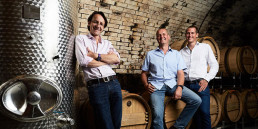
At The Winery
The company’s winemaker since its inception, is the exceptionally skilled Peter Schweiger, brother of Franz, whose winemaking heritage in Kamptal dates back five generations. Assisting him is his son, Peter Jr., who graduated from wine studies in 2012.
Despite retaining a deep connection to their vineyard’s history, Laurenz V Winery integrates state-of-the-art technology and innovative techniques to enhance its wine production process. This melange of tradition and innovation allows them to maximise the potential of the Grüner Veltliner grapes, ensuring the cultivation of the most exceptional wine possible.
They aim to offer wines of excellent quality and pure vinous enjoyment with a modern approach, attracting more enthusiasts to this outstanding grape variety. The Laurenz V wines display brisk acidity, with unusually-pronounced concentration of flavour, voluptuous texture and vibrant minerality. They are also remarkably easy to pair with a broad range of cuisines.
Terroir
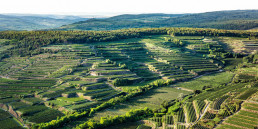
Terroir is key for Laurenz V in Kamptal. The Austrian wine-growing region of Kamptal is characterized by its gentle hills that nestle up against each other. Every now and then, shimmering granite rocks flash through – and right through the middle of it flows the river Kamp beside which lies the winery Laurenz V.
They say the right bank of the river Kamp gives Gruner creaminess and length, and the left bank’s granite and mica-slate soils account for the minerality and freshness of Laurenz V’s classic style.
Cold air from the north lowers night-time temperatures to slow the ripening process, which is crucial in producing the concentrated style of Gruner that Laurenz V is so well known for. Perfect diurnal conditions.
They also source grapes from trusted growers in the Kremstal region of Lower Austria, where Gruner Veltliner reaches optimal ripeness while retaining its trademark energy and acid structure.
Sustainability
Laurenz V’s offering isn’t merely encapsulated by distinct quality and flavour, but also by their recognition in sustainability. They strive for a delicate balance between maintaining their natural environment and the need for productivity which was made evident in 2019 when they received the Austrian Sustainability Seal – a significant accolade in the industry. From 2020 onwards they now use an eco-friendly lightweight bottle that reduces the weight of a case of wine by over one kilogram.
Laurenz V. has been instrumental in propelling Austrian Grüner Veltliner into the international spotlight. Laurenz V wines are enjoyed in 45 countries around the world and served in fine restaurants from Dublin to Dubai. The winery produces seven distinct proprietary Grüner Veltliners, two of which are currently available from Dhall & Nash in NZ:
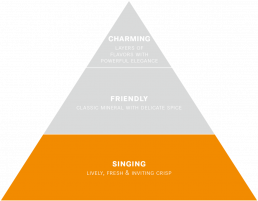
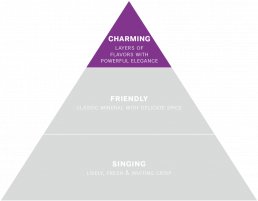
“Singing” is the perfect introduction to Kamptal Gruner and displays lively and harmonious fruit with a refreshing finish and mouth-watering spice.
And “Charming” the estate’s flagship wine, represents the reserve tier in the portfolio and is sourced from their best vineyard sites in the Kamptal.
Jancis Robinson writes:
“Until the 1990s very few wine lovers outside Austria had even heard of Grüner Veltliner. Today, no self-respecting restaurant wine list, whether in New York or Hong Kong, can afford to be without at least one example of this, Austria’s signature white wine grape.”
Accolades
2024 Laurenz V “Singing” GV
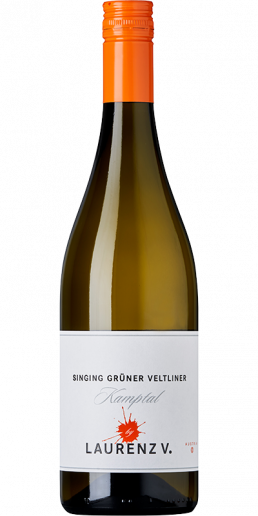
Clean and crisp, with fresh citrus and orchard apple flavors. Light-bodied and straightforward, with lively acidity and a short, approachable finish. Simple, easy-drinking, and refreshing.
87/100 Wine Enthusiast
Bright pomelo tang and honeydew sweetness are laced with tarragon and dill-weed accents, all riding a wave of salinity and subtle almond-pastel warmth. Pair with smoked-pepper tuna tataki and herbed goat-cheese tart.
(Singing 2023 Vintage) Natalie MacLean: 92/100
This fresh white has aromas of lemon rind, white pepper and chopped apples. It’s medium-bodied, crisp and juicy. Drink now.
90/100 James Suckling
Medium yellow-green, silver reflections. Fine herbal savouriness, delicate apple, a hint of guava, fresh bouquet. Medium body, fine acidity, white pome fruit on the finish, salty aftertaste, already easy to drink.
90/100 Falstaff
2023 Laurenz V “Charming” GV
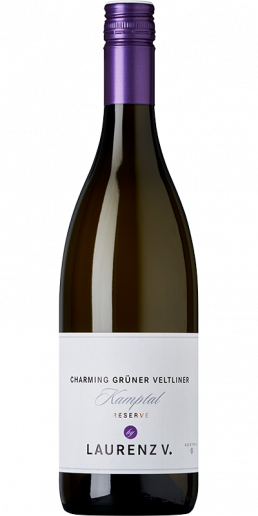
Medium yellow green, silver reflections. Some blossom honey and tobacco-herb savouriness, delicate hints of passion fruit, candied orange peel. Juicy, medium complexity, delicately spicy, apple on the finish, mineral aftertaste, already easy to drink.
91/100 Falstaff
Sliced apples, nectarines and fresh mangoes on the nose, followed by a creamy, ripe and medium- to full-bodied palate. Lovely just-ripe stone- and yellow-fruit character. Drink now.
91/100 James Suckling
90/100 – Wine Spectator
Silver Medal – Cathay Global Wine & Spirits Awards 2025, Asia
“Austria doesn’t actually make that much wine. But the word is out: the best Austrian whites are a match for any, and increasing numbers of wine buffs are switching on to them”
Wine Anorak
Let’s find our groove with “groonie”
Name Origins & Pedigree
“Grüner Veltliner” translates to “Green Veltliner,” referencing the Veltlin region in the Alps – now part of northern Italy – even though the grape itself is native to Austria. Back in the 16th and 17th centuries, this Alpine area was part of the Holy Roman Empire and later came under Austrian Habsburg control, so it had strong political and cultural ties to Austria.
The Grüner Veltliner name itself can be traced to 1855 when it was first mentioned, before that time it was known as Weißgipfler.
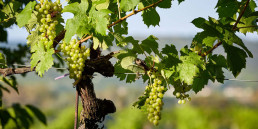
That said, despite the name, Grüner Veltliner is not genetically linked to any grapes from Valtellina. Ampelographers believe the name was more of a stylistic or regional nod than a literal origin story. The grape itself is indigenous to Austria, particularly Lower Austria (Niederösterreich), and its parentage includes Savagnin (Traminer) and a nearly extinct Austrian variety discovered in Burgenland, St. Georgener. It is an ancient natural cross.
Only by the 1930s was Grüner Veltliner established as the standard name of the grape. Until the Second World War, it was regarded as just another Austrian grape, but after the introduction of Lenz Moser’s Hochkultur system of vine training, its planting expanded quickly from the 1950s to later become Austria’s most planted variety with over 30% of total vineyards planted in GV.
“It has taken even the Austrians a while to truly appreciate the distinctive Grüner Veltliner. But those who do discover it, are inevitably smitten”.
Decanter Magazine
Recognition:
In recent years, Grüner Veltliner deservedly, has seen an uptick in interest following the results of a 2002 wine tasting organized by Masters of Wine Jancis Robinson and Tim Atkin. Here Grüner Veltliner from Austria beat out several highly acclaimed white Grand cru wines from Burgundy. The merited attention was then firmly upon this unique grape variety.
Pepper Power:
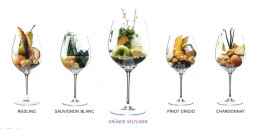
Grüner Veltliner’s superpower is its signature white pepper aroma and flavour that comes from a compound called rotundone, the same one found in Syrah. It’s also important to not confuse the rotundone peppery notes of Grüner Veltliner with pyrazine, green bell pepper notes in other wines like NZ’s Sauvignon Blanc. These are two completely different classes of chemical compounds and rotundone doesn’t give off “vegetal green” pepper or spice notes like pyrazine often does.
Versatile Styles and in Food Pairing:
Grüner ranges from light and zesty to rich and age-worthy. In regions like Wachau, top-tier styles are labelled Smaragd and can rival fine white Burgundies. Because of its food-friendliness, Gruner needs to show up more on wine lists across the country. It’s thanks to its high acidity and subtle spice – it pairs perfectly with white meat dishes like Wiener Schnitzel, and excels with challenging green vegetables (asparagus, artichokes), spicy Asian cuisine (Thai, Vietnamese, Indian), seafood, and fresh cheeses. A true chameleon wine.
Ages Gracefully:
While many Grüners are meant to be enjoyed young, the best examples can age for a decade or more, developing nutty, waxy, and honeyed complexity not unlike the characters of an aged Riesling or semillon.
We’re down the rabbit hole already, might as well check out Austria’s Wine History
Austria is well known for Mozart, schnitzel, Sacher torte, and The Sound of Music, but how aware are we of its viticulture? During the 19th century, Austria’s wine industry boomed, but many setbacks in the 20th century almost eradicated it. However, it has reemerged riding on the back of its unique and popular grape: Grüner Veltliner. New and exciting red wines made from Zweigelt and Blaufränkisch have received rave reviews and may indicate the start of the second wave of distinctive wine exports from Austria. Watch the D&N space!
Historically, wine came to Austria via the Celts in 700 BC. In the first century BC, the Romans further advanced winemaking by improving production techniques. After the fall of the Roman Empire, however, winemaking stagnated. In the 9th century, Charlemagne encouraged winemaking and instituted new guidelines. Cistercian monks further advanced wine production by introducing Burgundian methods in the Dark Ages, and by the 15th century, vineyards covered most regions of Austria.
Phylloxera
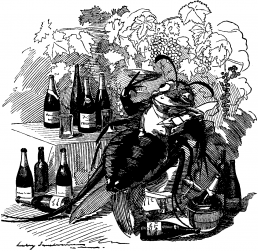
Austrian winemaking continued to thrive until the late 1800s when mildew and phylloxera devastated the vines throughout the country. Further decline occurred after World War I and the collapse of the Habsburg Monarchy when 30% of Austrian vines were lost as portions of Austria were annexed to other countries. The Soviets further plundered winemaking with the collapse of Nazi Germany after World War II. As a result, the wine industry started making low-quality, mass-produced wine.
The Anti-Freeze Scandal
The most significant embarrassment to Austrian wine culture occurred in the mid-1980s when the government found that some winemakers had added ethylene glycol (antifreeze) to their wines to increase “sweetness”. As a result, the Austrian industry fell into chaos, and exports dropped substantially.
Renewal
So, how do you solve a problem like a bad reputation? In 1986, the Austrian Wine Marketing Board was established. After that, strict wine laws were increasingly put in place, culminating in 2009 with the passage of the Austrian Wine Act. The government guaranteed wine regulation and quality, and the results have exceeded expectations.
The New Vineyard Classification
Since 2023, Austrian law allows for an official single-vineyard hierarchy – similar to France’s Premier Cru and Grand Cru system that can appear on Austrian wine labels. It introduces Ried (“vineyard”) designations and optional tiers like Erste Lage and Große Lage, which will be gradually implemented across DAC regions.
Distinctive Wine Capsules
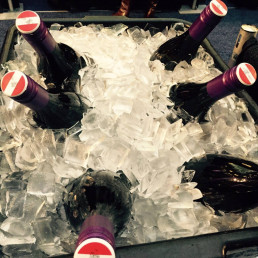
A surefire way of recognising quality on Austrian wine labels is to look for the eye-catching red-white-red banderole on the capsule or screw-cap. This means the wine has passed official tasting and analytical controls for the Qualitätswein level. You’ll often also find a Prüfnummer, a state control number confirming approval.
Austria’s Wine Regions
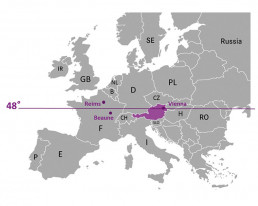
Austria’s Wine Regions are in good company so to speak, primarily around the 47th and 48th parallel. For comparison, the 47th Parallel is Beaune in Burgundy. Similarly to NZ, Austria is a cool climate growing region. But it’s a very small player internationally, producing less than 1% of the global wine production.
Austria’s Wine Country is in the Eastern part of Austria – mainly surrounding the Capital, Vienna with approximately 45.000 ha (110,000 acres) of vineyards – 65% in White, 35% in Red.
Austria’s DAC Classifications:
Austria’s labels look similar to German ones – yes, a tad confusing to the uninitiated. But since 2002, the country has had its own appellation system: DAC – Districtus Austriae Controllatus. It’s essentially Austria’s version of the French AOP or Italian DOC, designed to highlight regional typicity rather than just grape ripeness. Still, both systems coexist – the traditional ripeness-based classification (Prädikat) and the origin-based DAC system.
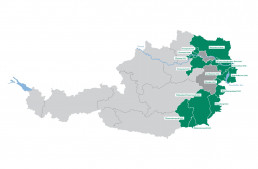
There are 18 DAC regions across the country, each tied to its own signature grapes and styles. Each DAC may include sub-zones, vineyard names, and individual village designations. This system hasn’t replaced the Prädikat system, but where both are present, this takes precedence over any consideration of Prädikat.
Lower Austria (Niederösterreich)
- Weinviertel DAC – Grüner Veltliner only
- Kamptal DAC – Grüner Veltliner, Riesling
- Kremstal DAC – Grüner Veltliner, Riesling
- Traisental DAC – Grüner Veltliner, Riesling
- Wachau DAC – multiple varieties, led by Grüner Veltliner and Riesling
- Thermenregion DAC – new addition (since 2023), with indigenous grapes like Rotgipfler and Zierfandler
- Carnuntum DAC – blends of Zweigelt and Blaufränkisch, also white varieties
Burgenland
- Leithaberg DAC – Grüner Veltliner, Weißburgunder, Chardonnay, Blaufränkisch
- Eisenberg DAC – Blaufränkisch
- Mittelburgenland DAC – Blaufränkisch
- Neusiedlersee DAC – Zweigelt
- Rosalia DAC – Blaufränkisch, Zweigelt
- Ruster Ausbruch DAC – botrytised sweet wines (white varieties only)
Styria (Steiermark)
- Südsteiermark DAC – Sauvignon Blanc, Gelber Muskateller, Chardonnay, Pinot Blanc etc.
- Vulkanland Steiermark DAC – aromatic whites and regional blends
- Weststeiermark DAC – home of Schilcher (Blauer Wildbacher)
Vienna (Wien)
- Wiener Gemischter Satz DAC – traditional field blend of multiple white grapes
Vineyard & Winemaking:
In Austria, Grüner Veltliner is often thought to grow best on sandy, alluvial soils, with the vines neither liking too little or too much water, while Riesling is generally grown on the rockier and more rugged sites. However, there are also many fine examples of Grüner from more mineral sites that show how well the grape can express terroir.
Quite a versatile grape, Grüner’s ripeness can change it from being racy, lean, delicate and gently aromatic to one that can be decidedly rich, full-bodied and powerfully fruited, with the best aged Austrian examples often compared to white Burgundy. This similarity to the weight and texture of chardonnay sees some makers using oak. Additionally, although it draws many parallels with Riesling, rarely are there wines with noticeable residual sugar.
As our fave irreverent wine influencer Tom Gilbey touts groonie as “my favourite crisp fresh white wine value for money…It’s like Chenin Blanc meets Sav Blanc but it’s got so much energy to it!”
We’re onto a winner with groonie!
Simply Put: The value of LAURENZ V is unmatched. These wines have no peers at this price.
You’ll Never Forget This Producer Once You Try a Bottle or 3!
***Here is a unique opportunity to taste earlier vintages and experience Grüner’s aging potential.
Luckily, Dhall & Nash has scored MAGNUMS of these vintages – get in quick!
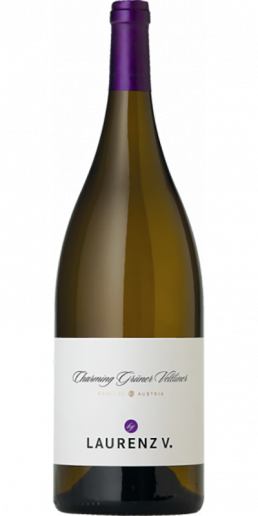
2013 Laurenz V Charming Grüner Veltliner
The combination of super ripe juicy pear with crunchily fresh green glints suggesting citrus foliage or aloe vera makes for an irresistibly refreshing drink. Lemony, zesty midpalate concentration creates extra liveliness.
91/100 Wine Enthusiast
2014 Laurenz V Charming Grüner Veltliner
A fresh peachy note on the nose carries a tinge of earthy yeast and savoriness. The palate offers zesty concentration and more of that textured yeasty soy spice. This is fresh but rounded and shows ample backbone on its concentrated palate.
90/100 Wine Enthusiast
2015 Laurenz V Charming Grüner Veltliner
This is very precise with dried-lemon, mango and pineapple aromas and a touch of fresh herbs. It’s full-bodied with complex bitterness and intensity on the finish. Almost smoky at the end. Aging beautifully.
James Suckling
2016 Laurenz V Charming Grüner Veltliner
Medium-bodied dry white with enough generous, citrusy character, structure and balance, to make a very flexible food wine, even for more substantial dishes.
James Suckling
2017 Laurenz V Charming Grüner Veltliner
A creamy aspect joins the pear drop candy notes on the fresh, fruity nose. The palate is concentrated and shimmers with white pepper between the flashes of ripe, juicy pear fruit. A lovely texture recalls citrus pith and freshness.
91/100 Anne Krebiehl MW
2018 Laurenz V Charming Grüner Veltliner
Really ripe, juicy, red-cheeked Mirabelle plum notes jump from the glass with uncommon intensity. The palate counters this with zesty freshness that seems to make this even juicier. All the ripeness of the 2018 vintage countered by vivid freshness and a tinge of white pepper on the finish.
92/100 Wine Enthusiast, Anne Krebiehl MW
2019 Laurenz V Charming Grüner Veltliner
A notion of the ripe and freshly cut peel of Russet pear fills the nose. The palate adds a wonderful smattering of white pepper, lemon pith, salty and savoury yeast. All this happens on a concentrated yet tight body that’s full of freshness.
94/100 Anne Krebiehl MW
Quite a rich dry gruner veltliner, but the balance of ripeness, lively acidity and spiciness works well on the creamy, medium- to full-bodied palate. Generous finish with well-integrated tannins. Sustainable.
James Suckling
Light yellow-green, silver reflections. Fine yellow tropical fruit, ripe yellow apple, delicate meadow herbs. Full-bodied, yellow stone fruit, fine acid structure, mineral finish, good development potential.
92/100 Falstaff
2020 Laurenz V Charming Grüner Veltliner
Pale yellow-green, silver glints. Hints of tangerine zest, yellow apple, and a little blossom honey. Inviting bouquet. Full-bodied, freshly structured, some mango and papaya at the core, mineral, followed by resonating saline nuances, and persistence. Good ageing potential.
92/100 Falstaff
91/100 Decanter World Wine Awards
90/100 Wine Spectator