

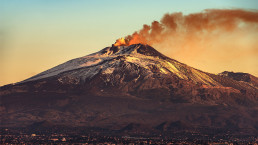
VINE, SEA, SMOKE - a Sicilian wine dinner by Spiga & Dhall & Nash
Join us for a memorable evening at Spiga with menu inspired by Sicily’s volcanic soul — where sea and smoke meet in perfect harmony.
Each dish is paired with the uncompromising purity of Frank Cornelissen, a visionary of Mount Etna whose wines express nature in its rawest form.
Tasting Line-up:
- Frank Cornelissen Susucaru Rosato 2022
With: Sarde "Beccafico" Sardines, raisins, orange zest & aromatic bread - Frank Cornelissen Munjebel Bianco 2020
With: Swordfish "Sando", Sicilian pesto & aubergine - Frank Cornelissen Munjebel Rosso 2021 and
- Frank Cornelissen Munjebel "MC" Monte Colla Rosso 2019
With Paccheri "Pastificio Mancini", tuna tartare & seafood sauce - Frank Cornelissen 'Magma' 2020
With Lamb loin, black pudding, red currants, panelle & jus - Limoncello
With Almond treats & candied oranges
Frank Cornelissen
Few winemakers have redefined a landscape like Frank Cornelissen has on Mount Etna. Once a Belgian wine trader, he saw in Sicily’s brooding volcano not danger, but possibility — a place where vines could speak for themselves, free from dogma or interference.
Cornelissen’s vineyards cling to Etna’s black, mineral-rich slopes, where bush-trained alberello vines yield meagre yet intensely expressive fruit. Each bunch is meticulously trimmed by hand, the sacrifice of quantity for clarity. His approach rejects every orthodoxy — no chemicals, no biodynamics, no oak — just nature left to its own rhythm.
Fermentation and ageing unfold in inert epoxy-lined vessels, chosen to eliminate even the whisper of external flavour. The result is wine stripped bare of artifice, charged with volcanic tension and uncompromising precision. In a world obsessed with intervention, Cornelissen offers something radical: purity, unfiltered.
If you'd like to learn more, we’ve blogged extensively about this humble icon before, which you can read here:
- May 2024: New Vintage, New Hotness
- Oct 2023: New Year, New Frank
- May 2023: Red Hot ‘n’ Smokin’
- May 2020: Too HOT to Handle
Spiga
SPIGA; Italian [Feminine Noun]
Ear of wheat, Botanical.
The part of the cereal which contains the seed.
"Small restaurant that delivers big feelings. Tucked in Remuera’s fantastic 1050 precinct, Spiga is a hidden trattoria that delivers Italian authenticity with handcrafted flair. Nestled down a quiet laneway in Remuera, this intimate space offers house-made pasta, Roman-style pizza, and seasonal antipasti using regional ingredients.
The design is rustic-chic, with exposed brick, timber accents, and a softly glowing open kitchen. A concise Italian wine list complements the menu, while the relaxed service and multi-course sharing approach feel like home without the nosy aunt. Spiga is where casual elegance and honest cooking intersect beautifully."
- Denizen Dining Guide

Marchesi di Barolo: Pitch-perfect Barolo from a Legendary Estate
Marchesi di Barolo:
Pitch-perfect Barolo from a Legendary Estate
“You would expect some pretty special examples of Barolo with this name, and the winery delivers…”
Forbes.com, ‘The 25 Best Producers of Barolo’, 2018
You know at D&N we love great, traditionally made Nebbiolo from prized terroirs, and we adore small-production wines made by talented, hard-working families. Oh, and of course we love excellent quality-to-value ratios. So, when you get all this from one winery, we consider it a true grand slam.
Dhall & Nash is honoured to announce the arrival to our stable of Marchesi di Barolo.
Every wine region needs its legends. Marchesi di Barolo is a legend of Piedmont. One that both defies our expectations of what Barolo can be and affirms its greatness. These are undoubtedly magical wines from one of Barolo’s greatest producers – they truly exude a sense of refinement and regalness.
This is a winery of serious intention, prestige and deep history, from a terroir right in the beating heart of blue chip DOCG Barolo. Marchesi di Barolo gives a master class in varietal character, soil character, and measured elegant winemaking.
“The [Marchesi di Barolo] winery has defined a unique lineage of quality, elegance and complexity, by interpreting the many nuances of Nebbiolo and the potential of each terroir.”
Decanter
With its unrivalled power, nuance, and longevity, Barolo is known as the “King of Wines”—but this so-called king actually exists thanks to a visionary “queen”.
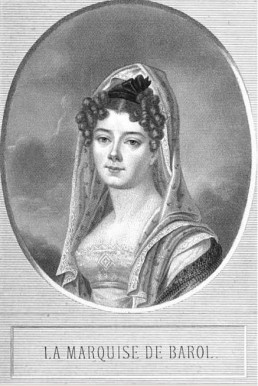
It was due to Giulia Falletti, the original Marchesa of Barolo, that Barolo was crafted more than two centuries ago, from a sweet spritzy wine into the complex red wine we know it as today.
Her vision lives on at Marchesi di Barolo winery with the Abbona family at the helm astutely guided by mother and daughter duo, Anna and Valentina Abbona – the modern day queens of Barolo.
“Powerful elegance has become Marchesi di Barolo’s trademark since its very first vintage.”
Decanter
Prestigious Pedigree
The braided history of Marchesi di Barolo is a love story that has been going on for more than 200 years. It began in 1807, when the Marchese di Barolo, Carlo Tancredi Falletti, fell in love with the French aristocrat Juliette (Giulia) Colbert de Maulévrier. After her marriage to the Marchese di Barolo, Juliette Colbert de Maulévrier fell in love again – but her husband had no reason to be jealous, as the object of her passion was the Nebbiolo vine.
It was Juliette Colbert de Maulévrier with her deep love of grand French wines, who recognised the potential of these local vines on the soils of lime, clay, marl and tufa in the Piedmont microclimate.
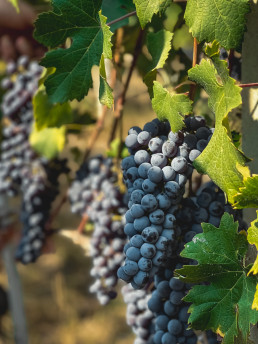
She was the first to vinify Nebbiolo in a dry style, set up the wine cellar and named the wine after its place of origin, Barolo, according to the French tradition. She thus brought Italy’s most prestigious wine to the world – Barolo.
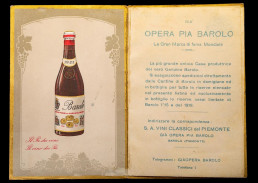
The wine from their estate soon became known as “the wine from Barolo”, served at important diplomatic and royal functions, even in France. The Marchesi had no children and following the death of the couple, the Marchesi di Barolo dynasty was left without an heir.
Per the wishes of Marchesa Giulia, a great philanthropist, the family assets were donated to charity and a non-profit foundation was created in their name, “Opera Pia Barolo”, helping the neediest of nearby Torino. The sales of wine from their Barolo vineyards continue to fund the charity, which still exists today.
It was in 1929, a local winemaker, Pietro Abbona with his siblings, purchased the cellars formerly owned by the Marchesi and eventually acquired all their vineyard holdings as well.
His arrival not only brought a new lustre to the famous producer, but it also ushered in a new era for Barolo. For proven Barolo-specialists, Pietro Abbona is the first of the pioneers of Barolo. He succeeded in spreading the reputation of Barolo far beyond its Piedmont home. He dealt reverently with the legacy that he was able to continue. His great respect for the creators of Barolo is especially evident in the cellar. Pietro Abbona kept and cherished the wine barrels in which Marchesa Giulia created Barolo from Nebbiolo grapes. This legacy has been preserved to this day.
Marchesi di Barolo remains a family business. The love of Barolo has been passed on within the Abbona family from one generation to the next. Since 2006, the estate has been under the direction of Pietro’s great-grandson and fifth-generation winemaker, Ernesto Abbona and his wife Anna, and their children Valentina and Davide. They have inherited an extraordinary winemaking tradition and remain faithful interpreters of the rich diversity of these places, vineyards, and varieties. The Abbonas are proud of their heritage and the fact that the wines of Marchesi di Barolo are still among the best examples from the region and are highly sought after around the world.
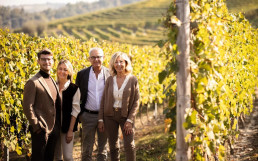
“Knowledge and respect are the core values that define Marchesi di Barolo’s philosophy and working methods – knowledge of the grapes, the vineyard and the specific vintage conditions; respect for the character they bring to the wine and that must be preserved through mindful winemaking. This ultimately defines the unique character and strength of all of the estate’s bottlings.”
Decanter
As great-great grandfather Pietro Abbona was, the sixth generation is committed to the traditional methods but, at the same time, they want to present Barolo in a contemporary way. The family motto is to combine tradition and evolution.
“Elegant, Balanced, Powerful and Nuanced – there’s nothing quite like Barolo in its capacity for soul stirring complexity.”
GT Wines
Amongst the Vines
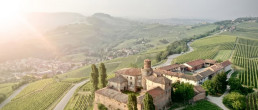
The Marchesi di Barolo estate encompasses approximately 430 acres of vineyards in the Langhe, some of the finest in Piedmont, including the celebrated Cannubi cru. The cellars are located in the village of Barolo, overlooking the Renaissance castle of the Marchesi Falletti di Barolo. They have been making wine and aging it in the ancient cellars of Marchesi di Barolo for six generations. The Abbonas remain faithful interpreters of native varietals and their locations, carefully preserving the qualities and peculiarities of each vineyard.
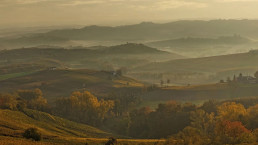
Marchesi di Barolo being an eminent family estate represents the great wine traditions of Piedmont, controlling 430 acres of UNESCO World Heritage vineyards, including holdings in the exclusive Barolo crus of Cannubi, Sarmassa and Coste di Rose. The Cannubi cru is Barolo’s oldest and most prestigious vineyard and a jewel in Marchesi di Barolo’s crown.
The winery is surrounded by high hills that protect the estate from inclement weather. These favourable conditions make the Nebbiolo grapes sweet, tannic, and lively.
The hills of the Langhe were formed from seabeds that emerged millions of years ago. The Barolo area is made up of Serravallian soil and Tortonian soil whose properties lend distinct characteristics to Barolo wines. The Serravallian soil produces robust, full-bodied, structured, and long-lived wines, and the Tortonian soils impart the fragrance, and elegant notes to balance against the power structure of the wine.
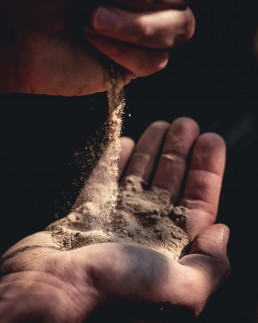
The family’s bond with Barolo starts amongst the vines. The aim is to promote the biodiversity of the vineyard. It is an ongoing challenge for the vintner to transfer the uniqueness of historic cru sites into the wine. This requires a close familiarity with the land and a lot of flexibility in the cellar in order to be able to respond to each of the crus – and Marchesi di Barolo boasts some of the most prestigious crus in the Barolo area. Cannubi is a site characterised by lime, which is protected from extreme weather conditions by the surrounding hills. Coste di Rose is a very steep site with a high quartzite content. Sarmassa faces south-east and has very stony soil.
The wines originating from these sites have an extremely long life. The family is especially proud of this longevity of their Barolo. Here too, the family is maintaining its traditional heritage. A unique asset of Marchesi di Barolo is its ancient wine cellars, home to a rare and private collection of over 30,000 bottles of Barolo that ranges from rare nineteenth century vintages to recent ones.
“You would expect some pretty special examples of Barolo with this name, and the winery delivers; especially noteworthy are the Cannubi and the Coste di Rose… Somewhat modern in their approach, the Barolos here also pay tribute to the winemaking heritage of this territory; the wines offer excellent ripeness and harmony.”
Forbes.com, ‘The 25 Best Producers of Barolo’, November 2018
Marchesi di Barolo wines are classic but clean, polished but soulful…in short, everything one could possibly ask for in a Barolo/Nebbiolo. These latest releases should be in both your glass and your cellar as soon as possible, right alongside your favourite Burgundies, Bordeaux, Napa Cabernets…whatever you consider collectible. And, believe us, this is as collectible as they come with at least 20 years of graceful maturation ahead of them. From a price/quality perspective, it leaves so many more-expensive wines completely in the dust. Elite-level Barolo like this remains the best “value investment” in wine. It’s only going up, up, up!
“A legacy of character and strength, inside each bottle of Marchesi di Barolo’s Barolo”
Decanter
Our 2025 Allocation
Nebbiolo is definitely having a moment, but very few can match what Marchesi di Barolo accomplish – a wine that has the full spectrum of aromatics, depth, and complexity yet is also extraordinarily drinkable right now. Of course, this wine can age, but it’s not mandatory. It is so effortlessly enjoyable and since it is a humble “Nebbiolo,” the value is outstanding.
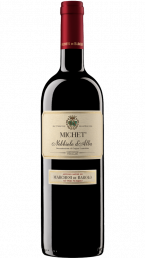
2021 Marchesi di Barolo Nebbiolo d’Alba Michet DOC
- Nebbiolo d’Alba is a very eclectic variety. It extracts unique characteristics from the terroir: from clay and limestone hills of medium consistency, it derives plenty of trace elements that enrich its structure; from ground rich in quartz sands and silt, it takes fragrant and fruity scents. The presence of the Michet grape variety, characterised by small and sparse bunches, enriches the colour and extract of the wine. This blend creates a wine of great completeness and harmony, that can fully and immediately express its bouquet.
- SOILS: From clay and limestone hills of medium consistency, it extracts plenty of trace elements that enrich its structure; from grounds rich in quartz sands and silt, it takes fragrant and fruity scents.
- FERMENTATION: Decanted into vitrified concrete vats; it maintains the post-fermentation temperature of around 22°C for a long time. In this way the malolactic fermentation starts and ends spontaneously in a short time.
- MATURATION: The refinement, carried out 60% in large 60 hl Slavonian oak barrels and the remaining 40% in steel, is aimed at maintaining the typical traits of freshness and florality of the Michet clone
- SENSORY: The colour is ruby, veering towards garnet red. The aroma combines the fruity scents of raspberry with the ethereal, spicy notes of violet and vanilla. This wine has a wide range of flavours, and the taste is harmonious and balanced, with graceful, never- too-prominent tannins and delicate woody notes.
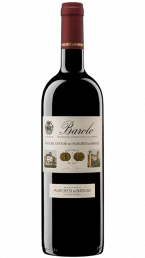
2019 Marchesi di Barolo Tradizione DOCG
- SOILS: The grapes used to make this wine grow in vineyards situated on hills with a good slope, composed of clay and limestone soils, alternated with firm layers of sandstone and covered by quartz sands and very fine silt. This creates a structured wine, rich in trace elements, that has a vigorous but balanced character and can fully express its bouquet.
- FERMENTATION: With maceration of the skins, takes place at controlled temperature. In this phase, periodic soft pumping over is carried out, so as to allow the must to gently extract the trace elements, the color and the noble tannins. The racking takes place only when fermentation is complete. The wine is moved into vitrified concrete vats, specially made with cork insulation, so as to maintain a temperature suitable for a prompt start of the malolactic fermentation.
- MATURATION: At least 18 months in oak barrels of different capacities. It completes its ageing in the bottle before being put on the market.
- SENSORY: The colour is garnet red with ruby reflections. The aroma is intense and persistent with distinct traces of spices, cinnamon, absinthe, tobacco and wild rose. The taste is full and elegant, with soft tannins. The spice and the woody aromas blend perfectly. Drink 2024 – 2035.
- 95 Points – The Real Review: “Medium cherry red colour. Blood plum, rose and pastrami aromas. Dark cherry fruits on entry, they build intensity as flowing across the palate. Has a wonderful silken glide to the flow early, acidity tickles at the edges, then well integrated tannins take over the back half. As it runs to a superbly long finish, we see some dark meaty savoury characters build.” (Stuart Knox, Jan 2025) Drink 2025–2040
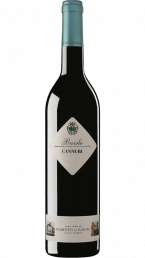
2018 Marchesi di Barolo Cannubi DOCG
There isn’t a wine in the world that more vividly evokes its place of origin than Barolo.
The 2018 Marchesi di Barolo Cannubi is off the charts! It’s certainly a blue-chip collector gem that deserves to be tucked away in the cellar. It displays immense structure with a harmonious combination of power and elegance which is one of the hallmarks of the “Cannubi” vineyard.
- VINEYARD: Cannubi: the long, gradually rising hill in the centre of the Barolo area. 300m elevation with an average vine age of 55 years. Surrounded by higher hills that protect it from bad weather and excessive flow of air, Cannubi enjoys a very special, unique microclimate.
- SOILS: Serravallian and Tortonian soils meet and merge, creating bluish-gray marls rich in magnesium and manganese carbonates, clays mixed with very fine sands, impregnated with a strong limestone content. Their technical name is “Sant’Agata fossil marls”, but they are commonly called Toû.
- WINEMAKING: The grapes are rigorously harvested by hand and a selection of the best bunches is made already in the vineyard. Once it arrives in the cellar, it is selectively destemmed and delicately pressed.
- FERMENTATION: Takes place at a controlled temperature: a range of 24-26°C is maintained to preserve all the aromatic potential characteristic of the specific terroir. Through repeated delestage and pumping over, they proceed with a maceration of 15-18 days aimed at the gradual and maximum extraction of the noble polyphenolic part of the skins.
- MATURATION: After racking, the wine begins a period of clarification and rest in vitrified concrete tanks, before continuing maturation in wood. The evolution lasts about two years. During the first year the wine matures in small French oak barrels, with the aim of fixing the colour and increasing the aging potential; the percentage of new woods is perfectly balanced to maintain the identifying characteristics of this Cru unchanged. The second year the wine ages in large Slavonian oak barrels in which the characteristics of finesse and elegance are enhanced. The complete expression of the wine is obtained after a period of at least 1 year of rest in the bottle.
- SENSORY: The colour is ruby with garnet red hues. The aroma is intense, with clear scents of rose, vanilla, spices and roasted nuts and a vague hint of absinthe. It is a robust wine, with good body, full and elegant taste, soft and enveloping tannins. Pleasant spicy and woody notes that merge perfectly together. Drink 2024 – 2045
- 96 Points – Decanter World Wine Awards: “Showing great depth of character with aromas of dried fruits, oak- layered cherries, attractive orange peel accents, and a touch of sweet onion relish. The palate is broad and solid with muscular tannins and a crunchy fresh fruit character. Shows great potential.”
The Mystique of Cannubi
For Piedmont and Barolo insiders, the “Cannubi” vineyard is considered one of the greatest cru sites in the Langhe as well as in the world. It’s a mere 37 acres!
If Barolo is the “King of Wines,” then Cannubi is its rightful throne. Perhaps the most celebrated hill in Italy’s wine landscape and undoubtedly among the most historic vineyards – with archival research tracing the first documented mention back to 1752, the year it appeared on a label for the first time – It is believed the name Cannubi comes from the Latin, connubio (marriage). This could be because it is where the two sides of the Barolo area meet.
Cannubi is a perfect blend of soil and climactic factors that create wines symbolizing the finest expressions of the region. For a Barolo lover, tasting and collecting Cannubi is a must!
However, this prized cru is not without some ongoing controversy: Here we are referring to the hill of Cannubi. There are actually specific sub-zones of Cannubi including: Cannubi San Lorenzo, Cannubi Muscatel, Cannubi Valletta, Cannubi Boschis and just Cannubi which can be either specified or generally written as Cannubi on the label. It pays to know your producer.
The soils of Cannubi are mostly compositions of sand, silt and a bit of clay. Towards the bottom of the hill, there are sandier soils which give the Barolos elegance, a characteristic of Cannubi wines. According to many locals, this is where the key flavour of licorice comes from. Position is everything!
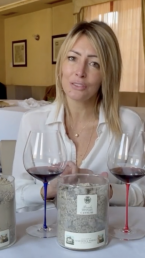
Cannubi’s Menzione Geografica Aggiuntiva (MGA) occupies a central position on a ridge, lower than the surrounding hills, shaped like a wedge that rises just before reaching Barolo. The tip of this wedge faces northeast, toward Alba, while the base extends southwest, ending at the edge of the village. This geographical setup provides the vineyards with optimal exposure, shielding them from cold winds and creating ideal climate conditions. Most of Cannubi is facing towards Southeast. This is considered a fantastic exposure because you have the bright and softer morning sun, and the grapes have time to cool off during the night as the sun sets in the west.
Cannubi is also a transitional zone between the two main geological areas of Barolo. On one side are the compact, deep soils of the Helvetian slope, and on the other, the softer soils of the Tortonian side. This unique soil mix, composed of sand and marl with significant limestone presence – the renowned Marne di Sant’Agata Fossili – creates a perfect blend of the different nuances of Barolo: the robustness and structure of the Helvetian sector meet the elegance and distinctive aromas of the Marne di Sant’Agata Fossili.
These are soulful Piedmonte reds from one of the variety’s greatest champions, Marchesi di Barolo. This is world-class wine of unique, and sublime distinction. So go ahead, it’s time to find out what the heart and soul of Barolo really tastes like! Superlatives are exhausted every time we taste one. If you don’t have some of this now-iconic red in your cellar, you are missing out.
A Bit of Geek Talk
Piedmont is serious wine business. Of the 20 Italian regions, it ranks the sixth highest in production volume and boasts more DOCG designated wines than any other (19!). In fact, there’s a growing consensus amongst wine geeks that we should give the endless gushing over Tuscany a rest, because this northern region–bordering France and Switzerland, situated between the Alps in the north and the Ligurian Apennines to the south–is truly where it’s at.
And the most noble grape that has definitely contributed the most to this region’s esteemed reputation is nebbiolo. Nebbiolo is named for the fog (“nebbia”) that settles in the foothills during the late October harvest. This highly tannic grape produces wines with a tar-and-roses bouquet that are often considered a more cost-effective alternative to Burgundy, the two most famous of which are Barolo and Barbaresco. It is believed to have been cultivated in the Langhe district before the fourteenth century and has spread to well-defined areas in Piedmont and Lombardy, creating very noble wines, named after their growing areas (Barolo, Barbaresco, Gattinara, Ghemme).
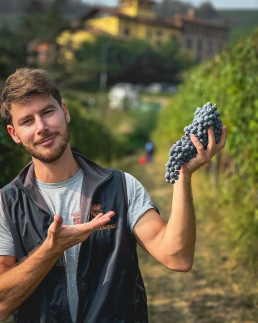
The Allure of Barolo
Barolo is an enigma. Liked by many, unlike any other and understood by few. Traditional Barolo is austere, we could say it is very “introverted”. Although often deep and impenetrable it is worth the patience of cellaring. Like any star, Barolo does know how to tease a crowd. However, there are some reviewers that have become enamoured with Barolo who are puzzled when they taste a traditional Barolo, perhaps because they are looking for a wine with more flash and sizzle, something that was not a style favoured by the original Barolo winemakers.
The Barolo DOCG encompasses 11 different communes and more than 1200 growers in the region. The “Big Five” — Monforte d’Alba (Josetta Saffirio’s commune), La Morra, Castiglione Faletto, Serralunga d’Alba, and of course, Barolo — have the advantage of altitude and soil, producing nearly 90 percent of all Barolo, while the remaining six — Diano d’Alba, Grinzane Cavour, Novello, Cherasco, Roddi, and Verduno — round out the rest.
Barolo is an accurate expression of terroir – it is a powerhouse, tannic wine in some communes, Serralunga, Monforte and Castiglione for example, but also more perfumed and delicate in others like La Morra. The Central Valley Barolos are known for softer, fruitier expressions of the region. Recent technological and viticultural advances are remaking Barolo into a wine that is more consistently balanced and approachable. Producers are careful not to change the flavour or feel of their wines, only to improve, and eliminate poor winemaking methods.
Interestingly, Pinot Noir and Nebbiolo could be brothers from another mother. Both are globally revered and sought after for their elegance, intensity, and age worthiness. And just as Pinot Noir is notoriously unstable genetically, available in many different shades, subvarieties, and clones, so is Nebbiolo. Both are thin skinned, high in acid and tannins. Both are exceptionally finicky about where they will happily grow and ripen. However, Nebbiolo has not travelled well as far as finding terroir to call home as opposed to Pinot’s internationally successful plantings.
Further, the one thing that sets Nebbiolo/Barolo apart is the tannin levels. These are bold tactile textures, yet Barolo has this ability to deliver tannins to a level of intensity and refinement that no other wine style can match.
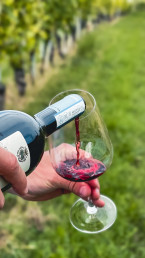
Modern Barolo winemakers’ experience and understanding of ripeness, managing tannins and curating extraction is nowadays at a point never before reached. Clearly, Marchesi di Barolo have expressively built their wines in a way that elaborates the full majestic power, depth and nuance of Nebbiolo. So, if tannin worship is your thing…roll out your prayer mat now!
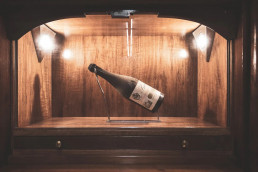
“[Barolo is] an absolute symbol of Italian wine, created by many families who have invested in quality, making the great red of Langa a must among enthusiasts and collectors, and the vineyards, cru in the lead, among the most precious in Italy and in the world.”
Matteo Ascheri, President of the Consorzio del Barolo
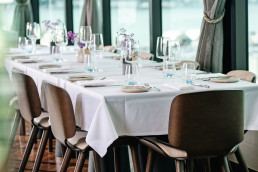
Winery in the Sky - An Italian Wine Dinner 15 Storeys Up
Join Harbour Society and Dhall & Nash for a journey to Italy, 15 floors above Auckland City with a wine dinner like no other at SO/ Auckland.
Enjoy a two-course family-style sharing dinner while you sip, swirl and savour handpicked Italian wines by Mont’Albano. The plates will be a melody of woodfired food, straight from Harbour Society’s signature oven and will include meat and seasonal veggies.
Three wines from Mont’Albano will be the stars of the show, showcasing incredible varietals and styles to suit all palates. Mont’Albano was founded in 1985 in the heart of the Friuli Venezia Giulia region, with wines from Verona, Abruzzo and Sicily. They are dedicated to creating niche wines that happen to be organic.
A table with sweeping views of Auckland city, fragrant food and delicious wine will set the scene among good company.
- Date: Thursday, 31 October 2024
- Time: 6:00pm - 8:30pm
- Location: Harbour Society at SO/ Auckland
- Cost: $89.10 per person
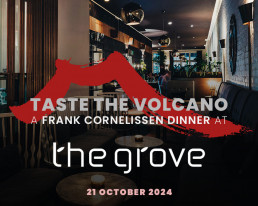
Taste the Volcano: A Frank Cornelissen Dinner at The Grove
Are you ready to turn up the heat? Join us at The Grove this October for our Annual Frank Cornelissen dinner event, where we'll be sipping some of the most sought after luminary wines from the volcanic faces of Mount Etna in Sicily, in the finest degustation dining room in New Zealand. It's fire meets fire.
Frank Cornelissen's wines will be expertly paired with a dish from the talented team at The Grove (menu to be confirmed).
Wine list:
- 2022 Frank Cornelissen Susucaru Rosato
- 2022 Frank Cornelissen Susucaru Rosso
- 2021 Frank Cornelissen MunJebel Rosso
- 2020 Frank Cornelissen MunJebel Rosso CR Contrada Campo Re
- 2019 Frank Cornelissen MunJebel Rosso CR Contrada Campo Re
- 2020 Frank Cornelissen MunJebel Rosso MC Monte Colla
- 2019 Frank Cornelissen MunJebel Rosso MC Monte Colla
- 2020 Frank Cornelissen MunJebel Rosso VA Vigne Alte
- 2019 Frank Cornelissen MunJebel Rosso VA Vigne Alte
To reserve your seat/table for this special evening, you can contact your account manager.
Seats are $245 inc GST per person.
https://www.dnfinewine.co.nz/frank-cornelissen-2020-new-vintage-new-hotness/
Frank Cornelissen 2020 - New Vintage, New Hotness
Frank Cornelissen 2020: New Vintage, New Hotness
Another Hot Drop from the Godfather of Natural Wines
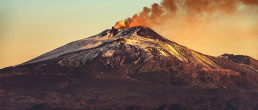
It’s 2024 and not only have we secured the newest vintages from the volcanic slopes of Sicily’s Mount Etna, but there’s a new hotness among them from the Godfather of Natural Wines: Frank Cornelissen’s Susucaro Rosso 2022! Produced with the same thought process and vinification techniques that’s made Frank’s other wines an organic icon of the winemaking industry, we’re very excited to introduce this new icon to the New Zealand market.
“Cornelissen is pushing toward the top of his dramatic arc, as I discovered during a recent visit with him. His wines have never been better”
– Monica Larner for Robert Parker’s The Wine Advocate, 2023
For anyone that’s watched The White Lotus Season 2, you’ll know how beautiful active stratovolcano Mt Etna is, and how it dominates the landscape with its ever-steaming activity. On its slopes, beneath the glow of molten rock is where you’ll find Azienda Agricola Frank Cornelissen, led by – you guessed it – Frank Cornelissen. Here, they grow grapes, olives and forage for juniper berries for winter stews (it’s like a lava-tinged Disney scene).
About Frank Cornelissen
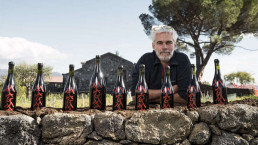
“One of the most significant figures in the revival of winegrowing on the slopes of Mount Etna”
– Robin Lee for The World of Fine Wine
Robin Lee sums Frank up nicely, and we’ve blogged extensively about this humble icon before, which you can read here:
- Oct 2023: New Year, New Frank
- May 2023: Red Hot ‘n’ Smokin’
- May 2020: Too HOT to Handle
But for those not wanting to go down a click rabbit-hole, let’s summarise…
When the Belgian ex-fine wine dealer came to Etna in 2001, his vision was that this is one of the few locations on Earth where wine could be made without any manipulation. He purchased old vines that had been planted during the Phylloxera crisis (which couldn’t survive in the volcanic soils here).
Mistakes were made as he learned along the way, but with time, the style of Frank Cornelissen became renowned. His hands-off approach was deemed extreme, even by his own standards and he admits that perhaps he took it a little too far sometimes. “My wines used to be anti-wines,” admits Cornelissen. His initial philosophy was never to use sulphur dioxide (SO²) in his wines. In every wine making decision, his aim was for absolute purity. His uncompromising and often extreme, (but always creative) visionary efforts to maintain the highest level of cellar hygiene without using SO² made him an idol of the natural wine world. However, over the past 22 years, trailblazing Cornelissen has needed to evolve. He has modified his thinking and methodology of this earlier philosophy.
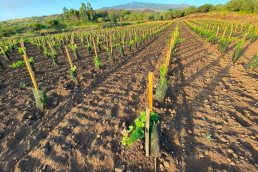
Still today, this is a winery that practises non-interventionist principles across their twenty-four hectares and eschews overhandling of the wines in the winery and cellar. However, there have been a number of changes to the process, including the fact he’s now using minimal amounts of SO² during racking and before bottling. “Quality- focused with natural being the inspiration, not the destination” explains Jancis Robinson MW.
“Frank Cornelissen is an Etna pioneer, and his contributions to the success of this special Sicilian wine region are immeasurable. His influences on Italy’s natural wine movement are equally important, and he was alone in embracing both concepts (Etna and natural wine) simultaneously. His winemaking experiments on the volcano started in 2001, and Cornelissen emerges as a major figure today”
– Monica Larner for Robert Parker’s The Wine Advocate, 2023
In a profile by Jancis Robinson, Cornelissen confessed that “2015 was my learning vintage that showed me the limit [of non intervention]. 2018 showed that I should have added a little SO² to 2015. 2017 was OK but 2018 really needed the SO². It was 2018 that changed my mind about SO². I’m very happy with the new technique, and 2020 is where I really want to get to. 2019 was deceptive. The fruit was very, very clean but we still needed the sorting table because there was a lot of variation. 2018 though was really difficult.”
“[Cornelissen] calls his 2019s ‘pretty’ and likens his 2019 Nerello Mascaleses to Pinot Noir whereas 2017 was more like Nebbiolo. His favourite vintages are 2011 and 2020.”
– Jancis Robinson “Soldera and Cornelissen” 2022
The 2020 Vintage
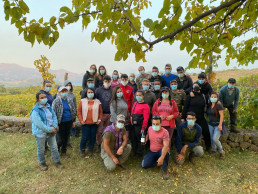
“What can I say, Frank Cornelissen is at the top of his game, [] and I can honestly say that I have never seen such precision, purity, and consistency as I’ve seen tasting the last few vintages”
– Eric Guido for Vinous
Our newest shipment of Frank Cornelissen wines includes a wave of goodies from the 2020 vintage, as well as a new gem – Susucaru® Rosso – from 2022.
Every year, Frank releases a vintage report. For the 2020 wines, he’s dubbed the vintage officially ‘Great’:
“The real winter came only at the end of January but with good snow; the pruning was finished late as we had to do some corrective pruning in a new vineyard which took more time than planned.
“The rest of the season was relatively balanced and we slid into the harvest pretty smoothly, albeit with some stress for some workers concerned about getting COVID and sending the whole team in quarantine… It was very stressful to keep everybody safe and sound but we managed with lots of precautions.
“Harvest went pretty easy as the nice weather was continuing until late autumn. A nice compensation for the COVID stress!
“The reds have a nice balance and I like the structure of the wines as tannins are present and it all fits nicely.
“Magma was picked in perfect zodiac and I was really happy. The Bianco Vigne Alte will be promising.
“My preferred wine of this vintage: Susucaru® Rosato for its rich flavours and freshness combined.”
Susucaru® Rosso The New Kid on the Block
The Susucaru® wines are the entry-level range from Frank, and after the roaring success of the Rosato (which we almost have to hide from our DN staff) we’re super excited to add the Rosso to the lineup.
2022 Frank Cornelissen Susucaru Rosso
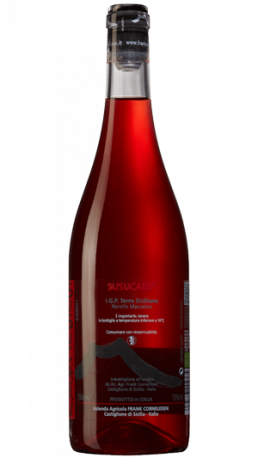
The 2022 Susucaru Rosso is a field-blend of mostly Nerello Mascalese (85%) with other local varietals all the vineyards: Nerello Cappuccio, Allicante Boushet, Minnella and Uva Francesa. Susucaru® Rosso perfectly expresses Etna, as it is produced in a more traditional way, blending different contrada’s as well as different varietals to obtain a fragrant, elegant and fluid wine with structure and personality.
The name Susucaru® comes from a Sicilian expression meaning “they stole it”, which is what Frank’s crew shouted when they realised most of the grapes from their first vintage had vanished.
From Vineyards Picciolo, Malpasso, Campo Re, Crasà, Piano Daini, Feudo di Mezzo. Grapes were destemmed and lightly crushed, before fermentation with a “pied-de-cuve” using only indigenous yeasts and skin contact for about 30 days. It was aged in neutral epoxy tanks from 2500-7000 litres. No fining, and filtering occurred before bottling with cartridges of 3 micron.
The Explosive New 2020 Batch from Frank Cornelissen
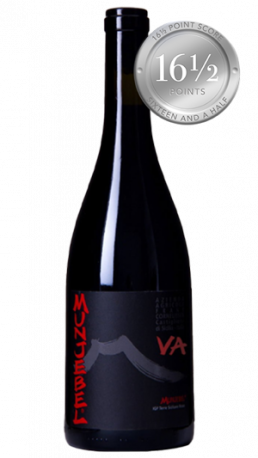
2020 Frank Cornelissen MunJebel Rosso 'VA' (Vigne Alte)
A blend of ungrafted Nerello Mascalese from Cornelissen’s three highest vineyards (hence Vigne Alte or ‘Tall/High Vineyards’): Tartaraci (1000m. asl), Barbabecchi (910m. asl), Rampante soprana (870m. asl)
“The most Burgundian of all our crus.” Nerello Mascalese 100% from 90+ year old ungrafted vines. With an annual production of only 2,500 bottles. Grapes were destemmed and lightly crushed before a “pied-de-cuve” fermentation using only indigenous yeasts and skin contact for about 60 days. Aged in neutral epoxy tanks from 1500-2500 litres for 18 months and another 18 months in bottle. No fining. Filtering before bottling with PP cartridges of 5 micron.
Previous Vintages Accolades:
- 16.5+ Points Jancis Robinson (2019)
- 97 Points Robin Lee World of Fine Wine (2019)
- 96 Points Decanter (2017)
- 93 Points Robert Parker (2017)
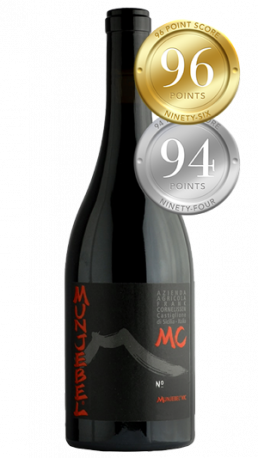
2020 Frank Cornelissen MunJebel Rosso ‘MC’ (Monte Colla)
This pure Nerello Mascalese comes from contrada Monte Colla. An extremely steep and terraced vineyard, beautifully exposed to sun and wind and right in front of Mount Etna. The sandy clay soil and the old-vine Nerello Mascalese, planted in 1946, produces a rich and powerful wine, maintaining grace and elegance. Our “Hermitage” of Etna.”
“Monte Colla MC delivers punchy red fruit flavors with rose, lilac and hints of powdered licorice root. There is a subtle play of fruit versus floral intensity in this wine. The vineyards enjoy heavier soils, with clay in part, that are rich in silicon at 780 meters in elevation. The vines were planted in 1948 and 1949 with south-southwest exposures, where they get the last light of the day. These are ancient soils, and marine fossils are sometimes found on Monte Colle. Geologically speaking, this site is unique in the Etna context.”
94 Points, Robert Parker’s The Wine Advocate
“Lovely cool berry, orange blossom, pumice, smoke and lava aromas, but subtle and complex. Bark and mushroom, too. Full-bodied and very structured with powerful tannins that are polished and thought-provoking. This needs time to soften. Clearly one for the cellar. Best after 2026.”
96 Points – JamesSuckling.com (8/4/23)
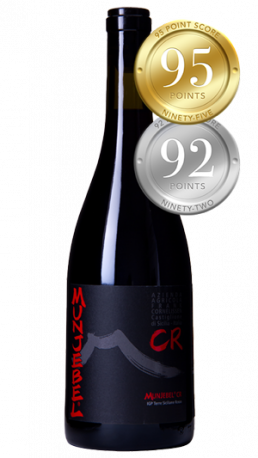
2020 Frank Cornelissen MunJebel Rosso ‘CR’ (Contrada Campo Re)
This pure Nerello Mascalese comes from a partly ungrafted vineyard ‘Campo Re’, situated at the far western side in the valley floor, at the entrance of Randazzo. The vineyard altitude is 735m. asl and is characterised by deep soil which, in humid vintages creates major difficulties to obtain ripe fruit. The wines are profound and tannic, and more Nebbiolo-ish compared to other crus.
“I like the aromas of vine bark, rose stem, light parsley, and red fruits that follow through to a medium body, with white pepper and cloves with a fresh and vivid finish. Tight and tannic. Shows tightness and focus. Best after 2025 but already fascinating to taste. (8/4/23)”
95 Points – JamesSuckling.com
“These results from 2020 show a lot of fruit character and dark cherry concentration with hints of curry leaf, mint, oregano and some of the wild herbs that grow on the volcano. The tannins are softly integrated and the acidity is bright. Mineral nuances add complexity.”
92 Points – Robert Parker’s The Wine Advocate
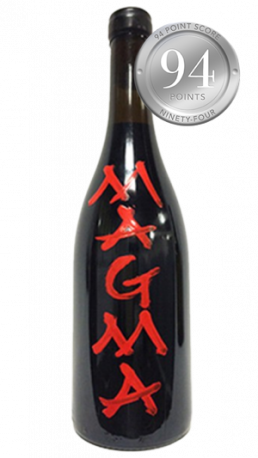
2020 Frank Cornelissen Magma
Magma® is Frank Cornelissen’s top cuvée, their “Grand Vin” and is produced only in great vintages where they achieve phenolic ripeness. Hailing from the Barbabecchi vineyard at 910m. asl. Planted around 1910 and North-North East exposed, capturing the first and cool morning sun rays. A profound wine, rich as well as elegant, with character, personality and great finesse. Vinification starts with a “pied-de-cuve” using only indigenous yeasts and skin contact for about 50 days before aging in neutral epoxy tanks 1500-2500 liters for 18 months and another 18 months in bottle. Annual production in the years it’s produced is around 2,000 bottles.
Bottles are hand-painted and to combat the increasing risk of counterfeit bottles, since 2016, Magma® has an NFC chip integrated into the label of each bottle which contains information regarding the authenticity of the wine.
In addition to the microchip, Magma® uses unique Ardeaseal closures on the bottles and magnums, further guaranteeing authenticity as these patented closures are manufactured in only one factory in the world.
“The Frank Cornelissen 2020 Sicilia Nerello Mascalese Vigna Barbabecchi Magma is a creative and original wine that is a lot of fun to drink and dissect. Fruit comes from a vineyard site at about 1,000 meters in elevation above the Contrada Rampante. This 2.5-hectare site was planted in 1910, and more than half of the fruit goes toward this production. The wine offers ample richness and volume with dark berry, campfire ash, grilled herb and cola.”
94 Points – Robert Parker’s Wine Advocate
Previous Vintages Accolades:
- 18 Points Jancis Robinson (2019)
- 96 Points Robin Lee World of Fine Wine (2019)
- 97+ Points Decanter (2019)
Also Still Available...
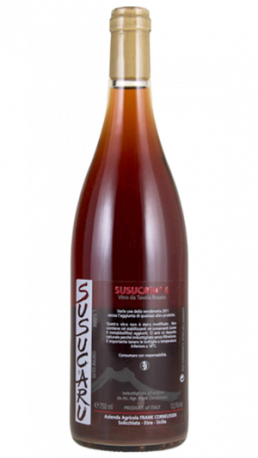
2022 Frank Cornelissen Susucaru Rosato
(Prior vintages sold out!)
Frank’s famous Malvasia, Moscadella, Insolia, and Nerello Mascalese Rosato blend – made with skin contact for texture and territorial identity, malolactic fermentation fully finished for density, fluidity and stability. A bright salmon pink. Intense perfumes of young fruits introduce sapidity and minerality. Drinking Window: 2023 – 2030
“I was privileged to taste the wine – Susucaru… bottom line is I taste this natural stuff and my eyes just lit up, some lightbulb went off and I feel like this is where the journey of life has taken me, and where I need to continue to explore.”
Action Bronson for Vice’s Munchies Series
2021 and 2019 Frank Cornelissen MunJebel Rosso
The Classic MunJebel Rosso is Frank’s vision of a traditional, balanced and rich Northern Valley Etna wine. A rich and fragrant wine of pure Nerello Mascalese from different vineyards, partly from their best parcels where we produce our crus (Zottorinoto-Chiusa Spagnolo, Feudo di Mezzo-sottana and Porcaria) as well as designated vineyards for this specific wine (Rampante Sottana, Piano Daini and Crasà).
2021: “Expressive and decidedly gentle and harmonious in the main profile, it shows notes of black plums, marjoram, lavender, hibiscus, black olives, strawberries, geraniums and white pepper. Medium body, creamy tannins of splendid elegant shape, perfectly polymerized and a finish of commendable beauty.”
94 Points WinesCritic.com
2021: “Seduces with a rich and sweetly scented bouquet of crushed black cherries, dried roses, and cloves. It’s silky in texture, enveloping all that it touches with ripe red fruits and spices, nicely framed by saturating minerality, as inner violet florals form toward the close. There are tannins here, but they don’t get in the way; instead, they create a perfectly dry platform where notes of lavender, plum and allspice hover above.”
92 Points Vinous
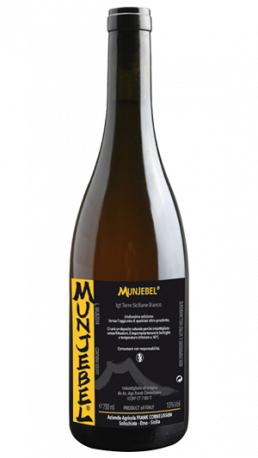
2020 Frank Cornelissen MunJebel Bianco
Cornelissen’s first white wine started out as an orange wine, fermented with the skins for an extended period. Frank liked the tactile feeling and density, but missed the finesse and precision of the classic French white wines, so he changed the technique to search for the purity and flavours of Etna. This transpired as a short period of skin contact and ageing for an extended period in the coldest part of the cellar before bottling. The obtained elegance, purity and density makes this wine very suited to accompany a wide variety of dishes and cuisine, from fish to white meat. 50% Grecanico and 50% Carricante.
“It is beautifully pure for a natural wine, and while rich, almost oily, there is drive and persistence to the gingery, herbal and stonefruit flavours.”
Different Drop

Masterclass - Wines of Frank Cornelissen (trade only)
Seen as the rebellious rock star winemaker in the world of natural wines, Frank Cornelissen’s wines carry the seriousness of many of the world’s greatest wines, while simultaneously tasting like nothing you’ve ever had.
Join Brandon Nash (Dhall & Nash Fine Wines) for a Wednesday afternoon tasting at Auckland's Tappo, and discover some of the most internationally sought after, luminary wines from the volcanic faces of Mount Etna in Sicily, and learn just what makes these acclaimed wines “liquid rock”.
The wines on full display includes:
- 2020 Frank Cornelissen MunJebel Bianco (Carricante / Grecanico Dorato)
- 2022 Frank Cornelissen Susucaru Rosato (Cattaratto / Malvasia / Moscadella / Nerello Mascalese)
- 2021 Frank Cornelissen MunJebel Rosso (Nerello Mascalese)
- 2019 Frank Cornelissen MunJebel Rosso (Nerello Mascalese)
- 2019 Frank Cornelissen MunJebel Rosso CR Contrada Campo Re (Nerello Mascalese)
- 2019 Frank Cornelissen MunJebel Rosso MC Monte Colla (Nerello Mascalese)
- 2019 Frank Cornelissen MunJebel Rosso VA Cuvée Vigne Alte (Nerello Mascalese)
Please note: this tasting is free, but restricted to Trades only. Seats are extremely limited to only 16 attendees, so to secure your seat please contact your Account Manager or email us at info@dnfinewine.com and prepare to taste the volcano.

Taste the Volcano: A Frank Cornelissen Dinner @ The Grove
Are you ready to turn up the heat? Join us at The Grove this November, where we'll be sipping some of the most sought after luminary wines from the volcanic faces of Mount Etna in Sicily, in the finest degustation dining room in New Zealand. It's fire meets fire.
Six of Frank Cornelissen's wines will be expertly paired with a dish from the talented team at The Grove (menu to be confirmed).
Wine list:
- 2020 Frank Cornelissen MunJebel Bianco (Carricante / Grecanico Dorato)
- 2022 Frank Cornelissen Susucaru Rosato (Cattaratto / Malvasia / Moscadella / Nerello Mascalese)
- 2019 Frank Cornelissen MunJebel Rosso (Nerello Mascalese)
- 2019 Frank Cornelissen MunJebel Rosso CR Contrada Campo Re (Nerello Mascalese)
- 2019 Frank Cornelissen MunJebel Rosso MC Monte Colla (Nerello Mascalese)
- 2019 Frank Cornelissen MunJebel Rosso VA Cuvée Vigne Alte (Nerello Mascalese)
To reserve your seat/table for this special evening, you can contact your account manager, or reserve directly through The Grove here.
Seats are $345 inc GST per person.